Tag: Earth and atmospheric sciences

A regulatory loophole could delay ozone recovery by years

Often hailed as the most successful international environmental agreement of all time, the 1987 Montreal Protocol continues to successfully phase out the global production of chemicals that were creating a growing hole in the ozone layer, causing skin cancer and other adverse health effects. MIT-led studies have since shown the subsequent reduction in ozone-depleting substances […]

Read More

Waves hit different on other planets

On a calm day, a light breeze might barely ripple the surface of a lake on Earth. But on Saturn’s largest moon Titan, a similar mild wind would kick up 10-foot-tall waves. This otherworldly behavior is one prediction from a new wave model developed by scientists at MIT. The model is the first to capture […]

Read More

Geothermal energy turns red hot

Drill deep and drill differently. That’s what’s needed to exploit the nearly bottomless promise of geothermal energy in the United States and around the globe, according to participants at the 2026 Spring Symposium, titled “Next-generation geothermal energy for firm power.”  Sponsored by the MIT Energy Initiative (MITEI), the March 4 event drew 120 people, including […]

Read More

Climate change may produce “fast-food” phytoplankton

We are what we eat. And in the ocean, most life-forms source their food from phytoplankton. These microscopic, plant-like algae are the primary food source for krill, sea snails, some small fish, and jellyfish, which in turn feed larger marine animals that are prey for the ocean’s top predators, including humans. Now MIT scientists are […]

Read More

A complicated future for a methane-cleansing molecule

Methane is a powerful greenhouse gas that is second only to carbon dioxide in driving up global temperatures. But it doesn’t linger in the atmosphere for long thanks to molecules called hydroxyl radicals, which are known as the “atmosphere’s detergent” for their ability to break down methane. As the planet warms, however, it’s unclear how […]

Read More

Investigating Antarctic ice shelf melting with global navigation satellite systems

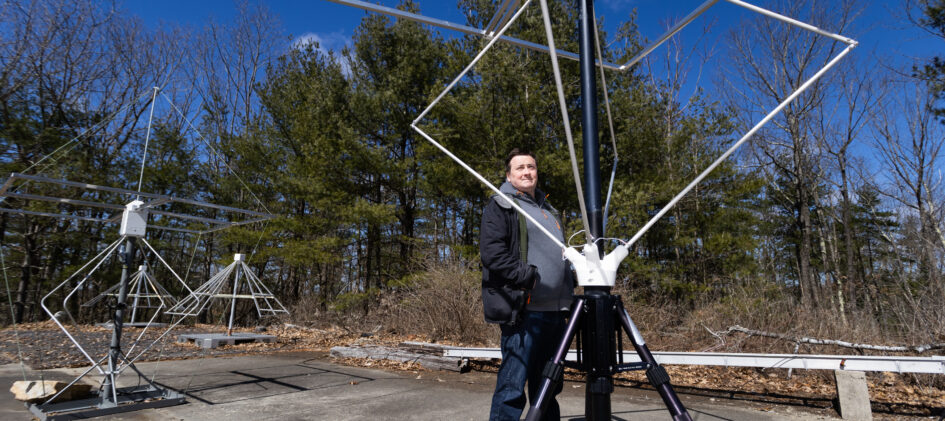
Global navigation satellite systems (GNSS), which include GPS, are traditionally used for positioning, timing, and mapping information. In an open-access study published Feb. 27 in Geophysical Research Letters, MIT Haystack Observatory scientists report using existing GNSS satellites, in conjunction with 13 stations installed on the Ross Ice Shelf (RIS) in Antarctica, to measure atmospheric turbulence above the […]

Read More

Understanding how “marine snow” acts as a carbon sink

In some parts of the deep ocean, it can look like it’s snowing. This “marine snow” is the dust and detritus that organisms slough off as they die and decompose. Marine snow can fall several kilometers to the deepest parts of the ocean, where the particles are buried in the seafloor for millennia. Now, researchers […]

Read More

X-raying rocks reveals their carbon-storing capacity

To avoid the worst effects of climate change, many billions of metric tons of industrially generated carbon dioxide will have to be captured and stored away by the end of this century. One place to store such an enormous amount of greenhouse gas is in the Earth itself. If carbon dioxide were pumped into the […]

Read More

Study reveals climatic fingerprints of wildfires and volcanic eruptions

Volcanoes and wildfires can inject millions of tons of gases and aerosol particles into the air, affecting temperatures on a global scale. But picking out the specific impact of individual events against a background of many contributing factors is like listening for one person’s voice from across a crowded concourse. MIT scientists now have a way to […]

Read More

New study unveils the mechanism behind “boomerang” earthquakes

An earthquake typically sets off ruptures that ripple out from its underground origins. But on rare occasions, seismologists have observed quakes that reverse course, further shaking up areas that they passed through only seconds before. These “boomerang” earthquakes often occur in regions with complex fault systems. But a new study by MIT researchers predicts that […]

Read More

Some early life forms may have breathed oxygen well before it filled the atmosphere

Oxygen is a vital and constant presence on Earth today. But that hasn’t always been the case. It wasn’t until around 2.3 billion years ago that oxygen became a permanent fixture in the atmosphere, during a pivotal period known as the Great Oxidation Event (GOE), which set the evolutionary course for oxygen-breathing life as we […]

Read More