Spain election early results show lead for conservatives, far-right
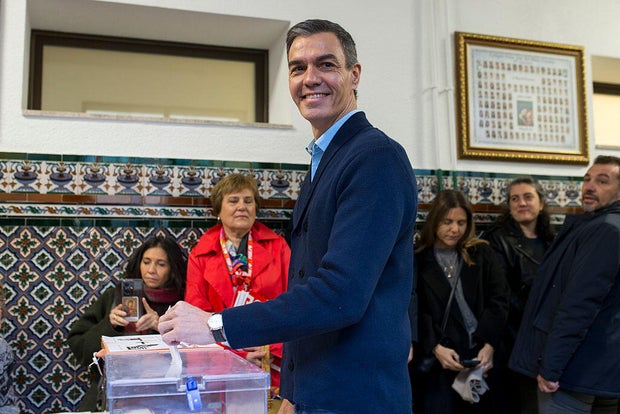
Voters in Spain cast their ballots Sunday in a snap election that could see another major European country swing to the political right, as socialist Prime Minister Pedro Sánchez battles to retain power amid mounting public discontent over housing, immigration and corruption.
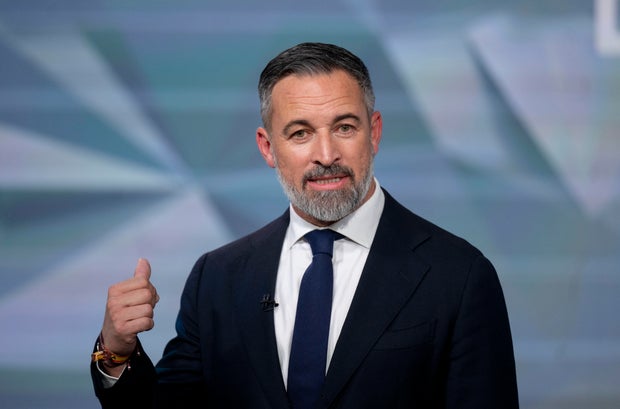
With about 50% of the votes counted, the conservative People’s Party, led by Alberto Núńez Feijóo, and far-right, anti-immigration Vox party, led by Santiago Abascal, appear to be on course to win enough seats to form a coalition and unseat Sánchez. They could form Spain’s most right-wing government since the country returned to democracy following the death of dictator Francisco Franco in 1975.
The election is seen as a referendum on Sánchez, one of Europe’s most prominent left-wing leaders, who has increasingly positioned himself as a political counterweight to President Trump on the world stage.
He has defied Mr. Trump’s demands over NATO defense spending, penned an opinion piece in The New York Times defending migration and denouncing “MAGA-style leaders” and cultivated ties with prominent figures on the American left, including New York City Mayor Zohran Mamdani.
Earlier in the day, Sánchez urged Spaniards to vote in large numbers to “send a clear message” about the government they want. After casting his ballot in Madrid, he told reporters that the election is “very important not only for Spain, but also for Europe.”
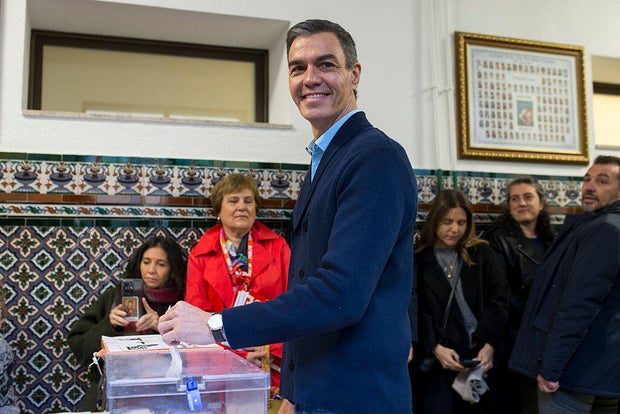
Meanwhile, Feijóo, while casting his vote in Madrid, said he asks Spaniards not to vote with fear “but with memory.”
“Today is a day when the Spanish people take the helm and will decide the future, the destiny, and the direction of Spain,” he said.
Participation by 6 p.m. was at 68%, about 15 percentage points higher than in the previous national election in 2023.
Housing has become a defining issue of the election, with soaring rents and property prices fueling widespread public anger.
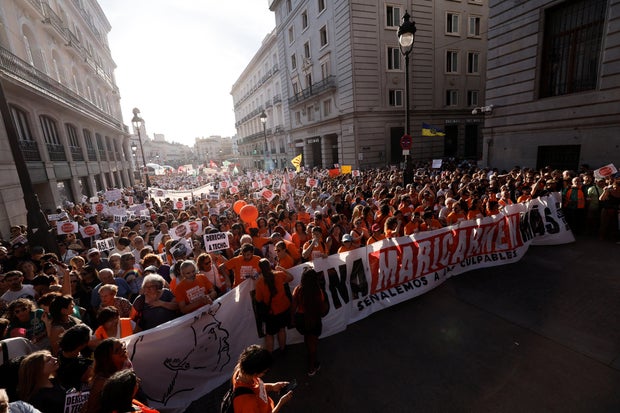
On the same day Sánchez met Mamdani in New York City, 87-year-old Maricarmen Abascal was forcibly removed from the Madrid apartment where she had lived for more than 70 years. Her landlord had sought to more than triple her monthly rent to $1,900, or 1,650 euros.
Her eviction – where she was carried out on a stretcher – sparked nationwide protests. Although her landlord subsequently agreed to let her return at a substantially lower rent, Abascal died in the hospital two weeks after her eviction, before she could sign the new lease. Her case became a symbol of Spain’s housing crisis.
In response to the protests, Sánchez introduced emergency housing measures, including restrictions on rent increases. But the proposals were defeated in parliament, prompting Sánchez to call a snap election.
Sánchez has since sought to blame the PP and the far-right Vox for blocking protections for vulnerable tenants. The PP, meanwhile, argues that Sánchez has had eight years to address the housing crisis and has pledged to build one million homes.
The PP has made reducing the cost of living and tackling corruption central to its campaign.
“Spain is deeply divided. There is a lot of fear on both sides, and I believe we need to soften the tense atmosphere and redirect what has been done wrong during the past eight years,” Paloma Jiménez-Ontiveros, a 65-year-old real estate agent in Madrid, told The Associated Press after voting.
Immigration has also become a particularly contentious election issue following the mass arrival of migrants in Ceuta, a Spanish territory on the northern coast of Africa, in July, and the Sánchez government’s decision earlier this year to offer legal status to hundreds of thousands of undocumented migrants.
The far-right Vox party has sought to capitalize on public unease over immigration, calling for mass deportations and prioritizing Spanish nationals in access to public services.
Hugo Marcos-Marné, a political scientist at the University of Salamanca, told CBS News that the “electoral growth of Vox is multicausal,” but perceptions of immigration, more than actual figures or changes in the country-wide objective situation, “is certainly behind” the party’s rise.
The PP has also called for tightened immigration controls.
Corruption scandals involving Sánchez’s political associates and members of his family have been a major feature of the election. Two deadly train crashes this year have also undermined confidence in his administration.
Vox has also been aided by “an anti-gender reaction, authoritarian nostalgia, and anti-elitism directed against mainstream parties and politicians,” Marcos-Marné said.
For decades, Spain was relatively resistant to the rise of far-right populism seen elsewhere in Europe, in part because of the country’s experience of dictatorship under Franco.
Although the center-right PP is polling ahead of Sánchez’s Socialists, polls suggest it could fall short of a parliamentary majority and need the support of Vox, which is polling at around 18%. Once reluctant to embrace the far-right party, the PP has increasingly shown a willingness to work with Vox, with the two parties having formed coalition governments at the regional level.
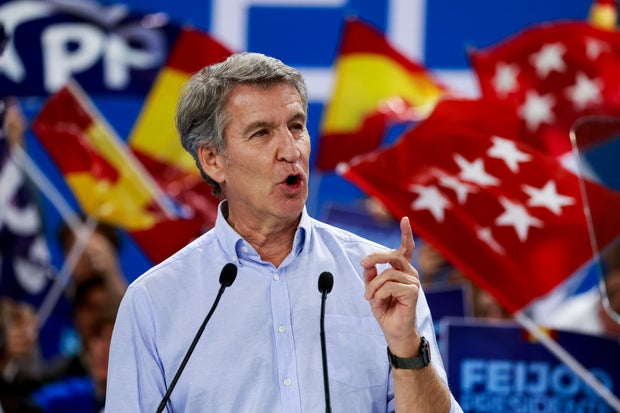
“Research shows that the radical-right was comparatively more stigmatized in Spain because of Franco dictatorship, but also that the Popular Party was a chameleonic party able to attract voters of the center-right and the radical-right,” Marcos-Marné said.
Sánchez is hoping that the prospect of the far-right entering national government will galvanize progressive voters.
“The PP and Vox pose a real threat to many groups in our country,” Sánchez wrote on X, accusing the parties of seeking to roll back the rights of women, workers and migrants. “Every seat that goes to the PP and Vox means taking a step backward.”
The implications of Sunday’s election extend well beyond Spain’s borders.
With Spain the only large EU country currently governed by the left, Marcos-Marné said, the election is “certainly significant for the balance of forces at the EU level.”