More than 10% of the bridges in Kenai Peninsula rated in ‘poor condition’
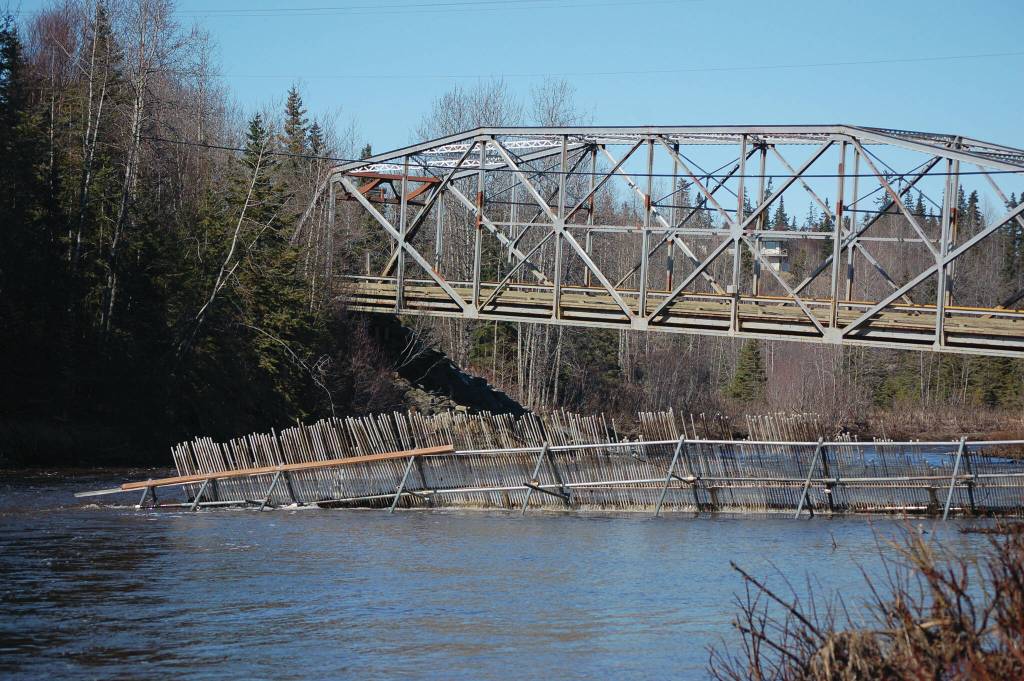

Of the 102 bridges in the Kenai Peninsula Borough, 13 are rated in poor condition according to the Federal Highway Administration’s 2025 inventory. Over 6,000 vehicles cross those bridges daily.
The 12.7% rate of poor condition bridges in Kenai Peninsula is 5% higher than the average across Alaska and nearly double the national average. The busiest of these bridges is on the Sterling Highway over South Fork Anchor River, which was built in 1959 and carries on average 3,490 vehicles a day. Six bridges in Kenai Peninsula Borough are closed while 10 have a load limit posted. Seven bridges in Kenai Peninsula Borough were built before 1960.
The second busiest bridge in poor condition in Kenai Peninsula Borough is the Funny River Road bridge which runs over the Funny River. It was built in 1969 and serves over 1,800 vehicles per day. Both the Funny River Road bridge and the Sterling Highway bridge are owned by the Alaskan state highway agency.
The culvert that runs underneath Seward’s 4th avenue between the lagoon and the bay was also rated poor while servicing 500 vehicles per day in the heart of Seward. The culvert was opened more than 60 years ago in 1960 and is owned by the local municipal government.
One of the worst bridges in Alaska is located 15.4 miles southeast of Port Graham. The bridge built in 1997 carries a rating of 0 (the lowest on the 0-9 federal scale). The bridge features wood or timber construction with a stringer/multi-beam or girder design. It is rated structurally deficient, meaning the bridge has one or more component ratings of 4 or below, indicating significant deterioration that requires attention. The bridge remains safe for travel but may have load restrictions.
Other bridges in the Kenai Peninsula Borough rated poor are Jakolof Bay Road over Barbara Creek near Seldovia, Nautical Avenue over Salmon Creek Tributary near Seward, a pair of bridges north of Windy Bay Road managed by the Bureau of Indian Affairs, five bridges southeast of Port Graham also owned by the Bureau of Indian Affairs and a bridge over Palmer Creek owned by the U.S. Forest Service.
Between 2010 and 2025 the rate of repair for poor bridges has slowed from 1,700 per year from 2010 to 2015 to only 1,298 per year between 2020-2024. Today, there are fifteen states that have more bridges in poor condition than in 2020.
In Kenai Peninsula Borough, only three bridges have had their “poor” rating removed since 2010. Independent publication and public data service gov.house predicts no change in the number of poor rated bridges over the next four years.
The “poor” rating is used by the highway administration to indicate condition and does not mean a bridge is unsafe to drive on.
Federal funding for bridge repair is mainly sourced through the Infrastructure Investment and Jobs Act. Authorization for funding is set to end Dec. 11 2026.