Is the Mimbres School a Lefty Cult—or the Future of Higher Education?
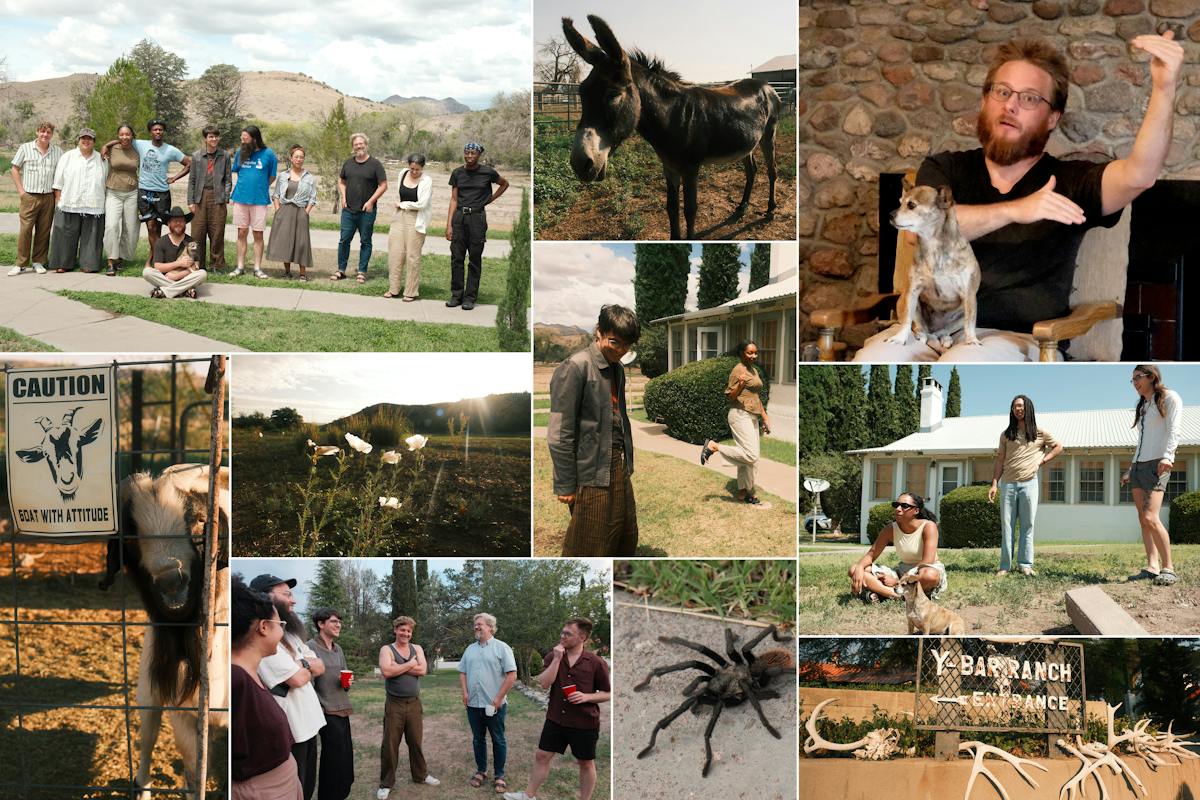

The
students at Mimbres hail from at least 25 countries, but most are Americans.
They are almost all in their twenties and thirties. The school is home for the
sort of disaffected young people who abandoned the Democratic Party in droves
in 2024. Many of Mimbres’s instructors have Ph.D.s, but more than a few abandoned
grad school. They’re hustling for gigs just like their counterparts at BISR.
Everyone seems to have flirted with Marxism or the Occupy movement. But they
have cast that all aside as the exhausted politics of their parents and their
professors.
Deborah
Wang, an analytics engineer in Cincinnati, is one of four students to complete Mimbres’s
most onerous offering, a Foundations Program that offers one-on-one feedback
and culminates in an intensive final research paper. Wang ruefully recalls
supporting Hillary Clinton in the Democratic primary in 2016. She had completed
a degree in Asian studies at Berkeley, where one professor took for granted
what she calls a “State Department–inflected view on China.” The main question
back then, she told me, was how and when China would finally adopt the
perfected, American form of democracy. By the time Trump was in office, Wang
had landed and then quit a job as a development coordinator fundraising at NPR.
She then got a second degree, this one in engineering, in 2020. As she and her
partner entered their thirties, they were politically adrift. “He would be
YouTubing a lot of alt stuff, and I remember reacting not so great to some of it
because it was quasi–Alex Jones curious,” she said. They were galvanized by protests against the
oil pipeline being built at the Standing Rock Reservation in North Dakota.
“Obama’s indifference at best was really, really disillusioning,” Wang said.
Her online gaze turned to criticism of the Democratic Party from the left, and
soon enough she encountered Drumm online.
Wang was
drawn to Drumm’s persona—he was “very snarky and kind of mean,” she said
affectionately—and in 2023, she signed up for a class at Mimbres, an introduction to Black studies and Afropessimism titled “What is
Blackness?” At first, Wang
was put off by the canonical authors circulating in the class and at the
school: “All the fucking Aristotle, Plato, Schmitt, Hegel … I was in my naïveté very surprised how many Black scholars were into this stuff.… And then to my
delight, what the Black scholars do is they completely decimate it.” One of Mimbres’s
best rules, she said, “is that we do not respect books, and we do not love
books—we read them adversarially.” This irreverent, even hostile style of study
makes it easier to think openly. “We’re not a political party,” she told me. Of
course, there are connections between politics and scholarship, but “you should
not mistake yourself for doing politics when you write an essay.”