Kenai Borough invests in new shredder to tackle growing tire stockpile
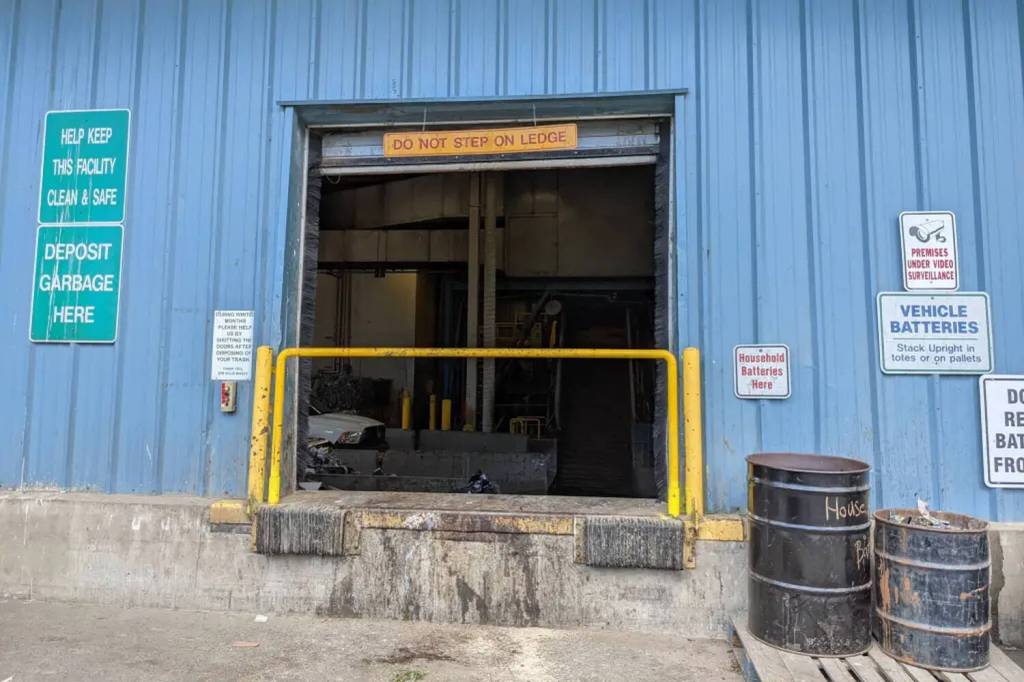

Businesses disposing of tires on the Kenai Peninsula could soon face higher fees as borough officials prepare to tackle a growing stockpile of discarded rubber that is taking up valuable landfill space.
The Kenai Peninsula Borough Assembly unanimously approved $500,000 for a mobile shredder on Nov. 10, bringing the project’s total budget to $1.3 million. Once operational, the equipment will help reduce the space taken up by tires and other bulky waste at the Central Peninsula Landfill near Soldotna.
During the assembly’s Finance Committee meeting, Mayor Peter Micciche said the borough hopes to tackle its growing tire stockpile by shredding the tires rather than burying them whole.
“We have a mountain of tires that will not be going into the ground,” Micciche said.
Solid Waste Director Scott Griebel said shredding tires could reduce the space they take up by about 70%, helping the borough get more use out of its existing landfill space. The department plans to process tires accumulated at the Central Peninsula Landfill and is prepared to arrange the hauling itself if necessary.
The original $800,000 budget was based on prices for similar shredders, though those machines were not necessarily built to handle the borough’s heavier waste.
Both bids came in over the original budget, and the manufacturer of the chosen shredder has indicated prices will rise in 2027. The borough plans cover the additional cost using federal Local Assistance and Tribal Consistency Fund grant money.
Officials are looking into other uses for the shredded rubber outside the landfill, which could be used for drainage work or around gas collection pipes. Making the rubber suitable for public use, however, could require another machine to remove the steel belting, along with additional staff and facilities.
Micciche said the borough had hoped to partner with a business to help cover the cost, but that arrangement fell through, so officials are now considering higher disposal fees, particularly for retailers that handle large numbers of tires.
“Commercial is going to pay more than they’re paying today for tire disposal,” he said.
The borough currently classifies tires as inert waste, charging $90 per ton at facilities with scales, subject to a $20 million minimum.
Landfill drainage
The shredder was one of two landfill-related appropriations approved during the meeting.
Another $60,000 was approved from the Solid Waste Capital Project Fund to begin expanding a stormwater detention basin at the Central Peninsula Landfill that has been unable to handle heavy runoff since it opened in 2017.
For now, staff have been pumping excess runoff into an unused section of the landfill’s demolition waste area, but that option will no longer be available once the borough begins placing debris there in 2027.
Officials hope the $60,000 will cover the landfill’s fourth waste cell development, as improving drainage would allow the borough to make better use of its existing disposal space while meeting stormwater management requirements.
Hospital agreement and service area projects
In other business, the assembly approved an extension of the borough’s operating agreement with Central Peninsula General Hospital Inc., giving both sides more time to negotiate. The agreement was set to renew automatically for another five years at the end of December, but the amendment gives officials until June 30, 2027, to work out new terms.
The assembly also approved funding to address heating and ventilation problems at North Peninsula Recreation facilities after a major system failure last year. Borough maintenance staff will now handle repairs to the unit ventilators, while Siemens will assess the existing control system to help staff respond to future problems.
In another decision, roughly $10,000 was added to the budget for an audit of Nikiski Senior Citizens Inc.’s 2025 finances after bids came in higher than expected.
Finance Director Brandi Harbaugh said the borough had originally set aside $20,000 for the audit, which is being conducted following changes in the organization’s leadership.
Transportation and land decisions
Transportation services came under scrutiny as assembly members considered which projects should receive priority for state grant funding.
The assembly backed a list of projects seeking state transportation grants, with priorities determined at an Oct. 28 public meeting where organizations presented their proposals and attendees voted on the rankings. Seward City Transit’s year-round service topped the list, followed by Independent Living Center ride voucher programs in Seward and Homer.
Several members questioned how well transportation providers work together, noting that organizations often operate their own vehicles and serve their own clients rather than coordinating services. Staff explained that the resolution only supports the applications, with the state ultimately deciding which projects receive funding.
Land use was another topic, with the committee reviewing two requests to vacate public rights of way.
The first involves portions of Diamond M Ranch Road near Kalifornsky Beach Road, where the property owners want to turn the existing route into a private road.
A second request concerns undeveloped Glendening Street in Clam Gulch. If approved through the platting process, the former right of way would become part of the adjoining properties.
In other business, an ordinance was introduced to accept approximately $12,000 in previously unallocated emergency medical services grant funding for a LIFEPAK 15 cardiac monitor package for the Bear Creek Fire Service Area. A public hearing is scheduled for Dec. 1.
Plus, Scott Griebel and Kaleena Barnes received confirmation for their respective roles in solid waste and emergency management.