Anthropic’s Trillion-Dollar Debut Is Watershed Moment for A.I.’s Risks and Rewards
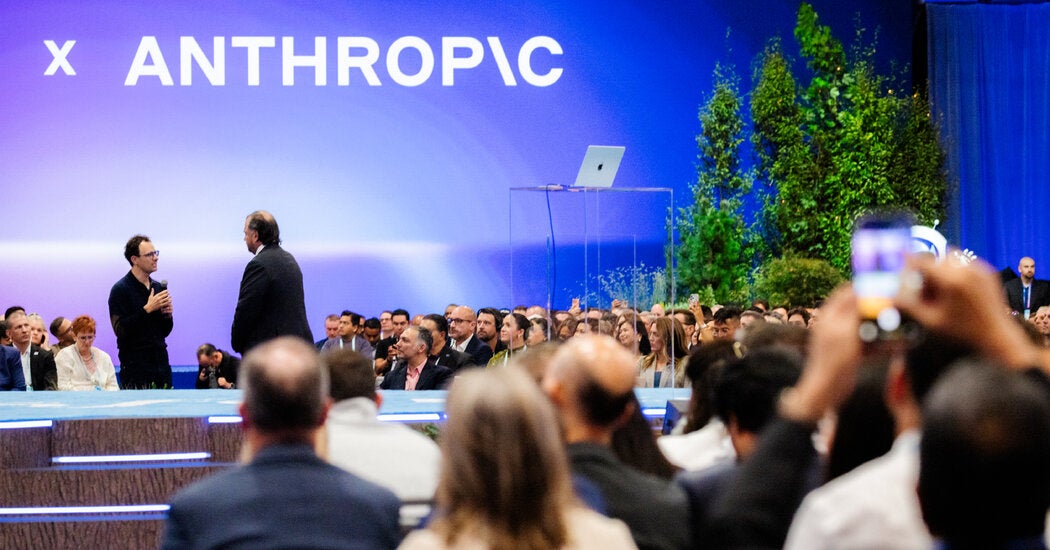

When Anthropic begins to list its shares for public trading on Thursday, the first-of-its-kind offering will double as a watershed moment for a fast-budding technology that may someday revolutionize American life.
But it will also spotlight the ways in which artificial intelligence has outpaced the federal government’s ability to prepare — and the vast economic consequences that could soon follow because Washington acted too late.
Despite an increasingly anxious public, the Trump administration and its departing Republican majority in Congress have done little over the past two years to address or mitigate the potential hazards of A.I., including mass job losses. They have opted to cheerlead the arrival of new technology while largely ignoring its risks, an approach that has encouraged economic growth while leaving workers and businesses at the mercy of an unpredictable transformation.
It is a tension that Anthropic itself has acknowledged as it looks to woo investors in what could be the largest, most anticipated public offering in history. The company’s official prospectus portrays A.I. as cataclysmic for “every area of human endeavor,” from medical research to military warfare, and describes its own inventions as rife with “catastrophic or existential” danger to life itself.
While policymakers in Washington have prepared a series of bills that aim to confront those threats, many remain stuck in Congress. That includes proposals that would help address the economic consequences of A.I. by aiding displaced workers and bolstering the federal safety net.
Members of Congress have similarly been unable to enact measures intended to contain A.I. security threats or deal with its implications for health care, education, the energy grid or the tax code. Frequently, the Trump administration has portrayed some of the proposed limitations on A.I. as unnecessary, while shrugging off concerns that the industry itself could fall victim to a financially costly bubble.