James Gray’s Paper Tiger is Brilliantly Murky
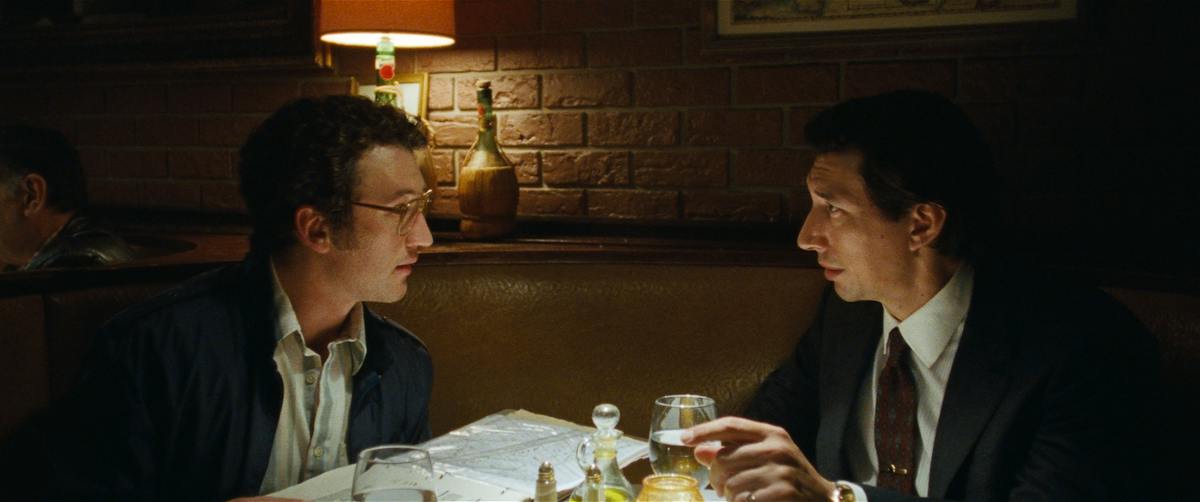

James Gray’s 2007 underworld drama We Own the Night closes on a whispered affirmation of solidarity between siblings. The brothers, who have survived a series of clashes with the Russian mob, pledge their devotion to each other, in a moment of profound connection and of desolation. At the end of a story defined by loss, they have each other’s backs and nothing else.
The enveloping bonds of brotherly love—and how swiftly they can tighten, in spite of themselves, into a straitjacket, or a noose—are the subject of Gray’s new thriller, Paper Tiger. The picture, which premiered earlier this year at the Cannes Film Festival, is suffused with an emotional heat that can’t quite thaw its icy bleakness. The balance of palpable warmth and scarifying chill makes it Gray’s most effective and affecting feature since We Own the Night, which it resembles both as a gritty period piece set in 1980s Queens and as an anxious, ambivalent meditation on masculinity. “Let there be wealth without tears,” reads an opening epigram, attributed to Aeschylus. The near impossibility of pursuing the former without the latter provides the catalyst for a carefully measured domestic tragedy.
“Everybody up here was born with a silver spoon in their mouth, or stole one. That’s not us,” notes a character early on in Paper Tiger, referring slyly to the pretensions of the Long Island suburbs. The line is delivered with just a hint of foreboding, in the midst of a family confab around a pool. It’s Labor Day weekend, and the assembled gaggle is enjoying one final summer idyll, before grown-ups and children alike have to get back to the grind—or, in the case of Irwin Pearl (Miles Teller), look for a way to leave it behind forever.
As Paper Tiger opens, Irwin is without tears, though he has plenty of troubles. The rapidly dilapidating suburban home he shares with his wife, Hester (Scarlett Johansson), and their sons, Scott (Gavin Goudey) and Ben (Roman Engel), is in need of repairs. The family car and other assets are depreciating. College applications for Scott are due. And a sense of diminished and receding horizons is closing in on Irwin himself. Irwin is an engineer, which means he’s good at measuring things; that’s why he’s pondering his prospects while he’s still on the right side of middle age and painstakingly installing storm windows in the late-summer heat. His inch-by-inch empiricism contrasts with the maximalist, magic-realist manner of his older brother, Gary (Adam Driver), who appears to be flush with cash and shows up for Friday night dinner with dinner (a full-course spread from Peter Luger, delivered by truck in warming trays). Gary plays piano and does card tricks; he takes Hester in his arms at the door and dips her, suavely and sweetly, a matinee idol-in-law. Irwin carries a tape measure; his brother packs a pistol in an ankle holster, which he flashes to his nephews under the piano for a vicarious thrill; the implication is that this ex-cop is also a guardian angel.
The contrast here between the flamboyant, jumbo-size playboy and the mild-mannered mensch is obvious: Cain and Abel; goofus and gallant; the grasshopper and the ant. Gray doesn’t deal in cliché, however. Instead, he shows us, through the observation of small behavioral details, how both men have slipped into their respective personas, and conveys why they might now be trying to shed those skins. That Irwin quietly idolizes his brother makes sense: He’s been looking up to Gary (who’s long and lanky enough to start at forward for the Knicks) for his whole life. There’s no resentment or skepticism, just respect—a powerful lure against the common sense he swears by in all other facets of his life. Gary, meanwhile, values Irwin’s intelligence and stability, and also his desire to do right by his wife and kids, which becomes a prompt, however indirect, for self-loathing as Gary continues to pay through the nose for an ugly divorce.