Homer certifies election, reelects two council incumbents
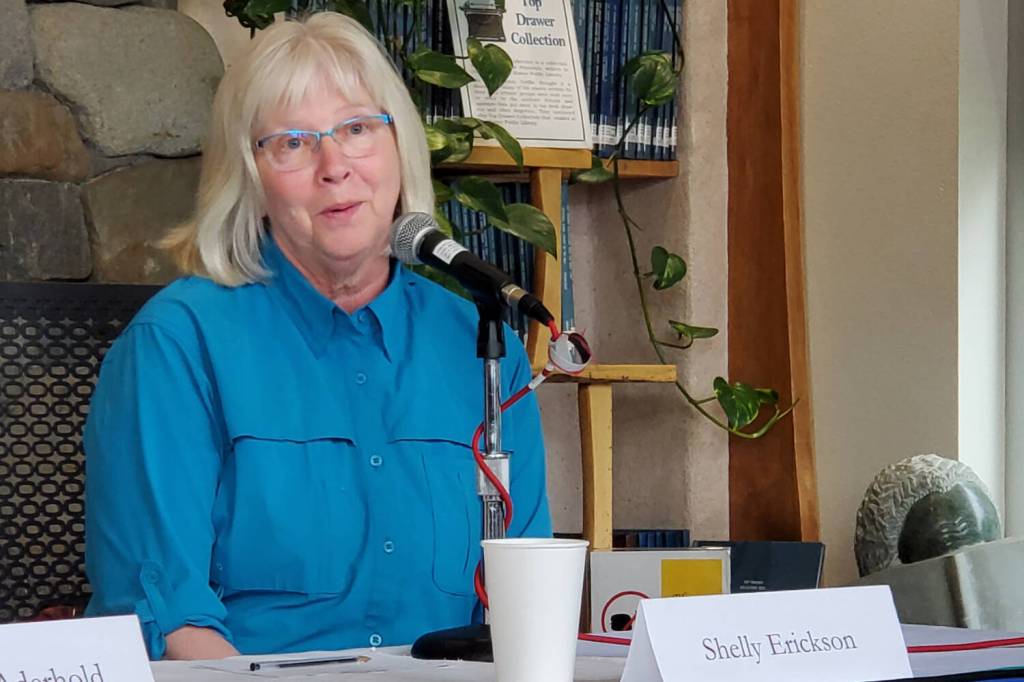

Homer voters returned two incumbents to City Council and approved another 20 years of road and trail funding after more than 1,000 absentee ballots were reviewed following the city’s Nov. 3 municipal election.
The Homer City Council certified the results Monday, Nov. 9, confirming Caroline Venuti and Bradley Parsons as the winners of two three-year seats. Council member Shelly Erickson, who ran unopposed for mayor, succeeded outgoing Mayor Rachel Lord.
The Homer Election Canvass Board convened Friday, Nov. 6, to review absentee, special-needs and questioned ballots before preparing the final election results. The review followed an election-night count that put Parsons just 75 votes ahead of challenger Matthew Bullard for the second council seat, with roughly half of the ballots still awaiting inclusion in the results.
According to the canvass board’s 30-page agenda packet, 1,086 residents voted at the city’s two Election Day precincts, while election officials received 1,058 absentee ballots. Another 26 special-needs ballots and 14 questioned ballots were identified for review. Before the canvass, city staff estimated that 1,026 absentee ballots, 19 special-needs ballots and four questioned ballots — 1,049 in total — would qualify for counting, subject to the board’s review.
Council incumbents win reelection
With two three-year terms available, incumbent council member Caroline Venuti led the three-candidate field with 508 votes in the initial returns, followed by fellow incumbent Bradley Parsons with 457 and challenger Matthew Bullard with 382. Those election-night figures did not include the ballots reviewed during the canvass.
Venuti, who has served on the council for six years, sought another term after a career in education and school administration. Parsons was seeking to continue his service after winning a one-year term in 2025, while Bullard was challenging the two incumbents.
In the mayoral contest, council member Shelly Erickson ran unopposed to succeed outgoing Mayor Rachel Lord. She received 862 votes in the initial tally.
Erickson’s move to the mayor’s office left another City Council seat to fill. In her final mayoral newsletter, published Nov. 9, Lord said the council would appoint a replacement following an application and interview process.
Road and trails funding
Alongside the council contests, Proposition A asked voters to extend the three-quarter-percent sales tax supporting the Homer Accelerated Roads and Trails program, known as HART, for up to 20 additional years. The tax generates approximately $2.3 million annually.
Voters approved the extension after election-night returns showed substantial support, with 754 votes in favor and 255 opposed. The measure had received nearly 75% approval before the remaining ballots were counted.
First established in 1987, the program helps pay for reconstruction of deteriorating streets, improvements to existing roads and construction of new roads and trails. The existing tax authorization had been scheduled to expire Dec. 31, 2027, but the approved extension continues that funding through the end of 2047.
Homer officials made a concerted effort to explain the program ahead of the election, approving $8,000 in June for public information about the proposal, followed by an additional $6,000 in September.
In her Nov. 9 newsletter, Lord thanked residents for supporting the extension.
Reviewing the ballots
During the Nov. 6 canvass, board members reviewed election records to verify that ballots met the city’s eligibility requirements. Their work included examining the chain of custody between the borough, city and precincts, along with reports from election workers and vote-counting equipment. Members were then responsible for determining which absentee, special-needs and questioned ballots qualified for inclusion in the final count.
The board included Julie Nolan, Susie Myhill, Beth Wythe and Kate Finn, with City Clerk Amy Woodruff and deputy clerks assisting.
Last year’s election demonstrated the importance of ballot reviews. In October 2025, city staff discovered 222 properly received absentee ballots that had not been included in the original canvass. Subsequently, the board reconvened to count them before certification, and city officials reported that the additional votes did not change any election outcomes.
Preliminary figures indicated that approximately 39% of Homer’s registered voters participated, compared with about 25% in the 2025 municipal election. This year’s election was the city’s first held in November alongside borough and state contests, following changes to the municipal election calendar.