architecture that invites nature as a designer, from dissolving walls to insect-built pavilions

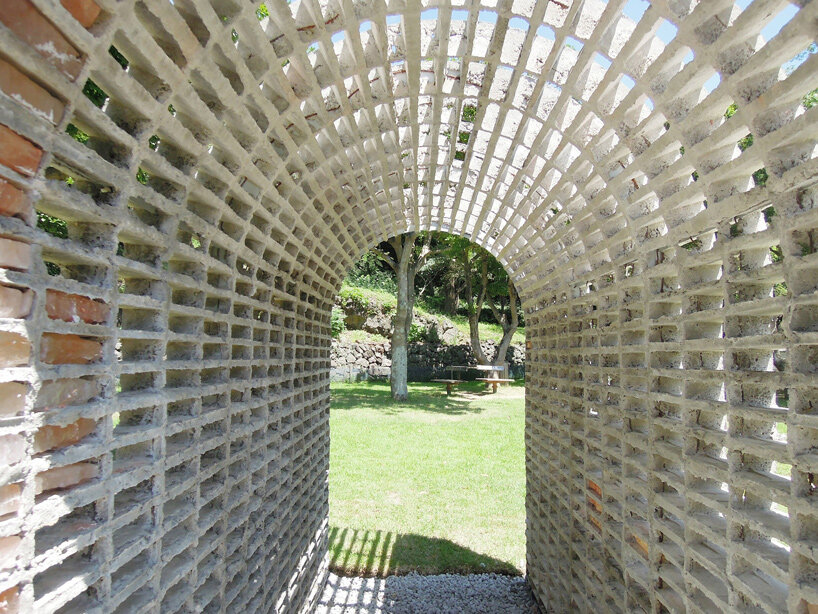
On South Korea’s Jeju Island, architecture studio stpmj built a small arch from rose-colored salt bricks, knowing that the island’s summer rainfall would eventually dissolve it. Over several months, the solid masonry gradually disappeared, leaving a delicate framework of mortar in its place. The weather had effectively been given permission to redesign the building.
Architecture typically seeks to control the natural forces around it, keeping water outside and protecting materials against decay. Yet a number of experimental structures propose a different relationship, allowing these conditions to become active participants in the design process.
From pavilions shaped by desert winds to structures constructed by insects, these seven projects explore what happens when architects give the environment a say in how their buildings take shape.
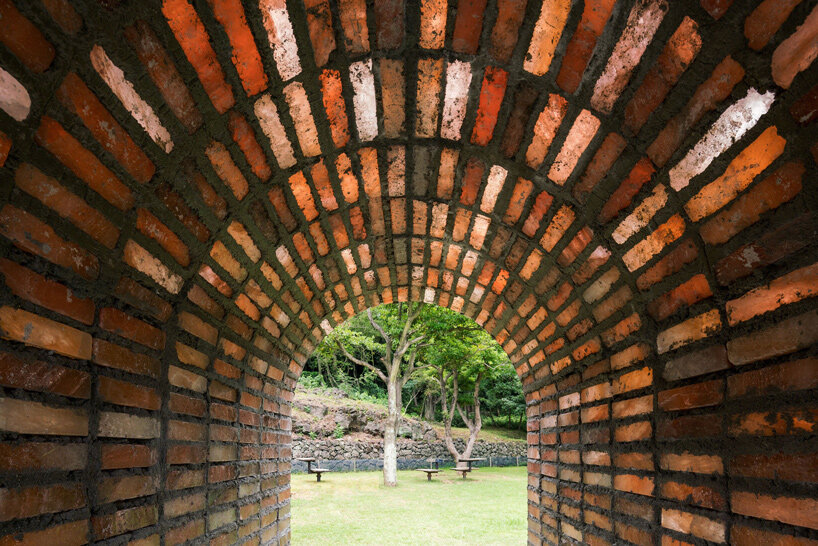
The walls of Dissolving Arch were always intended to disappear. Installed at the Osulloc Tea Museum on Jeju Island, the compact vault was built from translucent rock-salt bricks joined by cement mortar. Its pink masonry initially enclosed a narrow passageway, filtering daylight through the material before the island’s rainy season began to change its appearance.
The architects at stpmj deliberately chose materials with different reactions to water. While the salt bricks dissolved under repeated rainfall and humidity, the mortar remained, gradually revealing an open lattice where solid walls once stood. Over the exhibition period, the arch became more porous, admitting light and views of the surrounding landscape. Its final appearance emerged through the island’s weather, with rain completing a process that the architects had set in motion.
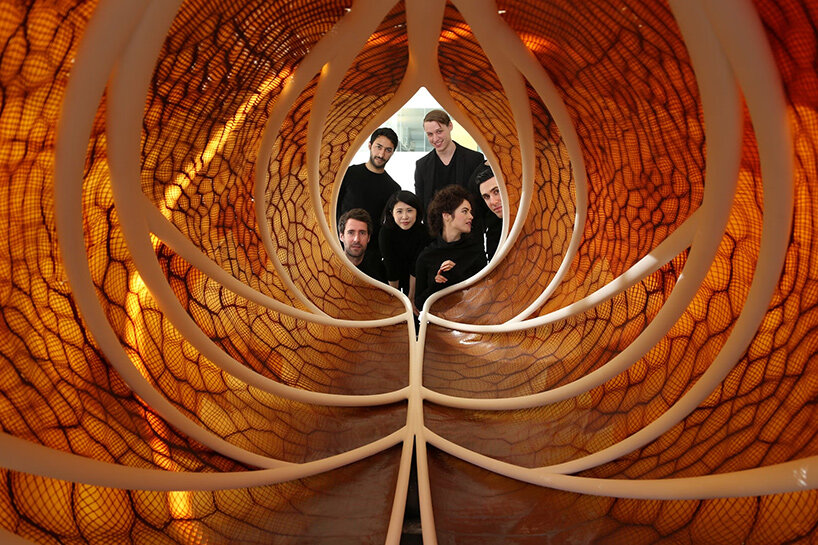
Amber-colored and almost glasslike, Neri Oxman‘s Aguahoja I rises five meters in a series of translucent surfaces that vary in thickness and flexibility. Developed by the designer together with the Mediated Matter Group at MIT, the pavilion was robotically fabricated from biopolymers derived from organic sources, including cellulose and chitosan. Its material composition allows it to respond to environmental exposure in ways conventional building materials are generally designed to resist.
Over time, the biopolymers can break down when exposed to water, allowing the structure to gradually return to the environment. When the original pavilion was later installed on an outdoor terrace at SFMOMA, researchers used instruments to monitor its exposure to the elements and study its decomposition. The project considers the eventual disappearance of architecture as part of its design, with the material’s lifespan considered from the beginning.
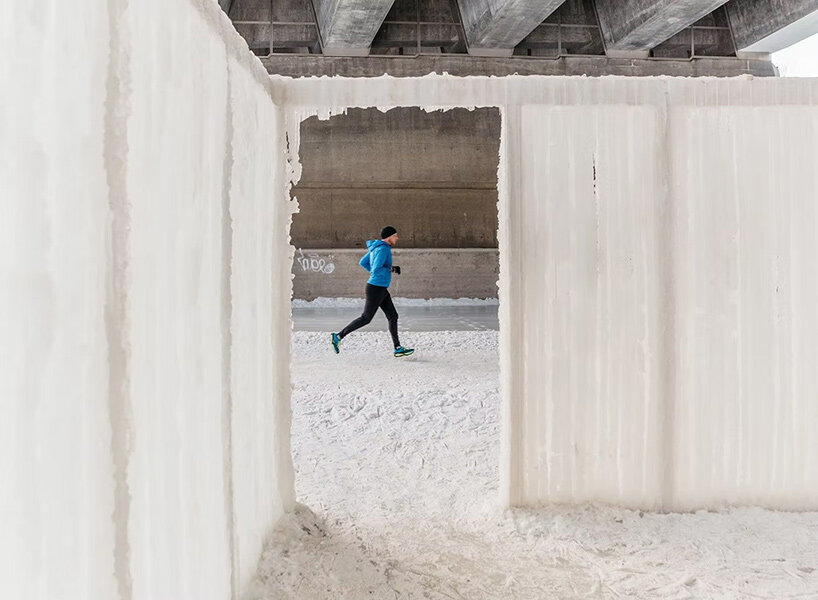
Winter temperatures became the principal building tool for Curtain, a temporary shelter installed on Winnipeg’s frozen Assiniboine River. Designed by Alejandro Felix and Fang Cui, the pavilion began with a simple timber framework wrapped in ropes. Water pumped from beneath the river ice was directed through a dripping system, allowing icicles to form along the suspended strands.
As the water continued freezing, ice accumulated into thick, irregular walls, gradually turning the open framework into an enclosed shelter. The process worked in reverse as temperatures rose. The icy surfaces thinned and became increasingly translucent before openings appeared and the timber structure emerged again.
Throughout the winter, the pavilion changed with the weather, its enclosure growing and disappearing according to the temperature outside.

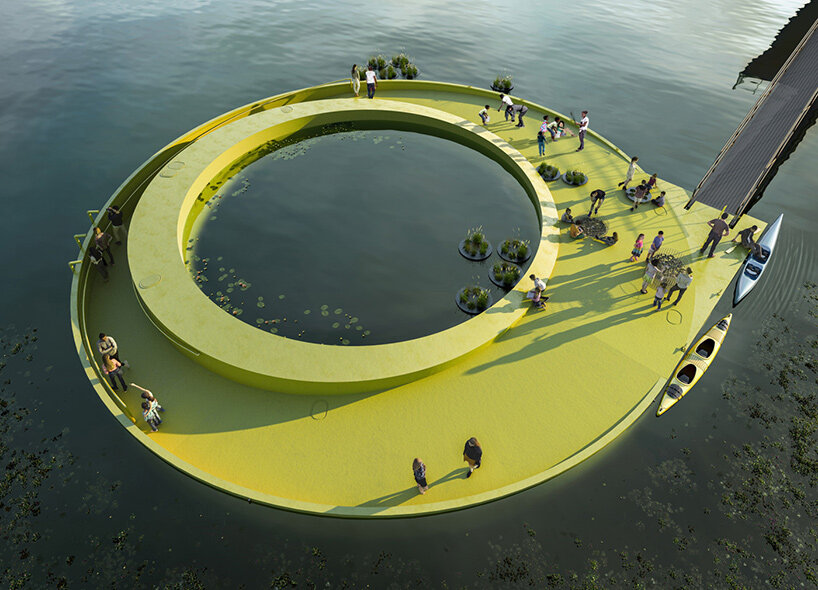
A bright-yellow steel ring now occupies the tidal Schuylkill River near Bartram’s Garden in Philadelphia. Known as FloatLab, the 75-foot-wide structure was developed by J. Meejin Yoon and Höweler + Yoon Architecture to rise and fall with changing water levels through a buoyancy and ballast system.
The river’s daily tidal cycle, which can produce fluctuations of approximately five to seven feet, determines the structure’s elevation. Its sloping circular walkway is designed to bring visitors toward the water’s surface while keeping them within the structure. FloatLab has arrived at its Philadelphia site, with public access planned for spring 2027.
Here, the architecture enters into a continuous relationship with a moving body of water, allowing the tides to govern its position throughout the day.