Why The NBA’s New Draft Lottery Could Cripple The Trade Deadline

The NBA’s February trade deadline has become an annual holiday for basketball fans. It’s the last chance for teams to make blockbuster additions that can upend the championship picture.
However, the trade deadline may be a casualty of the NBA’s new draft lottery.
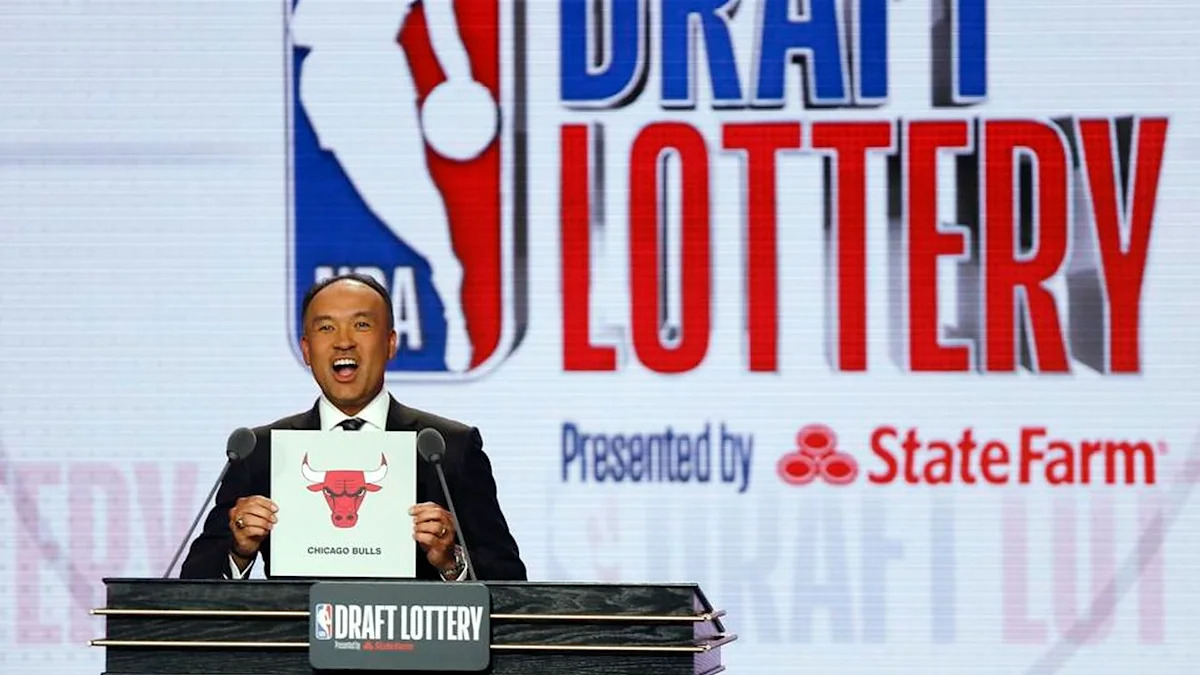
In an effort to deter teams from tanking, the league completely overhauled its lottery system this past May. Previously, the teams with the three worst records all had a 14.0% chance of landing the No. 1 overall pick, and no team could fall more than four spots from where they finished in the standings. That’s no longer the case.
Under the new lottery, the teams with three worst records have worse odds than the other seven teams that miss the play-in tournament. Those teams can now fall as low as the 12th overall pick, while the other 13 teams in the lottery—which includes the losers of the No. 7 vs. No. 8 play-in game—can drop as far as 16th.
That’s not all. Teams are now prohibited from landing the No. 1 overall pick in back-to-back drafts via the lottery. They also can’t receive top-five picks in three straight years.
While the new lottery might not completely dissuade teams from tanking, it should at least prevent the egregious shenanigans that have been on full display late in the past few seasons. However, the decreased odds for the teams in the so-called “relegation zone” could also deter teams from embarking upon trade-deadline teardowns, even if that would otherwise be in their best long-term interests.
“There will be less sellers than ever before,” one Eastern Conference team strategist told Jake Fischer of The Stein Line in mid-November.
That doesn’t mean this year’s trade deadline will be a complete bust. In fact, a few teams are uniquely equipped to ignore the new lottery system and tear down with impunity. But teams that do control their own 2027 first-round pick will have to think twice before taking a stick of dynamite to their roster at this year’s trade deadline.
If the previous lottery system were still in place, the Sacramento Kings might be the NBA’s most obvious seller at this year’s trade deadline.
At 2-16, the Kings are already 7.5 games behind the 10th-seeded Oklahoma City Thunder for the final spot in the West’s play-in tournament. They also have the NBA’s worst net rating, which suggests their record isn’t simply a byproduct of bad early-season luck.
The Kings have been open for business on Zach LaVine and Domantas Sabonis for the better part of a year (if not longer), although they’ve yet to find a taker for either one. LaVine is on a $49 million expiring contract, while Sabonis is earning $45.4 million this year and $48.6 million next year.
Even if the Kings could get only a second-round pick or two for LaVine, that’d be better than losing him for nothing in free agency, provided they don’t have to absorb a bloated contract in return. They aren’t likely to get significant value for Sabonis either, but again, every little bit helps when trying to turn around the Titanic.
The Chicago Bulls have begun to show signs of life recently after a dismal 1-9 start to the season, but they’d be another potential seller if not for the new lottery. Norman Powell, whom they signed to a two-year, $44.1 million contract with a second-year team option this past offseason, should have a fair bit of interest around the league. He made his first All-Star Game last year and is averaging 20.8 points per game this season.
The same goes for big man Jalen Smith, who’s on a $9.4 million expiring contract. Given the number of teams around the league hunting for frontcourt reinforcements, the Bulls should be able to get at least a few second-round picks for Smith, if not more. But will they be willing to cut bait on him if it increases their chances of landing in the relegation zone?
In a normal year, maybe not. But some around the league whether the 2027 draft class is so lackluster that teams will want to be in the relegation zone to decrease their probability of landing either the No. 1 overall pick or a top-five pick, according to Zach Lowe of The Ringer. That would help them avoid being prohibited from landing those picks in future years.
One of the issues with implementing the new lottery right away is that multiple teams had already traded away the rights to their 2027 draft picks. Those teams won’t have the same tanking deterrent as the rest of the lottery teams since the results of the lottery won’t impact them either way.
The Houston Rockets have the right to swap first-round picks with the Brooklyn Nets, while the Thunder can swap first-rounders with the Los Angeles Clippers. Meanwhile, the New Orleans Pelicans will receive the more favorable of their own pick and the Milwaukee Bucks’ first-rounder, while the Atlanta Hawks will receive the less favorable of the two unless both fall in the top four. Based on the current odds, New Orleans has roughly a 1-in-3 chance to land a top-four pick, while Milwaukee is at 23.6%.
The Utah Jazz also owe their unprotected first-round pick to the Memphis Grizzlies as part of the Jaren Jackson Jr. trade, although the new lottery rules crippled the upside of that pick. The Jazz already won the No. 5 pick in 2025 (Ace Bailey) and the No. 2 pick in 2026 (Darryn Peterson), so the highest pick they can convey to the Grizzlies is No. 6. Either way, the lack of control over that pick should leave Utah detached from the lottery proceedings.
The Jazz entered the season with the intention to at least vie for a play-in spot, but injuries have upended them in the early going. However, Fischer reported Tuesday that the Jazz “have been actively canvassing the market in search of trade additions” to help them get back into that mix. They might consider trading away ancillary pieces such as Mo Bamba, but it doesn’t seem like they’re entertaining a fire sale.
The same can’t be said about the Clippers and Nets. According to Marc Stein of The Stein Line, the Clippers are starting veterans ahead of their younger players “in anticipation of trade interest in some of those players” between now and the deadline. Max Strus ($16.6 million), Derrick Jones Jr. ($10.5 million) and Brook Lopez ($9.2 million) are all on expiring contracts, while Rui Hachimura has a $14.0 million team option for the 2027-28 campaign, which means he’s also effectively an expiring deal.
The Nets also have a big expiring contract in Michael Porter Jr. ($40.8 million), while Julius Randle has a $35.8 million player option for the 2027-28 campaign that he should only turn down if he’s presented with a nine-figure offer in free agency. They have a $10 million team option on Day’Ron Sharpe and mutual options on Moe Wagner ($9.45 million) and Keon Ellis ($9.0 million). And as a front office executive pointed out to Fischer, the new lottery also prohibits teams from landing the No. 1 overall pick in back-to-back years, so the Nets ironically have more incentive to finish in the relegation zone since they don’t have their pick this year and do have it next year.
The good news for the sellers is that the laws of supply and demand are irrefutable. If there are fewer sellers and the usual number of buyers in the market, said sellers might be able to spark more bidding wars. The bad news for the buyers is that more teams might be left out of the trade-deadline game of musical chairs thanks to the new lottery.
Unless otherwise noted, all stats via NBA.com, PBPStats, Cleaning the Glass or Basketball Reference. All salary information via Spotrac and salary-cap information via RealGM. All odds via FanDuel Sportsbook.
Follow Bryan on Bluesky.
This article was originally published on Forbes.com