Why Small Business Saturday Matters For Black Entrepreneurs
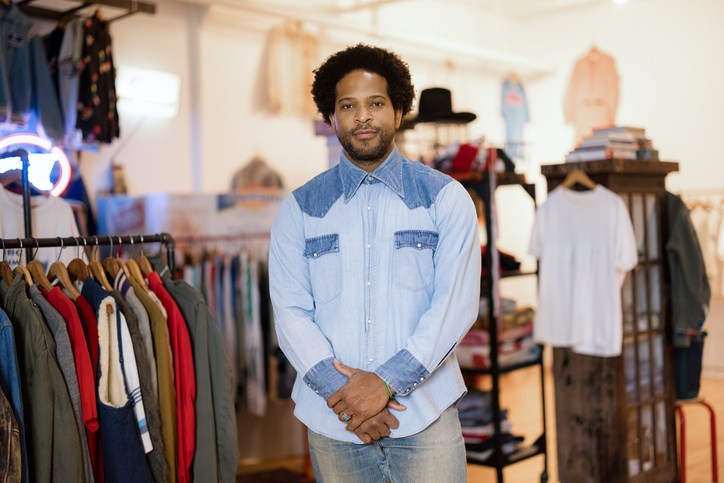

As we celebrate Small Business Saturday today, Black-owned businesses have emerged as an essential economic lifeline for many Black workers disproportionately pushed out of corporate America by layoffs and diversity rollbacks.
Small businesses depend heavily on fourth-quarter holiday sales, which generate around 20 percent of annual revenue for small businesses on average every year. And a whopping 88 percent of consumers have indicated they plan to spend their money buying from small businesses at some point this holiday season, the highest level in more than fifteen years.
Consumers spent an estimated $18 billion on Small Business Saturday last year, and Intuit QuickBooks projects shoppers will hand small businesses a record $118 billion across the holiday season.
Capturing even a fraction of that spending is critical for Black entrepreneurs, especially as Black consumer buying power is projected to reach $2.1 trillion in 2026, while recent National Urban League research shows nearly half of Black shoppers are actively pulling dollars away from corporations that retreated from diversity commitments. The report found that 45 percent of Black consumers are committed to reducing their spending with or seeking alternative brands if a company rolled back or eliminated its commitment to diversity, equity, and inclusion.
An estimated 4.6 million Black-owned businesses operate across the United States, including just over 201,000 employer firms that grew by 62 percent between 2017 and 2023. Many of these enterprises are still in their earliest stages of growth.
According to a Third Way analysis of Federal Reserve Small Business Credit Survey data, 48 percent of Black-owned businesses are less than two years old, and two in three have been operating for less than five years, compared with just 19 percent of white-owned firms under the two-year mark.
Black women are driving much of that entrepreneurial surge, accounting for 39 percent of all Black-owned employer businesses compared to the 22.3 percent share of women-owned firms nationally. Between 2017 and 2023, the number of Black women employers grew by 78 percent. Many launched companies after being pushed out of the labor market, where Black women have lost private-sector professional and service roles at three times the rate of all women.
According to a 2024 study, when Black business owners are asked why owning a business matters, most cite higher incomes, wanting to be their own bosses, and better work-life balance.
Despite launching businesses at record rates, Black founders face steep economic headwinds that threaten long-term survival. J.P. Morgan research from 2021 shows that only 3 percent of Black women-owned firms mature past five years, and their companies generate an average of $24,000 in annual revenue compared to $142,900 across all women-owned businesses. Limited access to capital is a major hurdle for Black-owned businesses. According to Third Way’s analysis of Federal Reserve small business data, only 32 percent of Black-owned employer businesses that apply for financing received full approval, while 41 percent are completely denied loans, lines of credit, or cash advances.
By comparison, 56 percent of white-owned small businesses receive full financing approval, and only 18 percent are denied. Locked out of traditional bank credit, 61% of Black women founders rely on personal savings to fund operations, leaving little financial cushion when inflation rises or consumer spending tightens. The irony is that although Black-owned businesses are six times more likely to be labeled a higher credit risk than their white peers, only 30 percent of Black businesses are considered low credit risk, compared to a whopping 75 percent of white businesses.
That capital squeeze has grown even tighter as corporate and federal lifelines launched after 2020 to support Black entrepreneurs have slowly disappeared. Following the racial justice protests in 2020, major corporations rolled out high-profile grant programs, venture funds, and supplier diversity pledges aimed at closing the funding gap for them.
Federal policy shifts under the Trump administration have compounded that retreat by dismantling programs designed to help underserved entrepreneurs compete. In 2025, the Small Business Administration cut its federal contracting goal for disadvantaged businesses from 15 percent to 5 percent and stripped race from a program intended to help develop businesses. It also suspended over 1,000 firms that participated in that program. It has proposed redefining small business standards to allow billion-dollar businesses to call themselves small businesses, a move lawmakers warn would let 114,000 larger companies compete for what used to be set-aside contracts for smaller firms.
The administration has also moved to dismantle the Minority Business Development Agency, canceling $10 million in grant funding and cutting staff across its regional business centers. Those cuts weakened a federal network that helped minority-owned business firms secure $1.6 billion in financing.
Over the past two years, conservative legal challenges, including the lawsuit that forced the Fearless Fund to shutter its grant program for Black women, and the gutting of the federal Minority Business Development Agency prompted companies like Google, Amazon, and FedEx to retire or water down dedicated funding programs.
Economic uncertainty and elevated interest rates have prompted traditional banks and online lenders to tighten credit standards and pull back from lending to smaller firms deemed higher risk.
With corporate grants drying up and traditional banks shutting the door on Black business owners, Black small business owners have increasingly turned to Community Development Financial Institutions and mission-driven lenders to get much-needed financing to stay afloat.
One example of capital support is Lendistry, a Black-owned company founded and led by CEO Everett K. Sands that pairs small business loans with credit-readiness advising through its nonprofit arm, The Center by Lendistry. To keep capital flowing responsibly in a tight economy without setting borrowers up for unsustainable debt, Lendistry generally requires applicants to have been in business for at least two years, hold a minimum credit score of 620, and prove consistent revenue before taking on a loan.
Heading into the final stretch of the year, many small business owners need quick working capital to stock inventory, cover seasonal payroll, and absorb higher supply costs before holiday shoppers arrive. Everyday consumer spending remains the fastest and cleanest form of capital for Black founders because revenue from sales comes without interest rates or underwriting hurdles.
For shoppers looking to back Black-owned firms this holiday season, how and where money moves matters. National directories such as Official Black Wall Street, Buy From A Black Woman, and WeBuyBlack make it easier to find vetted local shops and online brands. Buying directly from a business’ own website allows owners to keep more of every dollar by avoiding third-party platform fees that often take 15 percent or more of each sale. Buying gift cards and booking paid services for early next year also gives Black entrepreneurs steady cash flow to count on after the holiday spending surge ends.
As you start making your holiday shopping list, it’s important to remember that every dollar spent with a Black-owned firm helps keep $1.6 million jobs intact and builds equity that stays in Black communities. Research from Kindred Futures shows that neighborhoods with more Black-owned businesses see measurable gains in overall community well-being, including stronger youth and adult health, better educational outcomes, and safer streets.
As banks tighten credit and the Trump administration continues to cut support, spending our money with Black-owned businesses today will give these entrepreneurs the cash flow they need to stay afloat and grow into the new year.
SEE ALSO:
Black Women’s Job Security Can’t Depend on Political Winds
Are Companies Like Affirm And Klarna The New Layaway?