The U.N. Climate Talks Were a Disaster. But There’s a Silver Lining.
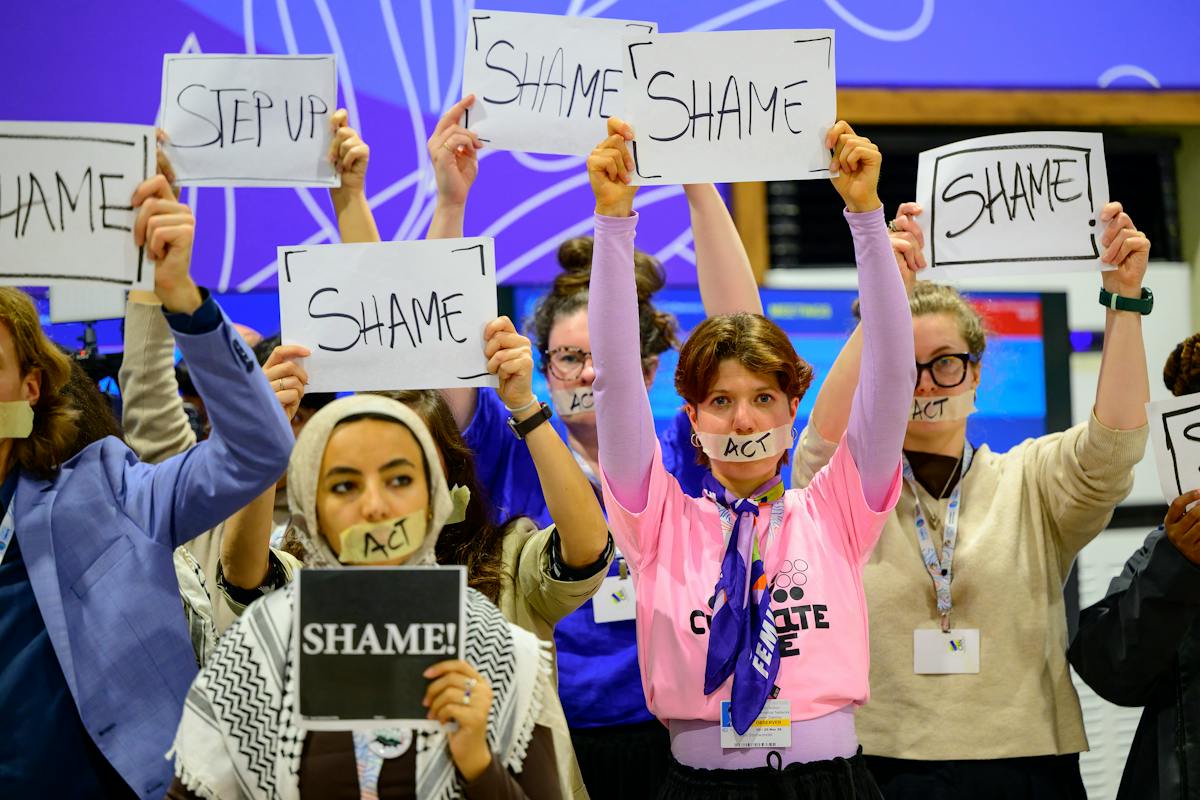

Undaunted, many of those countries met in April 2026 in Santa Marta, Colombia, to begin developing a roadmap themselves. Collectively, the countries that met in Santa Marta—a group that included Germany, the world’s third-largest economy; France, the sixth-largest; the United Kingdom, the seventh-largest; Brazil, the tenth-largest; and the Netherlands, the eighteenth-largest—amount to the biggest economic superpower on earth. Combine their GNPs and the total is larger than that of the U.S. Include California—whose governor, Gavin Newsom, said at COP31 that he backed the Santa Marta effort “100 percent”—and the coalition’s GNP is nearly as large as that of the U.S. and China put together.
If these countries can implement credible plans for transitioning away from fossil fuels to solar, wind, batteries, and other forms of clean energy, it would put governments and financial markets on notice that staying invested in fossil fuels will be a risky proposition that could leave them with trillions of dollars of stranded assets. This scenario became more plausible at COP31, as the coalition expanded to include not only California, the world’s fourth-largest economy, but also Spain, Ireland, Belgium, Finland, Denmark, Norway, Luxembourg, and Pacific island nations.
Petrostates’ obstructionism at COP31 also led to renewed calls to reform the decision-making process at future COPs. “COPs are designed to fail,” Juan Carlos Navarro, the minister of the environment for Panama, said in an interview with Covering Climate Now. Minutes earlier, Navarro had delivered the summit’s most piercing sound bite, telling a press conference that “we are being held hostage by the petroleum mafia.” In the interview, he explained that consensus decision-making means that “all it takes is one idiot to torpedo the entire process. If we don’t change direction, by the time we have COP61, the world will be five degrees [Celsius, or 9 degrees Fahrenheit] warmer.”