Democrats Plan To Take On Corruption, Voting Rights In New Congress
Democrats are planning to move quickly to pass legislation to address corruption in Washington, voting rights and gerrymandering — three issues that fueled the blue tsunami that handed the party its largest congressional majorities in decades.
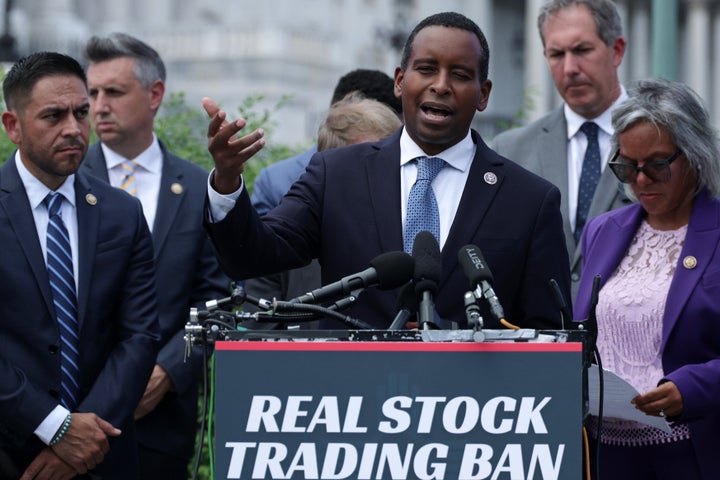
Congressional Democrats intend to likely act first on a ban on stock trading, which has strong backing from the incoming freshman class and some bipartisan support. After that, Democrats plan to introduce and advance legislation to strengthen voting rights, end partisan gerrymandering, fund election administrators, crack down on prediction market betting, ban the pay-for-pardon business, and enact campaign finance reform.
Advertisement
“We have to use this moment to make sure that we guard, for generations to come, the work that we’re going to have to do,” Rep. Joe Morelle (D-N.Y.), who will oversee much of this legislation as the incoming chairman of the House Administration Committee, said at an event hosted by Democracy Defenders Action earlier this month.
This effort, which is still in the works, will build on the omnibus ethics, voting rights and campaign finance reform legislation that Democrats passed out of the House in 2021. That legislation, the For the People Act, was eventually turned into the Freedom To Vote Act in the Senate but failed to clear Republican filibusters before then-Sens. Joe Manchin and Kyrsten Sinema refused to join the other 48 Democrats in voting to end the filibuster to pass it.
Alex Wong via Getty Images
Advertisement
While President Donald Trump still occupies the White House and universally opposes an anti-corruption, pro-voting and campaign finance reform agenda, Democrats and reform advocates believe there are some issues — notably the stock trading ban, bans on prediction market betting and possibly reining in executive power — where the parties could reach a bipartisan agreement.
But more importantly, the election gave the party a clear mandate. Corruption was frequently listed as a top-two concern for voters in polls ahead of the election, while Black voter turnout soared across the South in response to the Supreme Court’s gutting of the Voting Rights Act in Louisiana v. Callais and subsequent efforts by Republicans to eliminate Black-majority congressional districts.
“It’s a reform moment,” said Wendy Weiser, vice president at the Brennan Center for Justice, a nonprofit at the center of these reform discussions. “These are really urgent problems that are now at the center of everything, and they’re going to be at the center of what Congress is looking at.”
Advertisement
The main area where Democrats and Republicans can act immediately is banning members of Congress from trading stocks.
“The biggest item in the short term is going to be a stock trading ban,” said Adam Bozzi, a Democratic communications strategist who works with reform advocates. “This was one of the biggest talking points on the campaign trail with a lot of agreement that it has to stop.”
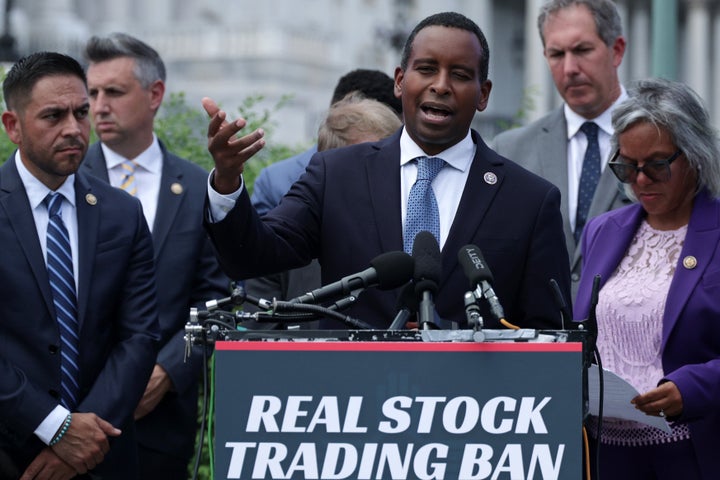
Fifty-one House Democratic freshmen sent a letter on Nov. 12 to Democratic leadership calling for a rule in January banning House members from owning and trading stocks. Dozens of current and incoming House members held a press conference at the Capitol last week to call for both legislation and rules banning stock ownership.
Advertisement
“We don’t have to do comprehensive legislation on day one,” Rep. Jason Crow (D-Colo.) said at the press conference. “We’re going to work on it. We’re going to try to do it. But there are many things that members of Congress can just do today that show that they mean it.”
A stock ban should move “as not only legislation, but as a rule, so that we get it done as quickly as possible,” incoming Rep. Sam Forstag (D-Mont.) said at the press conference.
But that is the low-hanging fruit. Democrats will introduce and move to pass legislation tackling the entire gamut of ethics, voting rights, gerrymandering and campaign finance reform issues.
Advertisement

Daniel Heuer/Bloomberg via Getty Images
These will include bills that Democrats have sought to enact for some time, including Alabama Rep. Terri Sewell’s John R. Lewis Voting Rights Advancement Act, legislation to set a national standard banning partisan gerrymandering, the voting rights expansions in the Freedom to Vote Act and campaign finance reform legislation proposed by former Maryland Rep. John Sarbanes in previous years.
“Those are foundations, but we’re going to build on them,” Morelle said.
While the legislative agenda in this area has not been fully decided, new areas to address that have emerged since 2021 include a legislative response to the Callais decision, bans on members betting on prediction markets and the pay-for-pardon lobbying business that has sprung up during Trump’s second term. This reform push will also look to rein in Trump’s abuses of executive power and reform the Supreme Court.
Advertisement
There will also be longer-term efforts to pass constitutional amendments to overturn both Citizens United, which fueled the record-breaking campaign spending in the midterms, and the Trump v. U.S. decision that granted presidents partial immunity from criminal prosecution.
Some elements of the reform effort will be ready to go early next Congress, but others will flow from oversight hearings into corruption scandals, executive power abuses and the Supreme Court.
While the last reform push from Democrats in 2021 wound up in a single omnibus bill, it isn’t yet clear how legislation will move next year.
Advertisement
“I don’t care how it’s packaged, whether it’s in individual bills or if it’s mini packages,” Weiser said. “It’s just important that the job gets done.”
“I’m not so concerned if things move in smaller bills along the way, but it’s likely I’d say that it becomes something we try to pass in one breath,” said Lisa Gilbert, co-president of Public Citizen, a nonprofit that advocates for ethics and campaign finance reforms.
Whether such legislation reaches Trump’s desk remains to be seen. Some Republicans may back certain anti-corruption reforms, like a stock trading ban, but the party is almost universally opposed to campaign finance reform, expanding voting rights and reining in the executive branch.
Advertisement
Progressive advocacy groups are calling for the Senate to abolish the filibuster sooner rather than later to help highlight the party’s priorities and let Trump either sign them, which is highly unlikely, or veto them. If legislation remains bogged down in the Senate by the filibuster over the next two years, then it will stand ready if and when Democrats win back the White House and hold on to Congress in 2028. That is when the fruits of this new reform push will most likely ripen.