This Is Not the Way to Abolish the Electoral College
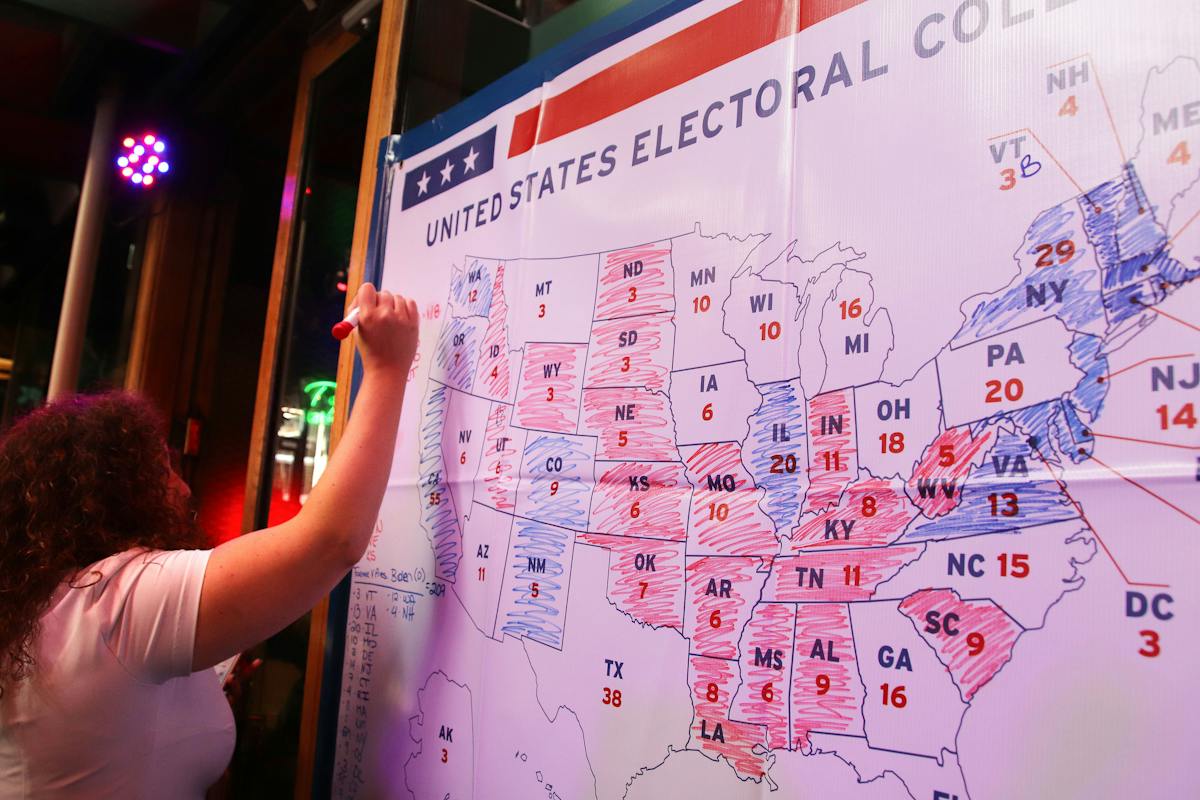

Every Texas county swung to the
left, some by more than 70 points. Latino voters, who had moved to the right in
recent cycles, swung 37 points leftward. White voters with a college degree
swung 15 points in that direction; those without a degree moved 13 points;
young voters, 54 points; seniors, 12 points; and small towns and rural areas,
22 points.
Hispanics alone comprise 32 percent of Texas’s eligible
voters (and 40 percent of all Texas residents). Their shift was prompted not
only by inflation, like all voters, but by anger at Republican-supported ICE
brutality toward their community, as well as other grievances common to working- and middle-class voters across the board. Texas has 40 electoral votes, second
only to California. Surely, Democratic political leaders can find ways to
deepen traction with Hispanics and constituencies that flipped in 2026,
sufficient to make Texas’s 40 electoral votes at least competitive, if not
tilting blue. Democrats would thence start off presidential campaigns with
three of the top four states (California, Texas, and New York), totaling 113
votes in their column, plus scores more from other purple and blue states.
The Texas turnaround is part of a broader prospect. On
Sunday, November 15, Mississippi Senator-elect Scott Colom told
Meet the Press interviewers that Democrats “need to put senators like
myself in position where we can deliver for the rural South, where we can be
leaders in ways that show the voters in [all of] rural America that we care
about them, that we want them to be successful.” (Emphasis mine.)
Further in that vein, as Harold Meyerson detailed
in the November 13 American Prospect, “There are deeper reasons why
Texas, Georgia, and North Carolina have become politically purple.… All three
states are increasingly dominated by metropolitan areas,
populated by racially diverse professionals, racially diverse service-sector
workers, young newcomers from neighboring states and distant lands.”
Understanding these “tectonic shifts,” Meyerson notes, can enable Democrats to
“create what might become a new political majority.”