the spectacle of entry: how concept car designers set entire bodies in motion
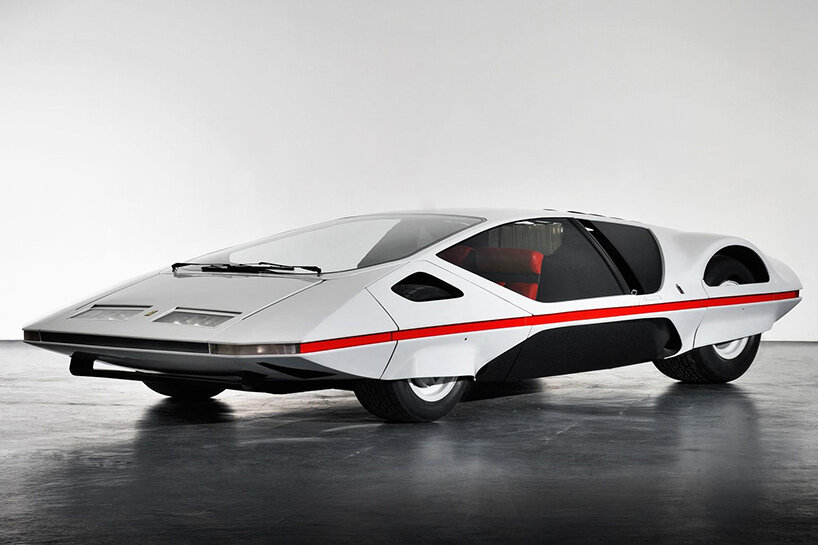
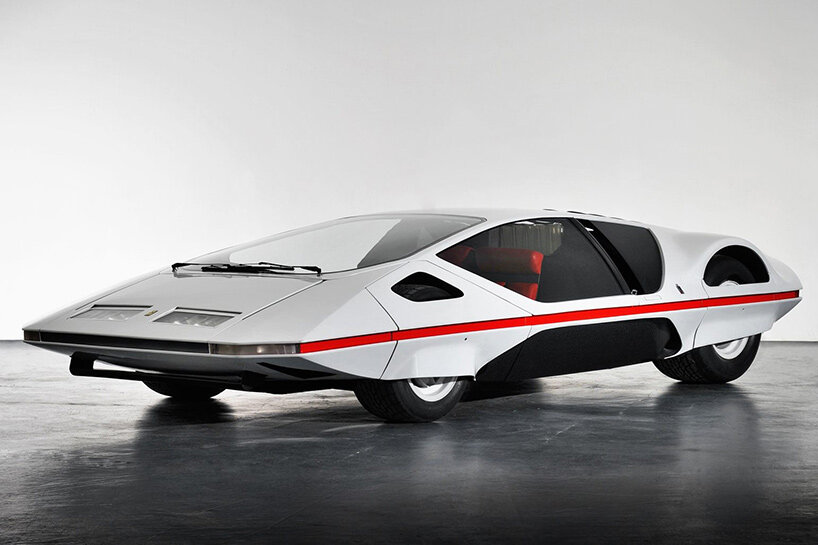
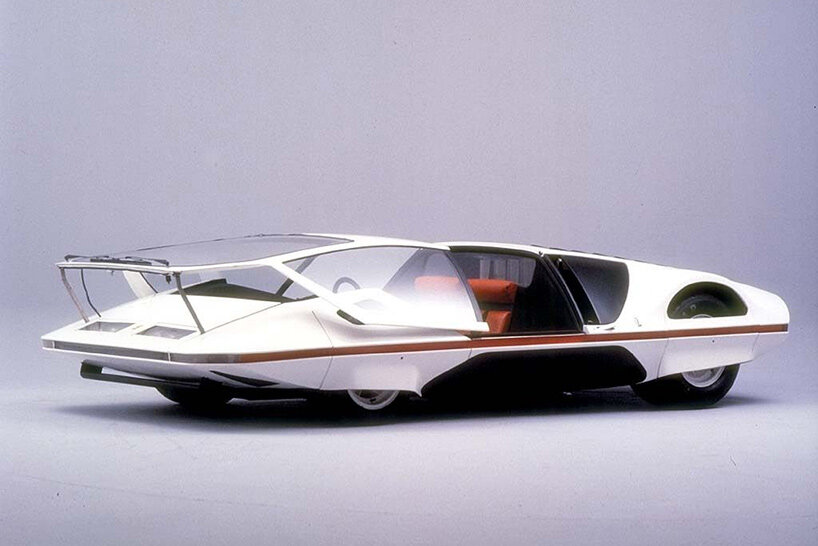
When Pininfarina presented its Ferrari 512S Modulo at the 1970 Geneva Motor Show, the Italian design team brought a vision of the automobile with almost all its familiar elements erased. The wheels were partially hidden beneath a white body, the roof barely rose above the hood, and the continuous black band of glazing gave little indication of how someone might get inside. To enter Paolo Martin’s futuristic concept car, the entire canopy had to slide forward.
The Modulo belongs to a radical period in automotive design when coachbuilders began to rethink the simple act of entering a car. With the freedom afforded by experimental prototypes, designers could do away with typical doors and set in motion much larger portions of the body. A windshield could become an entrance, and a roof could lift away to expose the entire cabin.
Read on as we revisit a series of these experiments from the 1960s through the end of the century. While much of the discussion around automotive design concerns the appearance of speed, these cars reveal some of their most dynamic qualities while standing perfectly still.
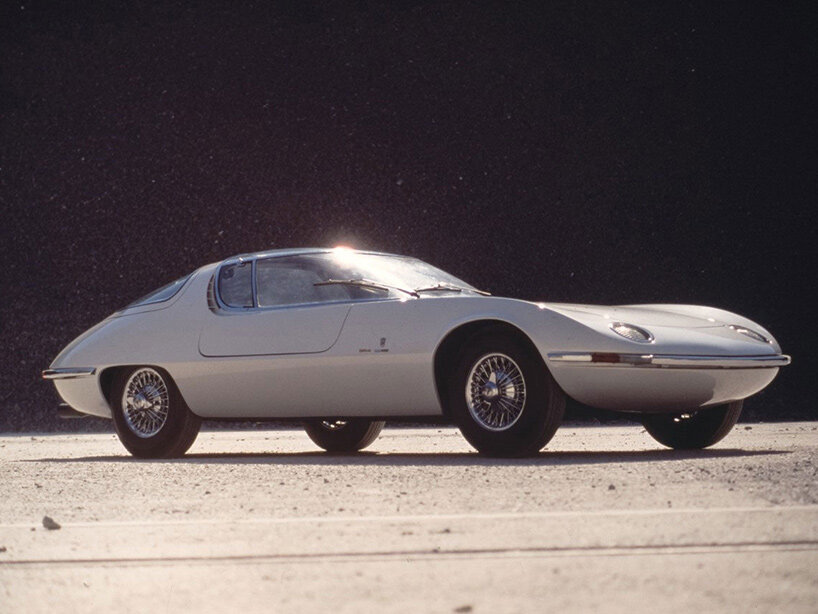
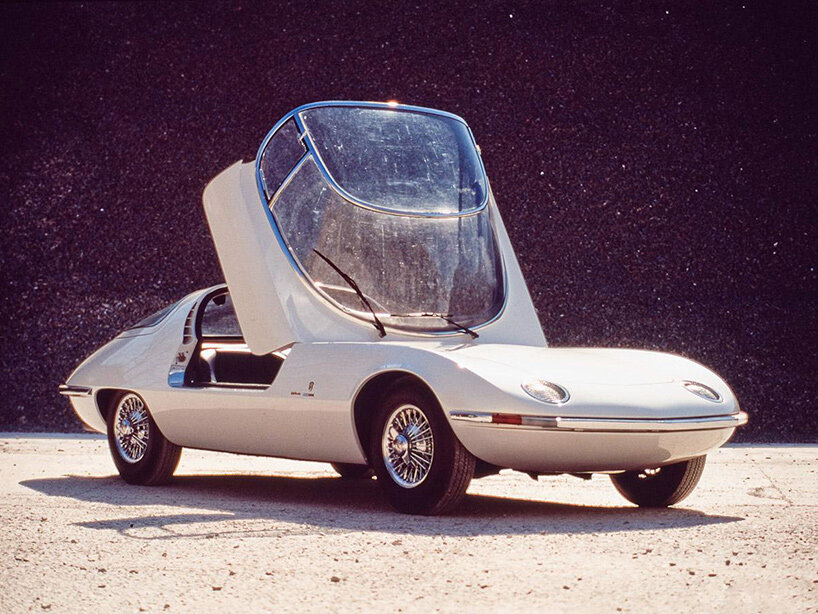
Seven years before the Modulo made its debut, a young Giorgetto Giugiaro had explored the possibilities of a continuous automotive shell with the Chevrolet Corvair Testudo. Designed at Bertone and presented in Geneva in 1963, the car had a distinctly organic profile. Its name, the Latin word for tortoise, alluded to the rounded body beneath which much of the mechanical equipment was concealed. The glass windshield and roof formed part of a single assembly that pivoted forward to expose the two seats.
The Testudo emerged at a time when the futuristic imagery of aviation and space exploration had entered the vocabulary of industrial design. The aircraft canopy offered an alternative to the upright door inherited from the horse-drawn carriage, and its application to the automobile gave designers greater freedom over the shape of the passenger compartment. The legendary designer could draw an uninterrupted line along the flank of his car because the point of entry had been moved elsewhere.
Paolo Martin took Giugiaro’s idea to an extreme with the Ferrari Modulo in 1970. Built on the chassis of a Ferrari 512S racing car, the concept was composed of two broad, almost horizontal volumes separated by a fine red line. The glazed upper enclosure sat within this geometry like the retractable roof of a building. In photographs of the Modulo with its canopy open, the familiar proportions of the car give way to an unexpected arrangement of overlapping planes.
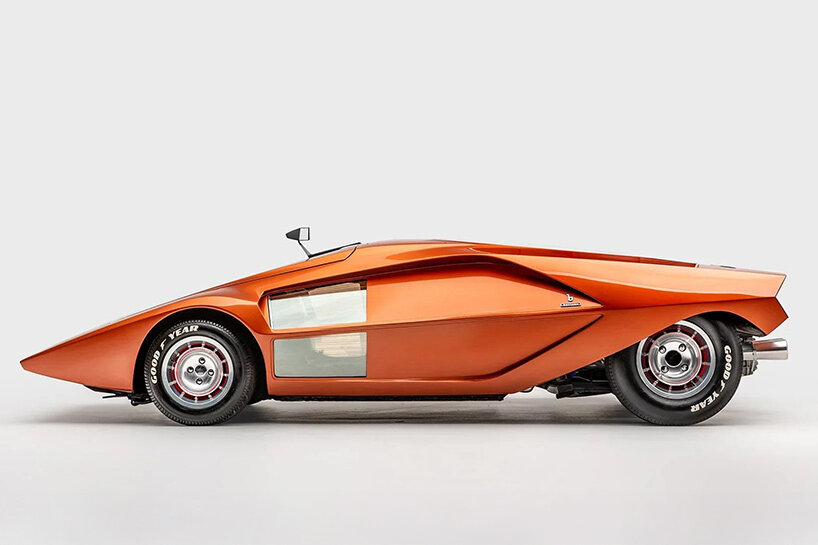
At Bertone, Marcello Gandini approached the question of entry from an entirely different direction. His copper-colored Lancia Stratos Zero, unveiled at the 1970 Turin Motor Show, stood just 84 centimeters (33 inches) tall. Its sharply angled profile was partly the product of an exercise within the design studio to see how low a car could possibly be built.
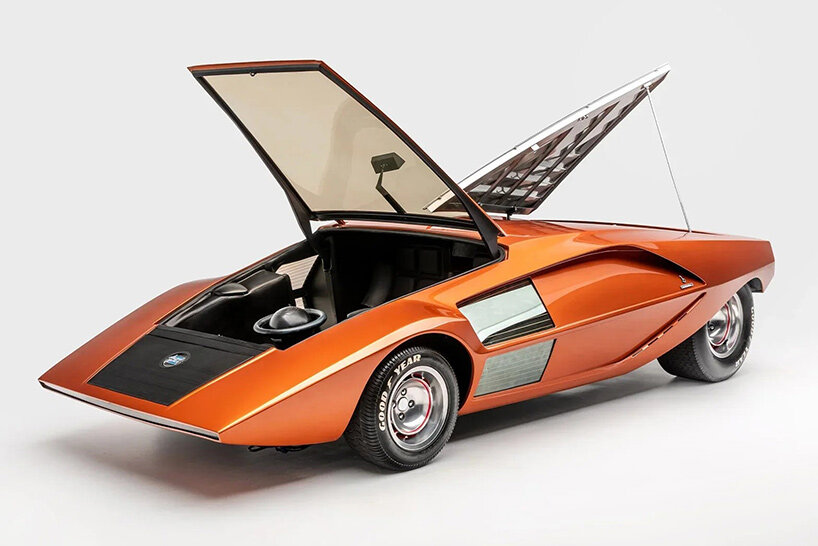
There is a small black rectangle at the base of the Stratos Zero’s windshield, which could easily be mistaken for a decorative detail. It is actually a rubber mat designed to accommodate the feet of someone stepping onto the bodywork. Beneath the Lancia badge is a concealed handle that releases the hinged windshield, while a hydraulic linkage connects the movement of the glass to that of the steering column.
Where most cars are approached from the side, the Stratos Zero asks its occupants to walk directly toward its nose, step onto its sloping surface, and lower themselves into the reclining seats. Gandini effectively designed a sequence of arrival around the geometry of the wedge. The exterior bodywork takes on some of the functions of a building’s entrance, right down to its little doorstep.
While Italian coachbuilders experimented with increasingly extreme proportions, designers at General Motors were developing cars whose interiors could physically accommodate the movements of their occupants.
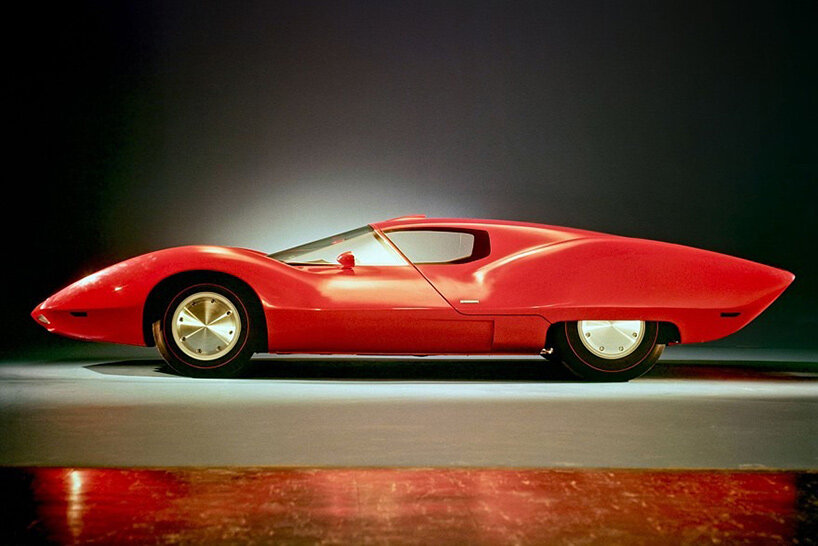
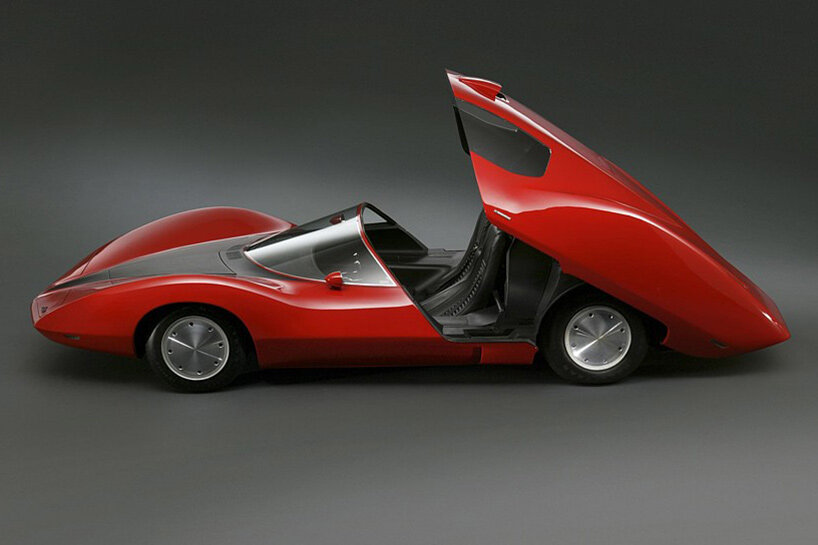
At the 1967 New York Auto Show, Chevrolet introduced its Astro I, an aerodynamic research vehicle designed by Larry Shinoda under the direction of Bill Mitchell. The red fiberglass body stood only 90 centimeters (35.5 inches) high, and a large section of its upper body hinged upward from the rear. Inside, the seats rose with the canopy.
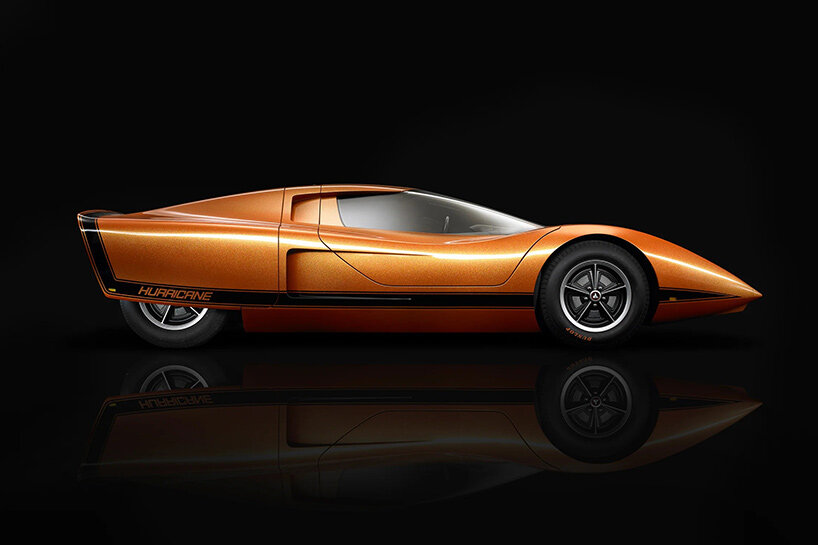
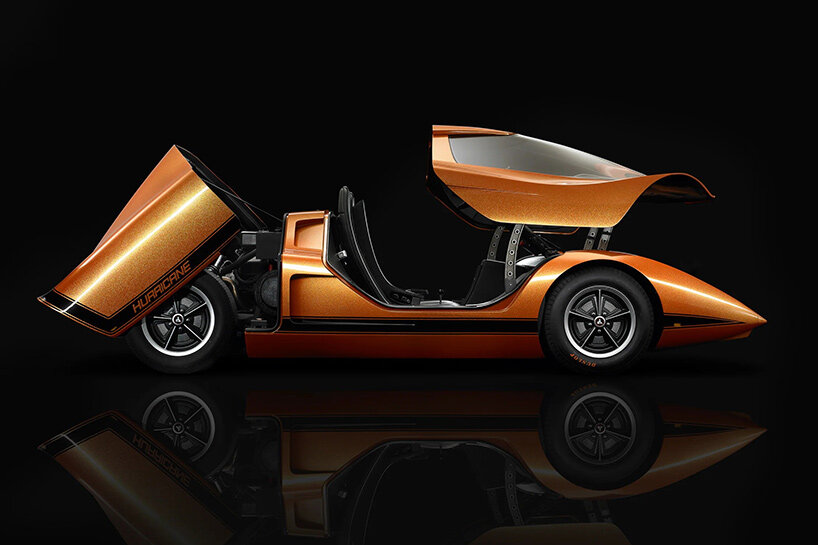
Two years later, on the other side of the world, General Motors’ Australian division introduced the metallic orange Holden Hurricane. Its hydraulically operated canopy pivoted forward over the front wheels, while the two seats rose and tilted toward the opening. The steering column moved out of the way. Once the occupants had climbed aboard, the seats descended into a reclining driving position and the roof closed above them.
The Hurricane is particularly interesting from an architectural standpoint because the interior arrangement changes according to how the space is being used. There is one position for entering the car and another for traveling in it. At a time when much of the automotive industry’s experimentation with aerodynamics called for increasingly low bodies, Holden considered how a mechanical interior might reconcile those proportions with the human form.
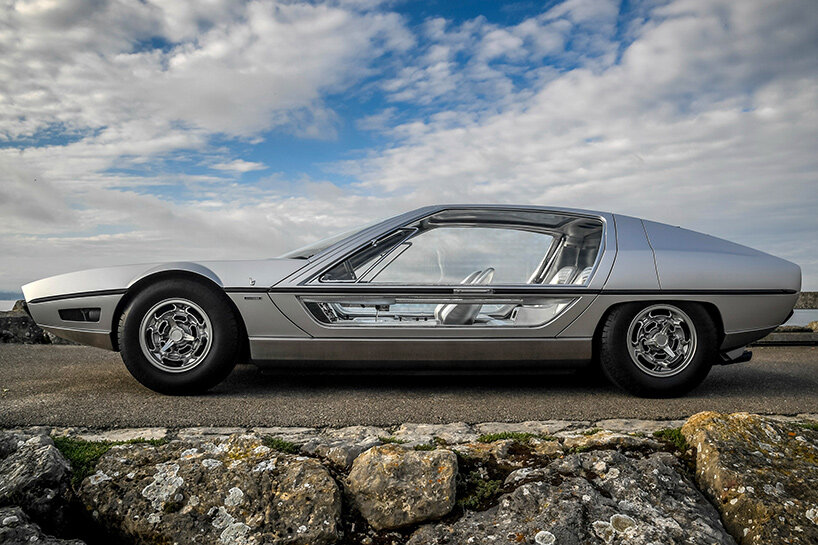
Another line of experimentation emerged through the extensive use of glass. In 1967, Marcello Gandini designed the four-seat Lamborghini Marzal at Bertone, with enormous gullwing doors whose glazing extended well below the occupants’ shoulders. Silver leather covered the seats, and hexagonal geometric motifs appeared throughout the interior. With the doors raised, nearly the entire side of the passenger compartment was exposed.
The Marzal’s approximately 4.5 square meters (48 square feet) of glass gave it an unusual degree of transparency for an automobile. Ferruccio Lamborghini himself expressed reservations about the privacy afforded by the doors. It was a familiar question in modern architecture, too, where increasingly transparent building envelopes had prompted discussions about the exposure of their inhabitants. In the Marzal, even with the doors closed, much of the interior remained visible from the street.