From AI-Generated Concept Art to Human-Generated Character Design
Assalamu Alaykum friends,
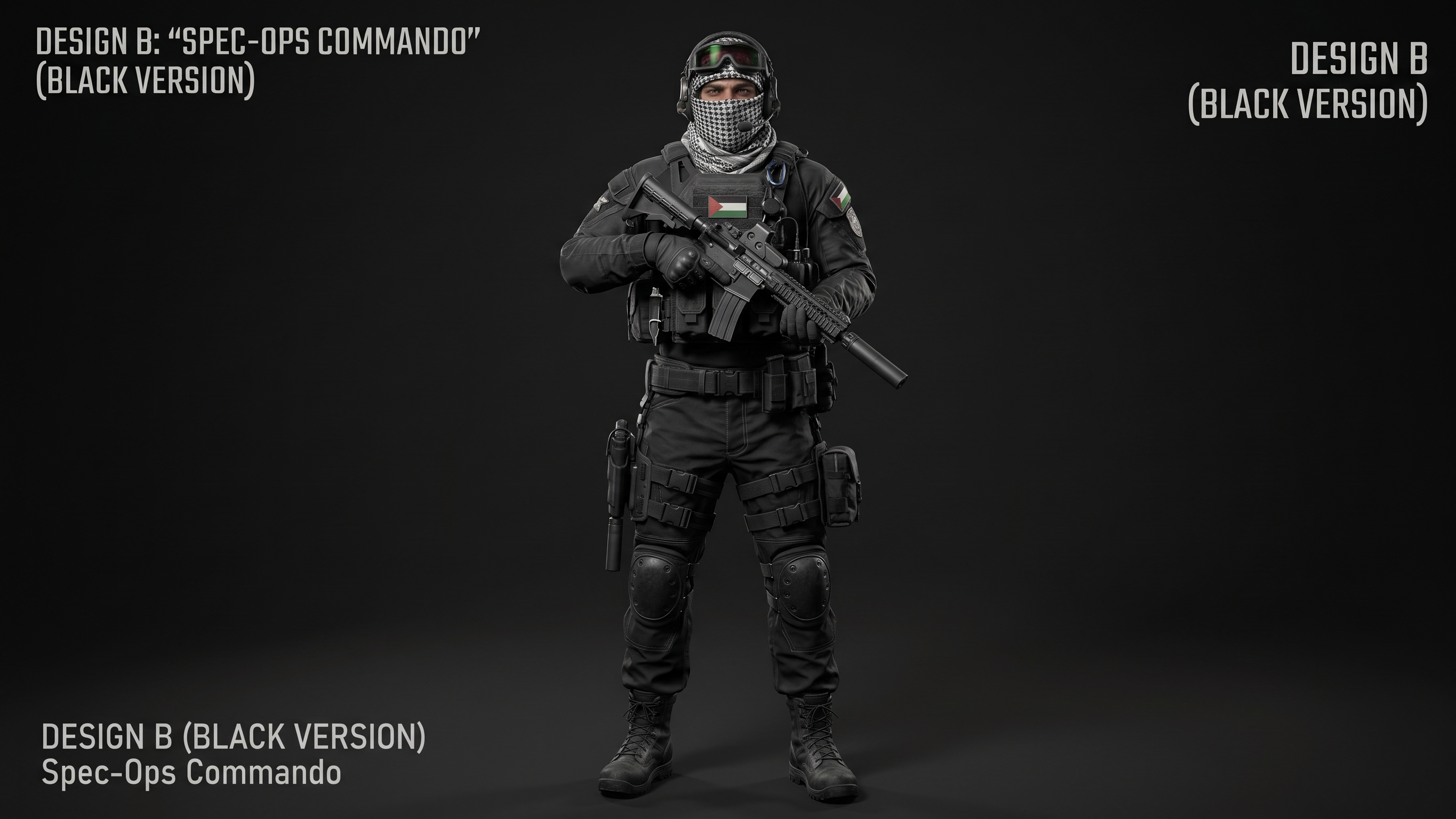
Here is the initial concept art for Ahmad al-Falastini’s new Spec Ops design for Fursan al-Aqsa 2:

And here is a render preview of the final 3D character model, straight from 3ds Max (it is still not the final visual):

As I have told you all since the beginning, I use AI as a force multiplier in my workflow. Being a solo developer with almost zero budget, having the right tools is an incredible and invaluable help.
When it comes to modeling, I still build my assets the “old-school” way—customizing and assembling modular pieces from purchased model packs created by real human artists. From my own experiments with AI-generated 3D assets, the cleanup required to make their topology and UVs production-ready and optimized simply isn’t worth the time.
Nonetheless, I found some crazy useful ways to leverage AI behind the scenes. Instead of using AI to replace artistry, I am using Google Gemini and Claude Code to build custom pipeline tools and scripts that speed up my technical workflow—and it is helping a lot, Alhamdulillah!
Here are a few examples of the tools I built while creating Ahmad’s new look:
1. Custom Palestinian Keffiyeh Pattern Generator (Photoshop Script)
I built a custom Photoshop script to generate clean, seamless weave patterns for the Palestinian keffiyeh texture on Ahmad’s new skin.

2. Albedo-to-PBR Map Generator (Photoshop Script)
This custom Photoshop script generates physically based rendering (PBR) maps directly from the base Albedo (color) texture, saving hours of manual texture prep.

3. One-Click Unreal Engine 5 PBR Shader Creator (3ds Max Script)
Inside 3ds Max, I wrote a script that automatically builds, configures, and audits PBR shaders formatted for Unreal Engine 5 in just one click.

4. Studio Lighting & Look-Dev Setup (3ds Max Script)
This custom 3ds Max script automatically generates a studio backdrop and lighting setup so I can preview how the shaders and materials will look in Unreal Engine before even exporting from 3ds Max—massively reducing the back-and-forth between both programs.

I have also developed several other custom tools for rigging (skeleton and animation) to get any character retargeted and animated inside Unreal Engine in just a few clicks, which I will showcase in upcoming devlogs, In sha Allah.
So believe me—when you see all these “AI slop” games flooding Steam, don’t blame the technology itself; blame the developers who misuse it. I am committed to raising the quality bar for Fursan al-Aqsa 2, In sha Allah, and showing how AI can be used the right way in game development without sacrificing human craftsmanship.
Thanks and see you in the next update, in sha Allah!