Did Trump Profit From Reinstating Jensen Huang?
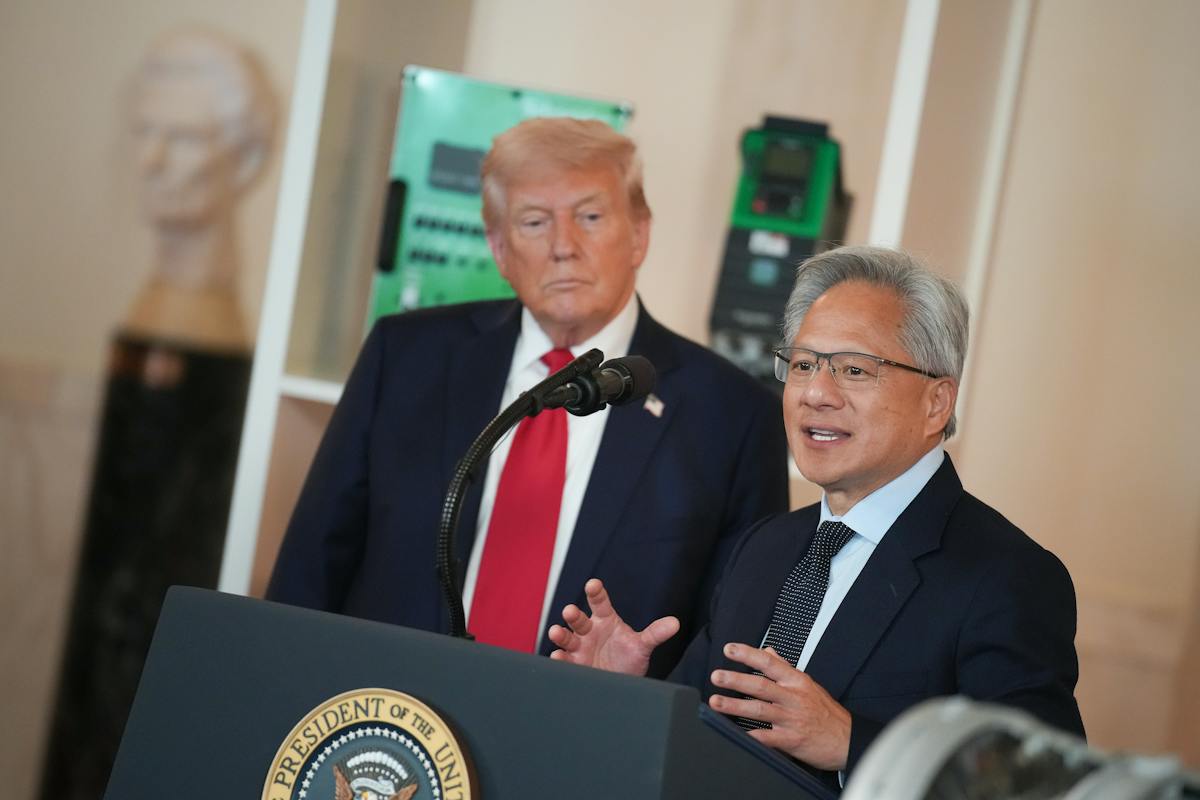

Never mind that we don’t yet know whether Jensen actively collaborated with Alice to move advanced AI chips, illegally, into China, as seems entirely possible. Never mind that we know Jensen had an affair with one of Nvidia’s biggest customers (Alice), and also with one and perhaps two of his employees. These sexual relationships were a clear violation of Nvidia’s conflict of interest policy, which defines “conflict of interest” as “any situation in which an employee or person related to the employee has any actual or apparent personal benefit that may tend to conflict with the fulfillment of the employee’s impartial obligations to NVIDIA.” Such as shagging the staff.
Trump wasn’t the only one demanding Huang’s reinstatement. So, too, did various tech chief executives and former chief executives, including Elon Musk of Tesla and Space X, Sam Altman of Open AI, Gary Tan of Y Combinator, Travis Kalanick of Atoms (formerly Uber), and Steve Chen of YouTube. They co-signed a letter advancing the risible argument that the board itself had “a massive conflict of interest” in removing Huang because doing so “helps their personal legal defense” in a shareholder lawsuit (Vanegas v. Huang) that alleges the board moved far too slowly to remove Huang (which of course it did). Never mind that re-hiring Huang will now expose the Nvidia board to many more shareholder lawsuits. “The mistake has been corrected,” Musk announced on X after Huang’s reinstatement.
Nvidia’s statement announcing Huang’s reinstatement made clear that it was doing Trump’s bidding, not that of Silicon Valley. “In the process of reaching its decision,” Nvidia said, “the Board received input from senior levels of the United States government, and based on that input, the Board is confident that Mr. Huang’s reinstatement poses no national security risk.”