2028 Dem Presidential Candidates Must Disavow Super PACs To Make Debate Stage
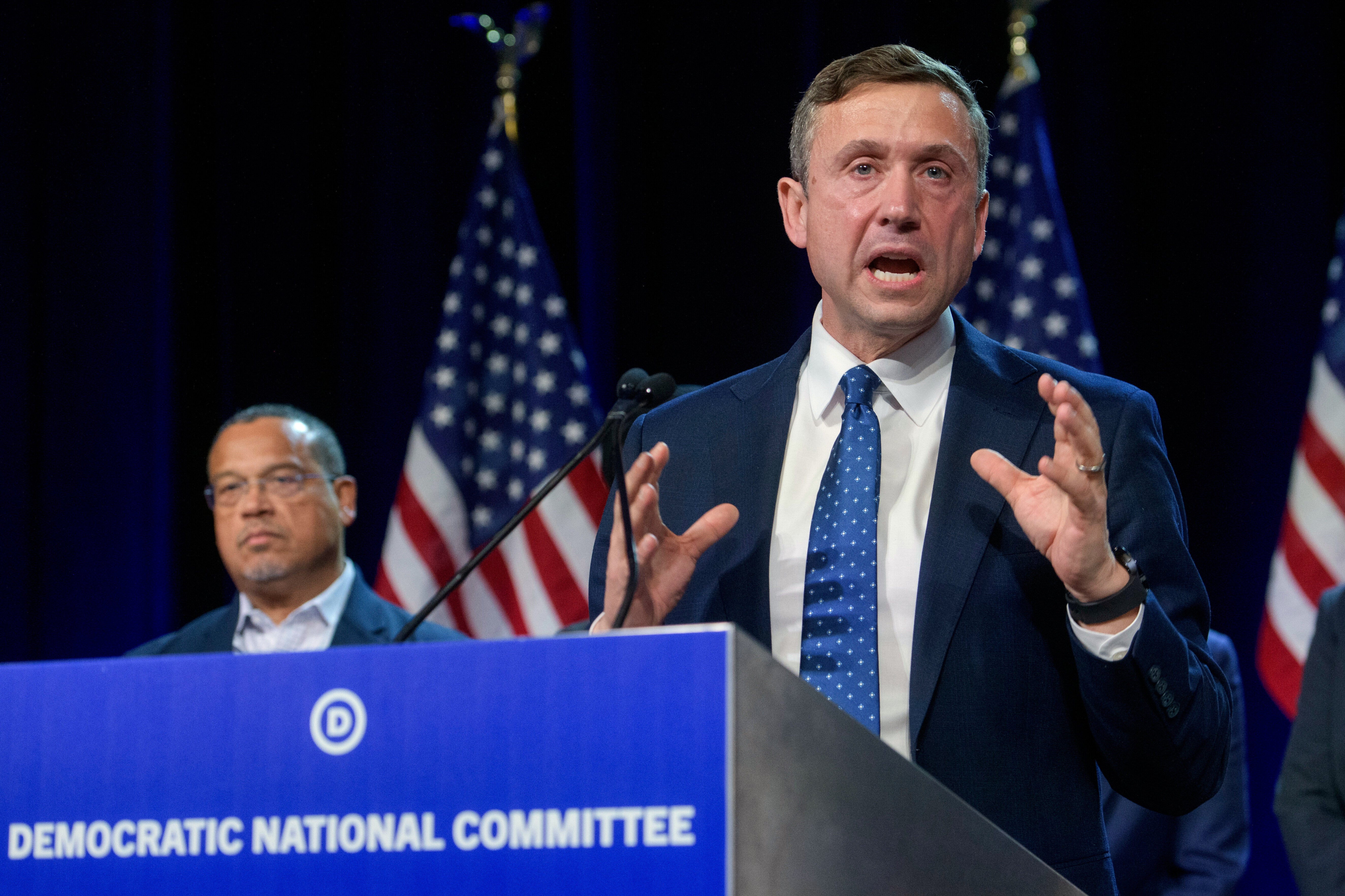
The Democratic National Committee on Monday announced plans to host a dozen 2028 presidential primary debates and is requiring candidates who want to appear onstage to swear off support from super PACs or nonprofit groups who do not disclose their donors, a potentially explosive demand.
The first debates will be in June and July 2027. The committee will host five debates in 2027 and seven in 2028, with debates in the five early-state contests held in the latter year. Qualifying for the debates will require candidates to meet certain polling and grassroots fundraising benchmarks, provisions that caused occasional frustrations for campaigns during the last major primary contest in 2020.
Running the debates will be a major test for Democratic National Committee Chair Ken Martin, who has spent much of his tenure battling severe financial headwinds. Martin is relying heavily on Minyon Moore, a well-respected veteran party operative, as well as DNC Executive Director Roger Lau to shape the debate process as co-chairs of the debate planning committee.
Advertisement
Rod Lamkey Jr./File via Associated Press
“Democrats are on offense after our historic victories in the midterms, and the DNC is keeping our foot on the gas as we head into the 2028 cycle,” Martin said in making the announcement. “The fair and transparent process and experienced leadership team we’re announcing today will keep our party united, strengthen our eventual nominee, and put Democrats in position to take back the White House.”
“I’m honored to be guiding the team that will run the 2028 Democratic Presidential Primary Debate process,” said Moore. “I’m committed to ensuring our debate process is not only fair and transparent, but that it also sets our nominee up for success in the general election.”
Advertisement
Banning outside money has been a major priority for Martin, and has long been backed by progressive Sen. Bernie Sanders (I-Vt.), who caucuses with Democrats. As laid out by the DNC, the rule — called the Presidential Primary Fair Campaign Practices Pledge — would require candidates to disavow any super PAC or nonprofit group spending on their behalf or attacking their opponents, and failing to do so would bar a candidate from the debate stage.
A number of Democrats are set to endorse the pledge on Monday, a DNC official said, including Sanders, Sen. Elizabeth Warren (D-Mass.), Reps. Jason Crow (D-Colo.) and Greg Casar (D-Texas), and former DNC Chair Jaime Harrison.
Campaigns who agreed to the pledge can flag potential violations they spot to the DNC, and that review and adjudication process is expected to be trackable on the committee’s website. If a campaign is found in breach of the pledge, they will have to denounce and refund the spending in question.
Advertisement
Notably, this dark money disavowal pledge does not apply to the general election, and groups will face no penalty from the DNC for raising money in preparation for that stage of the election.
It’s unclear how much impact the rule might have: Candidates are already barred from coordinating with outside groups, which means those groups could simply continue spending despite a disavowal. The rule could also face criticism from candidates going up against self-funding candidates like Illinois Gov. JB Pritzker, a billionaire who will presumably not have any need for a super PAC backing him.
Barring candidates who want to appear on debate stages from campaigning in “unsanctioned contests,” a requirement passed by the DNC’s Rules and Bylaws Committee in June, is also potentially fraught: Democrats have set New Hampshire to have the third primary, following contests in South Carolina and Nevada, even though a state law widely backed by New Hampshire’s political class requires it to host the first primary in the country.
Advertisement
New Hampshire is yet to officially schedule its primary for 2028, but it’s likely the state will schedule one for an earlier date and then the New Hampshire Democratic Party will host its own on the planned Feb. 8 date.
The committee said early debates may be held over two consecutive nights to accommodate a crowded field, with no more than 20 candidates participating in any given set of debates.
The DNC said it will announce the specific dates and locations of the first two debates in January 2027.
Advertisement