How Computers Reprogrammed Our Inner Lives
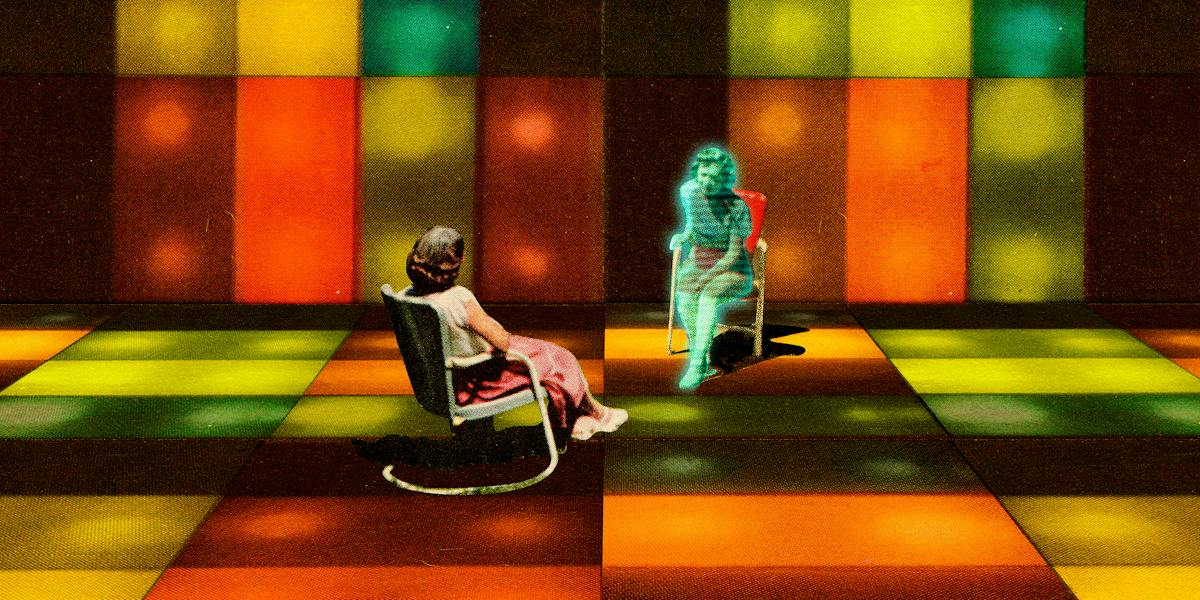

Today, Turkle’s fellow researchers at MIT are imagining agentic AI as “digital twins”: AI agents that will construct digital versions of their users, do their work, educate their children, organize their lives, and make decisions on their behalf. Meta’s Muse already offers to choose and buy a birthday gift for your mother, drawing on the personal accounts you let it access. OpenAI’s dots, unveiled in September, promise agents that keep working across applications with little supervision. Turkle worries that, as the agent learns our preferences and acts on them, we may grow accustomed to its agency and surrender our judgments and our lives to it. The metaphor of her early book has been turned on its head. “Now you’re the second self,” she writes.
Spike Jonze’s 2013 film, Her, imagined a lonely man connecting with an AI bot named Samantha, who is warmly voiced by Scarlett Johansson. Around the time of the movie’s release, I spoke with Peter Norvig, then Google’s director of research, and the philosopher and cognitive scientist Daniel Dennett. Did they think a computer could fall in love, as Samantha appears to in the film?
Norvig thought that if a bot acted exactly as though it loved us, the distinction could cease to matter. Dennett disagreed. Computers were built as obedient servants. They had no needs of their own, no fear of death, no struggle to survive. They might give a superb performance of love. “But that’s not love.”