The Rise of the Socialist YIMBY Mayor
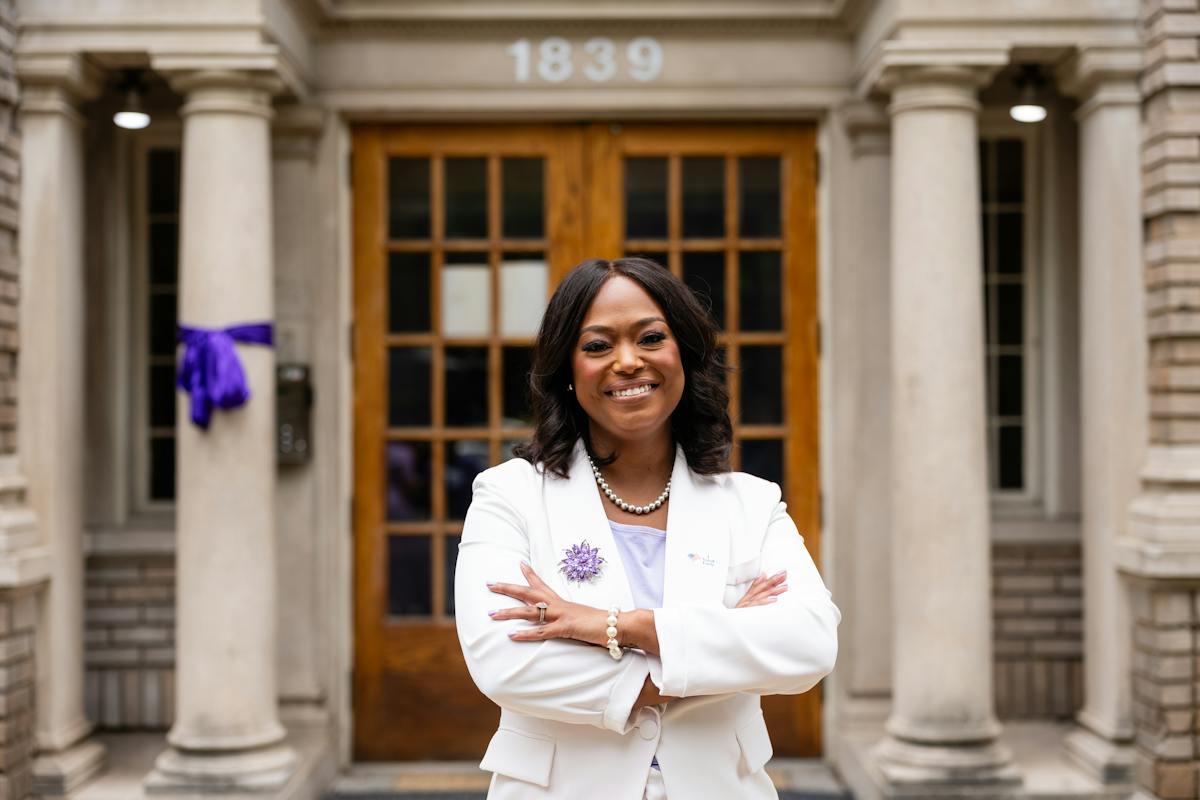

The growing body of evidence in favor of YIMBYism has persuaded a number of skeptics on the left, including the incoming D.C. mayor. In an April blog post for D.C.’s main pro-housing organization, Greater Greater Washington, Lewis-George wrote that she initially “wasn’t certain about the role private development should play in making housing more affordable,” but that “after reading the research myself and learning of the successes of other cities that’ve built more homes, I’ve embraced the fact that cities that build temper costs for renters and homeowners.” Similarly, New York Mayor Zohran Mamdani sounds like a sincere convert when he espouses YIMBY ideas about relatively abstruse issues like staircase reform.
That’s the short answer. The longer answer is—appropriately enough, given that we’re talking about socialists—a story of class conflict. But it is not an orthodox Marxist story about labor and capital. In this case, the thing that defines one’s class position is not one’s relationship to the means of production but one’s relationship to real estate. YIMBYs are representing an emergent urban tenant class against the entrenched landowner class that has long dominated urban America. To borrow an expression from Marx himself, tenants—and in particular younger, downwardly mobile tenants—are coalescing into a “class for itself” with its own distinct politics.
Consider the electorates that have been propelling left YIMBYs to victory. Mamdani won New York’s 2025 mayoral primary thanks to his performance in neighborhoods where renters well outnumber homeowners. His opponent, disgraced former Governor Andrew Cuomo, swept the majority-homeowner neighborhoods. A similar finding holds in Los Angeles: Raman won majority-renter areas by double digits. In D.C., the strongest results for Lewis-George’s main Democratic primary opponent, Kenyan McDuffie, came from Ward 3, a relatively affluent area with a higher proportion of homeowners than the city as a whole (though Lewis-George trounced McDuffie in Ward 4, which has the highest concentration of homeowners in the city). And in Seattle, Mayor Katie Wilson’s main geographic stronghold is the Capitol Hill neighborhood, where renters far outnumber homeowners. Even where the YIMBY on the ballot is not a socialist, the pattern holds: In the race to take over Nancy Pelosi’s House district, NIMBY candidate Connie Chan dominated the homeowner-heavy West Side of San Francisco, while YIMBY candidate Scott Wiener tended to hold the places where renters are most numerous.