A Yellowstone Co-Creator Wrote a Prison Survival Guide. It’s a Mess.
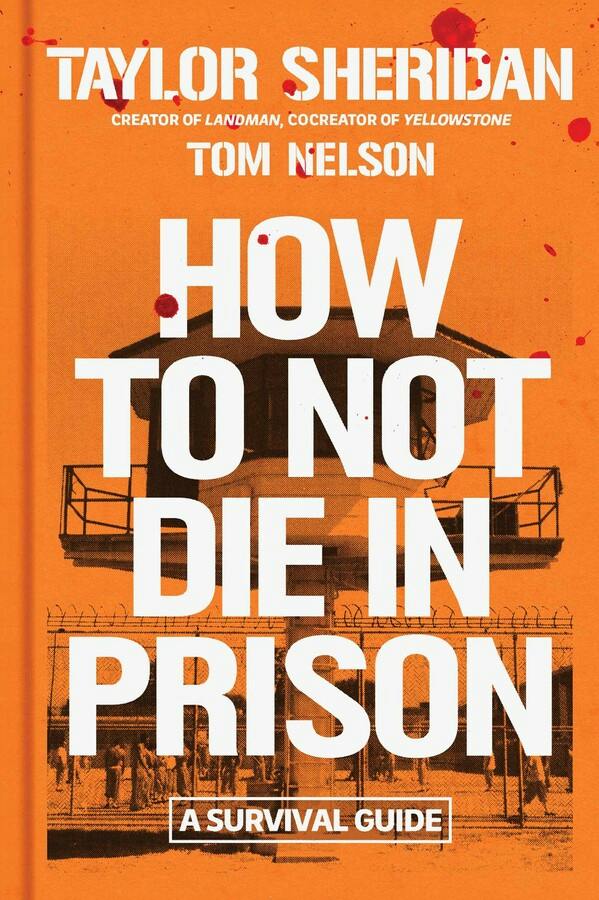

How to Not Die in Prison: A Survival Guide
Sheridan’s lack of curiosity extends even to his co-author. “Tom was a fucking criminal,” Sheridan writes definitively in his introduction. Pages later, in Nelson’s own introduction, we find out he had run away from home at 12 years old to escape an abusive father, quickly becoming addicted to drugs and committing theft to fuel his habit. As a teenager and young man, his many stints in prison, including time spent in solitary confinement, contributed to his recidivism; only years later, after getting clean of his own accord, was he able to secure a stable job and remain free.
Meanwhile, despite Nelson’s own firsthand experience, his parts of the book seem to cater to a prurient interest in prison life, depicting a world of big, scary men wielding shanks, inmates gathered together in cells drinking homemade hooch, fights breaking out daily in the yard. In eight sections (to each of which Sheridan wrote short, italicized introductions), Nelson outlines the first few days of being in prison, making friends, getting a job, surviving a riot, making meals from commissary food, keeping sane, maintaining ties with family, and finally, getting out. In an early chapter, readers are invited to find out their own “Prison Readiness Score.” Questions include: Do you know how to fight? Have you ever been in a knife fight? Do you have skills that might help you avoid the politics of prisons, like having been an attorney? And do you have drug connections, since those could help you curry favor with other inmates?
Above all, the hypothetical prisoner in the book is imagined to be a different class of person from the other inmates. “Let’s say you were getting your master’s degree in political applications of philosophy when you decided to buy that 8 ball during spring break,” Sheridan posits, in the introduction to a chapter about the prison economy. (Show me a judge sending a graduate student to a medium- or maximum-security prison for simple possession in the year 2026, but OK, sure.) That means you can probably read and write, and an educated person can win friends in prison: “Let’s say your cellie is trying to get his GED because that goes a long way toward convincing a parole board he has changed his evil ways. Problem is—dude reads at a third-grade level. All of a sudden, that advanced degree, which has zero economic value on the outside, becomes extremely valuable to your cellie.” Here, intentionally or not, Sheridan invokes class stereotypes to make a point about the criminalization of poverty: The man getting his graduate degree is incarcerated because of a one-off incident; the man with a third-grade reading level is merely trying to convince the parole board he has changed his “evil ways.”