A Village Burned, Its People Killed or Exiled. Was It Genocide?
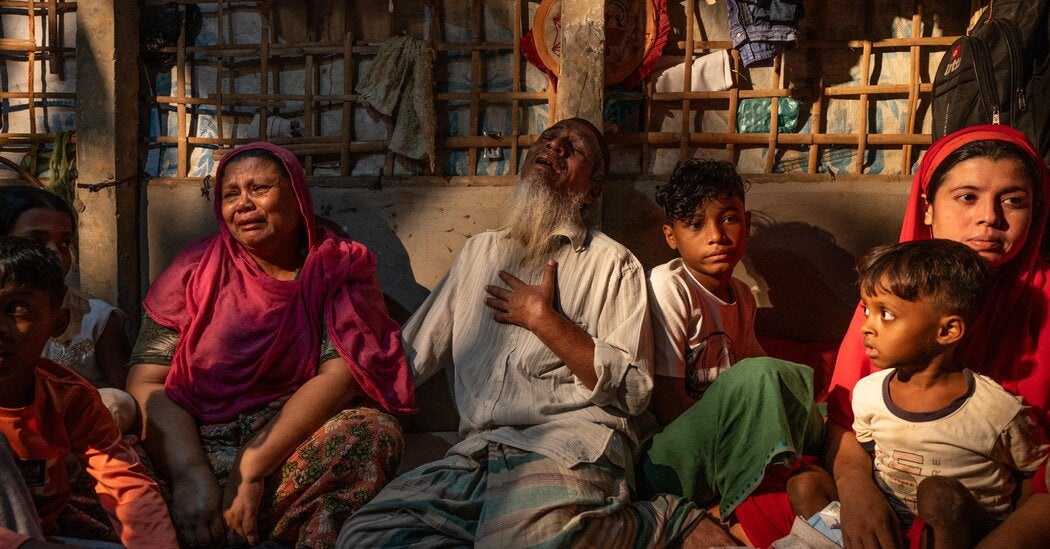

As his village burned, Mustafa Kamal somehow kept his family safe.
Husband and wife, three sons, three daughters, a granddaughter, they ran until their breath ran out. They stumbled past bodies of people they knew, shot by Myanmar’s security forces. They slogged through mud that claimed some of their clothes and trekked over jungle passes thick with leeches. Days later, when they finally crossed a river into Bangladesh, they rowed past swollen bodies of other Rohingya Muslims who never made it to the other side alive.
On Thursday, the International Court of Justice in The Hague is ruling whether the atrocities against the Rohingya ethnic minority constitute a genocide waged by the Myanmar state. The killing, gang rape and mass arson reached a furious zenith in 2017, building on years of systematic persecution. Three quarters of a million Rohingya flooded into Bangladesh in a matter of weeks, the most rapid refugee exodus in recent history. And more kept coming.
A judgment in a country half a world away would matter, Mr. Kamal told me. It would acknowledge the fate of his home, Zammona, one of 400 Rohingya villages that were obliterated by Myanmar security forces nine years ago.
But sitting in the dark, cramped shelter that is now his home in Bangladesh, part of what is now the world’s largest refugee settlement, Mr. Kamal said that the trauma did not end nine years ago. For the Rohingya, he said, misery never ends.