The Longest NBA Scoring Streaks Before Going Scoreless After Trae Young’s 511-Game Run
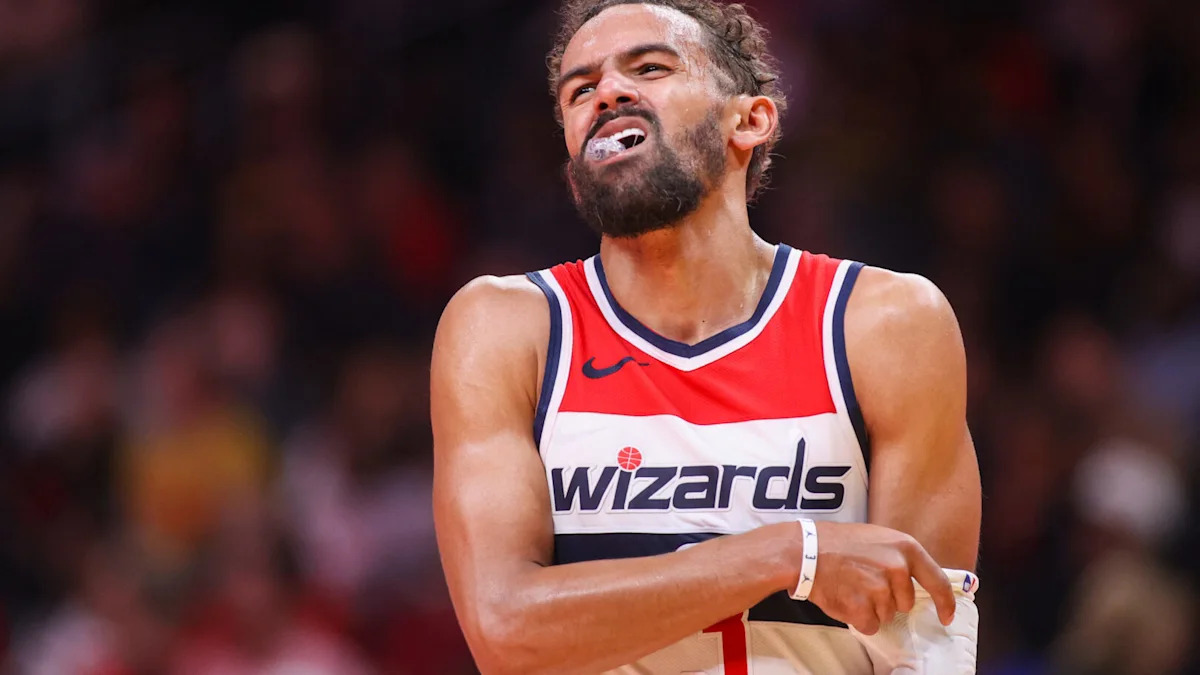

For a star player who averaged more than 20 points per game for most of his career, scoring just one point in an NBA game is normally very easy. But on Sunday, Wizards guard Trae Young had a really bad night against the Houston Rockets. He finished the game with zero points, and this stopped his big streak of 511 games in a row with at least one point.
Young missed all five shots he took and did not get any free throws. He only made eight assists in Washington’s big 147-119 loss. It was the first time he scored zero points since he arrived in the NBA in 2018. Making 511 games is really good, of course, but other NBA legends went much longer before they finally got a zero.
Look at the top players in history: Tim Duncan reached 1,359 games, Karl Malone arrived at 1,356, and Kevin Garnett scored in 1,323 games in a row before having a zero-point night. Most of these players were already old when their streaks finished, while others just had a terrible night shooting the ball, or played very few minutes because of an injury or fouls.
Now that Young’s 511-game run is over, let’s check 10 of the longest NBA scoring streaks that ended with zero points, ranked from number 10 to number 1.
This is the exact same player who scored 100 points in one game and averaged an amazing 50.4 points during a full season, so seeing Wilt Chamberlain end a game with zero points feels almost impossible to believe.
Still, on March 27, 1973, in a close 85-84 Lakers loss against the Bucks, it really happened. And the most strange part? Wilt didn’t even try to take one shot. He played 46 minutes, took 14 rebounds, and gave four assists, while finishing 0-for-0 from the field and shooting zero free throws. That weird game stopped his 1,043-game scoring streak that started in his rookie year back in 1959.
By 1973, Wilt was 36 years old and playing his final season, so he changed his style of play completely. He was only scoring 13.2 points per game, focusing more on getting 18.6 rebounds a night and making an NBA-record 72.7% of his shots.
The very next night, in his last regular-season game ever, it was almost the same thing: he scored just one point in 48 minutes against the Warriors. He retired with 31,419 total points and a 30.1 PPG average, so ending a thousand-game streak without even trying a shot is a crazy NBA story.
Elvin Hayes started his NBA career super strong in 1968-69, averaging 28.4 points as a rookie to win the scoring title right away. From that moment, he did not have a single game with zero points for more than 13 years.
Then came December 19, 1981. Playing only six minutes against the Bulls, Hayes missed both shots he took and ended with zero points, zero rebounds, and zero assists. His Rockets squad still won the game 102-95, but Hayes’ 1,084-game streak was finished just one day after he scored 14 points against the Mavericks.
At 36 years old, Hayes was back with the Rockets after playing nine years for the Bullets, where he won the 1978 championship. He was still playing very good basketball for his age; he started all 82 games that season and averaged 16.1 points and 9.1 rebounds per night.
During his best years, Hayes was an amazing scorer, putting up 27.5 and 28.7 PPG in his second and third seasons. When a player retires with 27,313 points and over 16,000 rebounds, playing over a thousand games before his first zero makes complete sense.
When Hakeem Olajuwon finally had a game with zero points, he had already won everything possible: two NBA rings, an MVP trophy, and two Defensive Player of the Year awards. He was 37 years old and near the end of his Hall of Fame career.
On January 17, 2000, the Rockets beat Dallas 121-111, but Hakeem could not score at all. He missed all four shots in 14 minutes on the court. He still helped his team with seven rebounds and three blocks, but his 1,089-game scoring streak finished that night.
For more than ten years, “The Dream” was Houston’s main star on offense. He played 13 seasons in a row averaging 20 or more points, including 27.8 PPG during the 1994-95 championship season, and then he was unstoppable with 33.0 points per game in those playoffs.
By the year 2000, however, he was playing fewer minutes, and his numbers went down to 10.3 points and 6.2 rebounds. Hakeem had two more scoreless games before retiring in 2002 with 26,946 points and an incredible NBA-record 3,830 blocks. Even when his shot was not falling, he was still a monster on defense.
In December 2018, Dirk Nowitzki was already 40 years old and playing his 21st NBA season. He was coming back from an ankle injury, so he wasn’t playing many minutes, yet he still had a 1,092-game scoring streak that started way back in December 2003.
The streak finally stopped on December 20 in a 125-121 loss against the Clippers. Dirk played only six minutes, missed his only shot (a three-pointer), and finished the outing with zero points.
During those 15 years, Nowitzki became a true legend in Dallas. He won the 2007 MVP, led the Mavs to the unforgettable 2011 championship, and averaged 20 or more points for 12 straight seasons, including 26.6 PPG in 2005-06 and 27.7 points per game during the 2011 playoffs.
By 2018-19, though, his body was tired, and his stats dropped to 7.3 points in less than 16 minutes per game. He even had a tough 0-for-10 shooting night (0-for-8 from three) against Boston the next month before retiring with 31,560 points. It took almost 20 years for the NBA to finally stop Dirk from scoring.
For almost 15 years in Boston, Paul Pierce scored in every single game. Fittingly, his long scoring streak didn’t finish until he started playing for a new team.
During his only season with the Brooklyn Nets in 2013, Pierce had a bad night to forget on December 23. In a big 103-86 loss to the Pacers, “The Truth” went 0-for-7 from the field, including two missed three-pointers, and had zero free throws in 15 minutes of play. Just like that, a 1,107-game streak that started in March 1999 was over.
What made it even stranger was that Pierce had scored 24 points against the Sixers just three days before. He could still have big scoring nights sometimes, finishing that season with 13.5 points per game, even if he was taking way fewer shots than in Boston.
In his best years, Pierce averaged 20 PPG eight seasons in a row, reached 26.8 in 2005-06, and won the 2008 Finals MVP against the Lakers. He was 36 years old when the streak ended and played three more years before retiring with 26,397 points and 10 All-Star selections.
Seeing Ray Allen miss every single shot he took felt very strange. He had one of the best shooting forms in basketball history, and during his prime, he was one of the most steady scorers in the league.
Still, even the greatest shooters have cold nights. On January 8, 2013, when the Miami Heat lost 87-77 to Indiana, Allen played 16 minutes and missed all five of his shots, four of them from three-point range. He ended with zero points, one rebound, one assist, and two steals, stopping a 1,124-game scoring run that started back in February 1997 during his rookie season with Milwaukee.
Before he became a killer three-point specialist in Boston and Miami, Allen was a complete scorer who averaged 20 or more points in eight straight seasons. He even reached 26.4 PPG with the SuperSonics in 2006-07, before helping the Celtics win the 2008 NBA title.
By 2012-13, he was coming off the bench for Miami behind LeBron James, Dwyane Wade, and Chris Bosh. Allen was still scoring 10.9 points per game and making 41.9% of his three-pointers, so one bad night didn’t mean he lost his shooting touch.
In fact, he helped the Heat win another championship later that year by hitting that unforgettable three-pointer against the Spurs in Game 6 of the Finals. Allen retired in 2014 with 24,505 points and 2,973 made threes, so that scoreless game against Indiana was just one small bad night in an amazing career.
John Stockton was never a player who needed 25 or 30 points every time, because his main job was passing the ball. Still, he managed to score in 1,262 straight NBA games. That is even more impressive when you think about how few shots he usually took compared to other big stars.
His streak finally ended on April 16, 2003, when the Jazz lost 95-84 to the Kings in the last regular-season game of his career. He played 14 minutes, missed his only shot, and finished with zero points, one rebound, and five assists, stopping a run that started way back in April 1987.
Stockton was already 41 years old, yet he was still scoring 10.8 points and giving 7.7 assists per game while shooting 48.3% from the field. He hadn’t averaged 15 points since 1996-97, so scoring was clearly not his main focus, but he always found a way to make at least one basket or free throw.
His passing and defense stats were crazy, finishing his career with 15,806 assists and 3,265 steals, both NBA records that nobody has broken yet. He also averaged a double-double in points and assists for 10 seasons in a row, reaching 17.2 points and 14.5 assists in 1989-90.
Stockton retired with 19,711 points after 19 seasons, and his very last regular-season game was the one that ended his scoring streak. For a point guard who spent his life passing the ball to Karl Malone and his teammates, scoring in over 1,200 consecutive games is truly special.
Kevin Garnett started scoring in every single game back in January 1996, when he was just a teenager in his rookie season with the Timberwolves. He kept that streak alive for almost 18 full years.
The run finally stopped on January 31, 2014, when the Nets lost 120-95 against the Thunder. Garnett played only 12 minutes, missed all four of his shots, and ended with zero points, one rebound, and one block, breaking a streak of 1,323 straight games with at least one point.
He was 37 years old at that moment and didn’t get the ball nearly as much as before, averaging only 6.5 points and 6.6 rebounds in 20.5 minutes per game during his first year in Brooklyn. Still, Garnett was one of the best power forwards in the NBA for a very long time, especially during his years in Minnesota.
His best season happened in 2003-04, when he won the MVP award after averaging 24.2 points, 13.9 rebounds, and 5.0 assists per game, taking the Timberwolves to the Western Conference Finals. He also averaged at least 20 points for nine seasons in a row before moving to the Celtics, where he won the 2008 championship.
By the time he had that zero-point night against Oklahoma City, Garnett had already spent almost two decades scoring, rebounding, and playing great defense. He later went back to Minnesota before retiring in 2016 with 26,071 points, 14,662 rebounds, and 15 All-Star appearances.
Karl Malone scored in every NBA game since his rookie year in 1985, but on November 3, 2002, he had one of the worst shooting nights of his life, and his massive streak finally ended.
The Jazz lost 91-77 to the SuperSonics, and Malone finished with zero points in 15 minutes, missing all seven of his shots without taking a single free throw. He also grabbed two rebounds and made one assist, though he got into early foul trouble, which kept him on the bench.
That stopped his run of 1,356 straight games with at least one point, which is unbelievable when you remember he averaged 20 or more points for 17 seasons in a row. His best scoring season was 1989-90, when he averaged 31.0 PPG, and he was still putting up 22.4 points per game just the year before.
Malone was already 39 years old, yet he was still Utah’s top scorer next to Stockton, and shooting free throws was always a massive part of his game. He finished his career with an NBA-record 9,787 made free throws, so finishing a game without shooting one against Seattle was super rare.
That zero-point night wasn’t Malone’s end, because he still ended the 2002-03 season averaging 20.6 points, 7.8 rebounds, and 4.7 assists. He played one final year with the Lakers before retiring with 36,928 points, and his 1,356-game streak held the number one spot until Tim Duncan finally broke it.
Tim Duncan spent almost 19 years scoring in every NBA game he played, and he finally ended a match with zero points when he was already 39 years old and very close to retirement.
On January 2, 2016, the Spurs beat the Rockets 121-103, but Duncan played just 14 minutes, missed all three shots he took, and did not shoot any free throws. He finished with zero points, four rebounds, and two assists, ending a record streak of 1,359 straight regular-season games with at least one point.
Duncan had been doing this since his very first NBA game on October 31, 1997, when he was a rookie averaging 21.1 points and 11.9 rebounds per night. He went on to win two MVP trophies, five championships, and three Finals MVP awards, while averaging 20 or more points for nine consecutive seasons.
His best scoring year was 2001-02, when he put up 25.5 points and 12.7 rebounds per game, though his role changed a lot by 2015-16. Duncan was playing fewer minutes and finished his last season averaging just 8.6 points and 7.3 rebounds, as the Spurs did not need him to score 20 every night anymore.
Still, seeing him finish with zero points after 1,359 games was very surprising, especially because he had broken Malone’s old record by only three games before his own streak stopped. Duncan had one more scoreless game against the Kings later that season, but he had already made NBA history by then.
He retired in 2016 with 26,496 points, 15,091 rebounds, and 3,020 blocks, and his streak stays at the top of this list. With Trae Young’s run ending at 511 games, Duncan went 848 games further before finally getting his first zero, showing just how hard it is to score every night for almost twenty years.