Homer council approves road, harbor projects and insurance savings
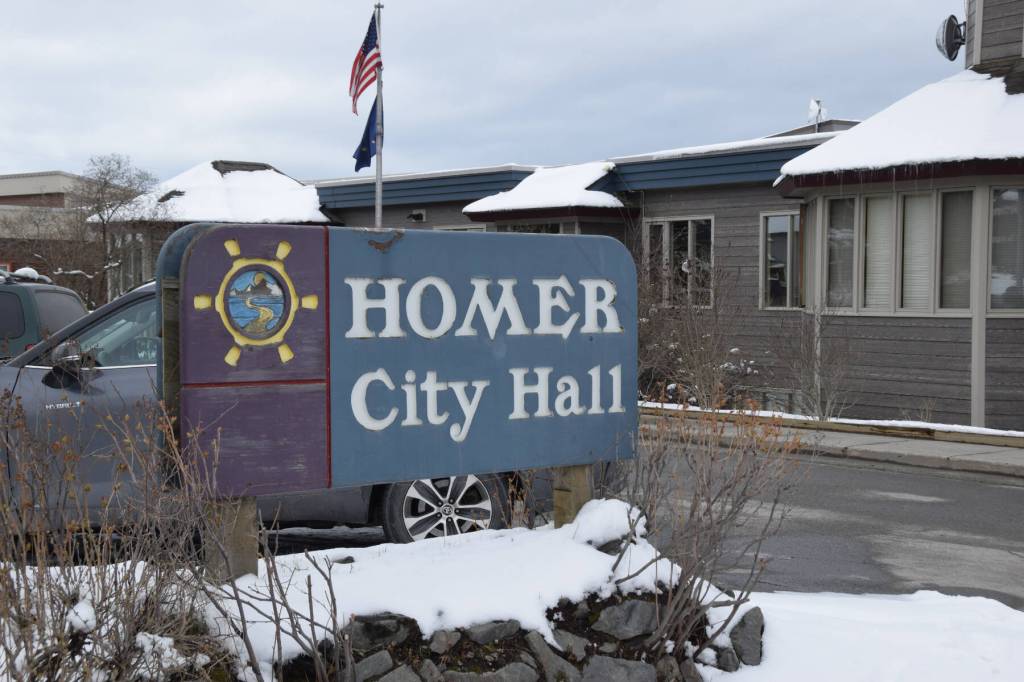

Less than a week after voters renewed Homer’s roads-and-trails sales tax (HART), the City Council approved $170,000 for pavement restoration and trail planning, advanced harbor repairs and found a way to save more than $31,000 on employee insurance costs.
The Nov. 9 meeting followed two afternoon work sessions addressing the city’s budget reserves and health insurance coverage. It also marked a change in leadership, with Rachel Lord concluding her term as mayor and Shelly Erickson taking office.
HART move forward
Following the Nov. 3 election, council certified the results of Proposition A, which extended the three-quarter percent Homer Accelerated Roads and Trails sales tax through 2047. The measure passed with 1,606 votes in favor and 406 opposed, nearly 80% support.
With the funding source secured, members approved $150,000 from the HART Trails Fund to plan and design a hiking trail along an existing roadbed above Karen Hornaday Park.
The project had been postponed in August while the city awaited the election, and would allow for recreational access through city-owned land above the park, where steep slopes and drainage concerns require additional engineering.
Another $20,000 from the HART Roads Fund was approved for the Heath Street Pavement Restoration Project.
More than three years ago, council awarded Kinney Engineering LLC of Anchorage a $16,860 contract to inspect the site, but a second engineering proposal will be needed to finish the construction.
Public Works estimates the eventual paving project will cost approximately $1.5 million, with work planned for summer 2027.
Insurance change saves city $31,517
Council approved new one-year employee benefits contracts with Moda Health, VSP and Prudential starting Jan. 1, 2027, and changed how the city pays its insurance broker, USI Insurance Services.
The amendment reduced the annual fiscal amount from $2,690,595 to $2,659,078 by replacing a percentage-based commission with a $75,000 flat brokerage fee.
Councilmember Jason Davis asked why Homer previously paid USI a fixed $25,000 annually, but switched to a 5% commission arrangement in 2021 — which was subsequently reduced to 4% — to which the city clerk could not locate a signed copy of the 2021 agreement or records establishing that council approved the change. USI representative Brian Hardy said the arrangement predated his work with Homer and offered to negotiate a flat fee.
Meanwhile, staff preferred Moda’s lower copays and existing provider network despite less expensive proposals from competing insurers. Under a comparable Premera option, urgent care copays would have increased from $25 to $80, while certain medical visits and prescriptions would have become more expensive.
Davis expressed interest in eventually seeking competitive proposals from insurance brokers, although council did not authorize that process during the meeting.
Harbor repairs and contracts
In other business, Homer Harbor was awarded a $681,217 project management contract to Moffatt & Nichol of Anchorage for the System 4 Float Replacement Project, funded through a Denali Commission grant which covers engineering oversight, permitting assistance and construction management.
System 4 dates to the harbor’s original construction in 1964 and serves approximately one-third of its vessels. The project received an $11.2 million federal infrastructure grant earlier this year.
At the Deep Water Dock, council approved another $50,000 from port reserves to design repairs to damaged mooring dolphins, after Port Director Bryan Hawkins reported that one dolphin had extensive damage to its piling supports. Approximately $143,000 in state grant funding has already been secured for construction.
City Manager Melissa Jacobsen separately reported that the U.S. Army Corps of Engineers had updated estimates of Homer’s potential financial obligations for the harbor expansion.
Budget reserve rules
Earlier in the afternoon, council members discussed Ordinance 26-60, which proposes changes to Homer’s budgeting regulations.
Introduced by Lord and Aderhold, the ordinance would correct outdated provisions, clarify accounting procedures and establish additional requirements for reviewing municipal fund balances.
One proposal would reduce the city’s required general fund reserve from four months of operating expenses to three, potentially freeing money for other priorities.
The draft would establish conditions for accessing protected funds during emergencies or significant revenue shortfalls, including a supermajority council vote and a plan to restore the balance.
Former councilmember Heath Smith warned that reserves provide financial stability and that using one-time savings could create problems if the money supports recurring expenses.
Council members discussed whether the minimum annual amounts retained in the HART fund should be adjusted for inflation. Currently, at least $500,000 in annual roads revenue and $50,000 in trails revenue must be retained before eligible funds can be transferred toward maintenance expenses.
Councilmember Bradley Parsons expressed that rising maintenance costs could consume money intended for new infrastructure, while Councilmember Davis suggested exploring percentage-based requirements.
Members agreed to examine those questions separately from the broader budget ordinance, which is scheduled for a public hearing Nov. 23.
Air service, tourism and leadership
Other business included approving a letter to Aleutian Airways to express frustration over flight delays and cancellations between Homer and Anchorage.
The letter urges the airline to improve its scheduling and provide more reliable service. Aderhold clarified that the concerns were separate from the city’s discussions about Essential Air Service.
Homer Chamber of Commerce Executive Director Brad Anderson reported growth in tour bus activity and discussed plans to encourage longer visitor stays, with the chamber’s HarborFest event scheduled for June 12-13, 2027.
Council also introduced ordinances accepting $152,324.24 in state community assistance funding for conceptual design of a new Public Works campus and a $5,130 grant supporting library internet service.
Proceedings concluded with Erickson being sworn in as mayor for a two-year term, alongside returning council members Parsons and Caroline Venuti, who were elected to three-year terms.
Lord, who first joined the council in 2017 and became mayor in 2024, received a recognition for her years of service.
Erickson’s move to the mayor’s office leaves a council vacancy. Applications were accepted through Nov. 16, with council members now selecting the replacement. The next regular council meeting is scheduled for Nov. 23.