alvaro barrington threads stories of migration through supermarket curtains in accra
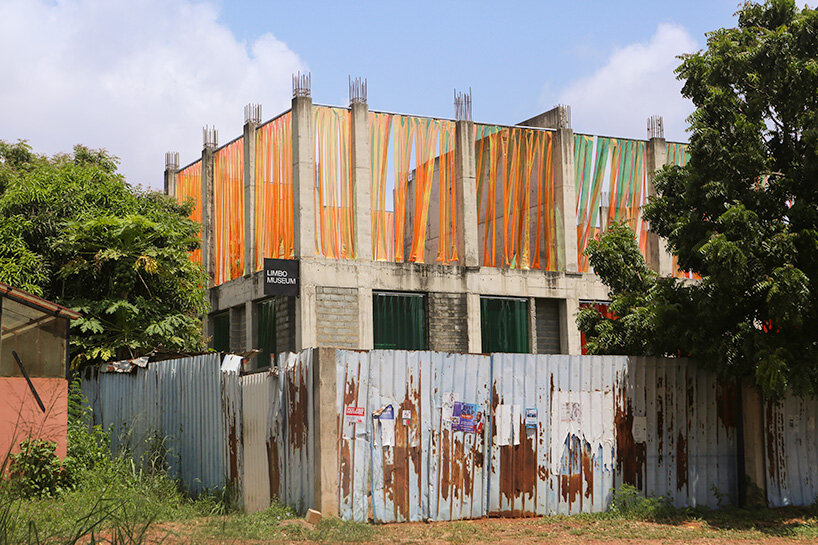
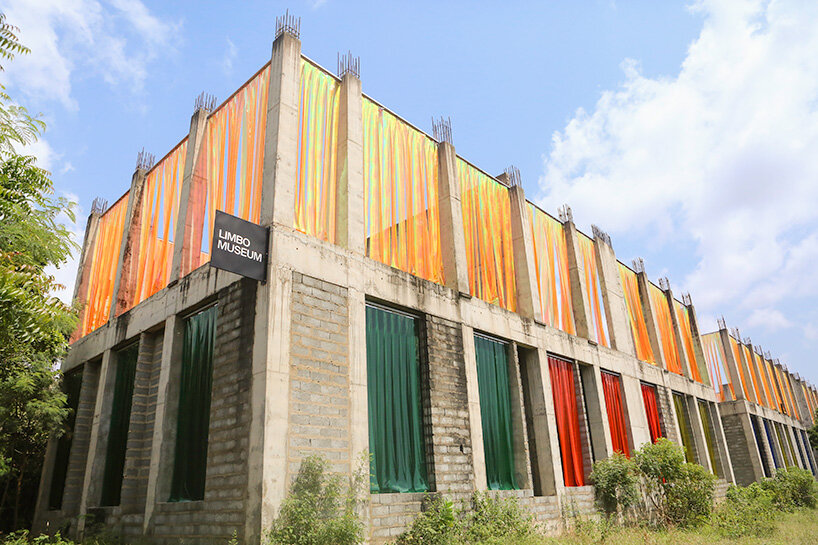
Artist Alvaro Barrington transforms the unfinished architecture of Limbo Museum in Accra, Ghana, into a colorful, site-specific installation that connects everyday infrastructures of commerce and migration to the shared experiences of the African diaspora. Titled Western Beef ft. Western Union, the exhibition, on view until February 1st, 2027, marks the artist’s first presentation on the African continent and is the culmination of a residency organized through the Visiting Artist Program of the museum. Curated by Diallo Simon-Ponte, the project turns the exposed concrete structure and open apertures of the building into an extension of Barrington’s painting practice, using color and familiar materials to consider how cultural identities travel across borders.
The exhibition takes its title from two recognizable fixtures of diasporic life. Western Beef is a New York supermarket serving primarily Caribbean, African, and Hispanic communities, while Western Union is the financial service through which people living abroad send money home to support families, build houses, and maintain connections across geographical distances. Bringing these references together, Barrington draws on his own upbringing in New York and his Caribbean background to consider the systems that sustain communities separated by migration.
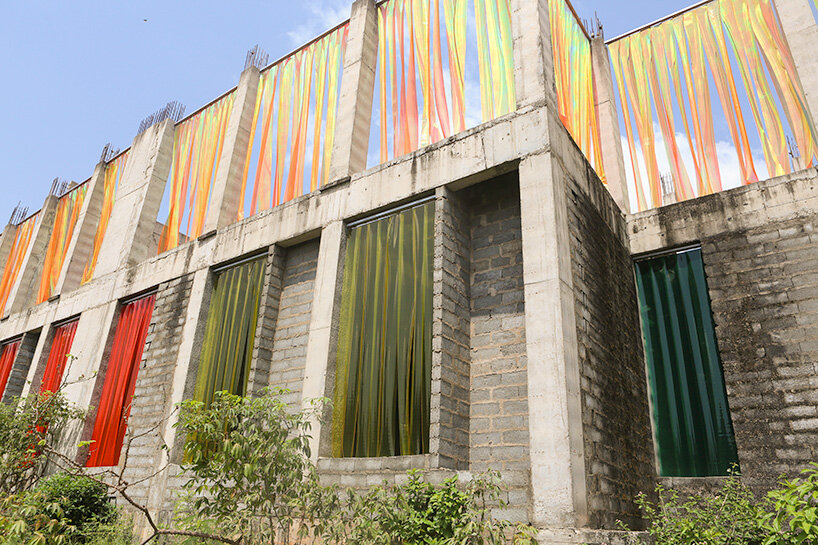
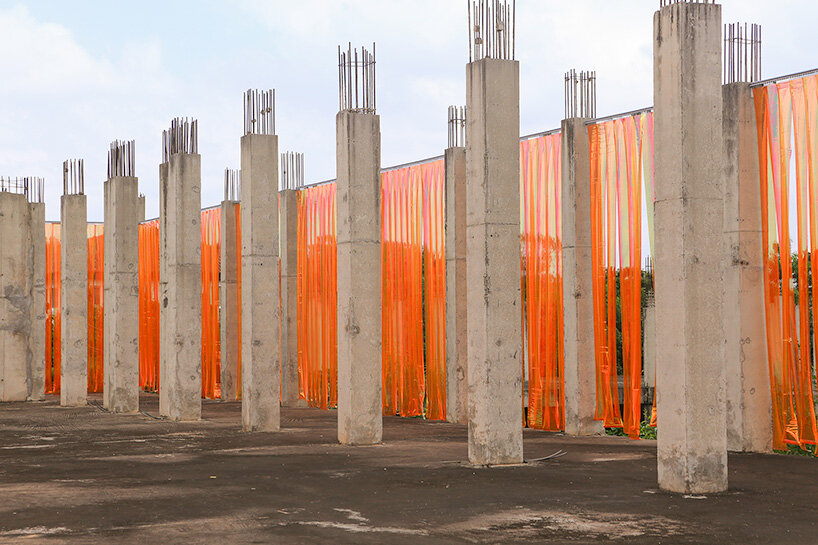
Alvaro Barrington works directly with the unfinished architecture of the museum. Floor-to-ceiling strips of colored PVC occupy the open apertures of the building, creating a series of flexible partitions that visitors move through. The material recalls the plastic curtains found in grocery stores, where they regulate temperature by separating hot from the cold areas.
The strips form a kaleidoscopic passage, shifting between pink, green, blue, gold, and purple. Their colors emerge from Barrington’s observations of Accra’s landscape and the work of kente cloth weavers during his residency. In this setting, the installation brings together references to commercial interiors, local material culture, and the exposed concrete framework of the museum.
Usually associated with the circulation and storage of goods, the PVC partitions become an architectural element that reorganizes how visitors experience the building. Their movement and transparency create an environment that is neither fully enclosed nor entirely open, allowing the existing structure to remain visible while changing the way it is perceived.
Color has always played an important role in Alvaro Barrington’s work, which spans painting, textiles, sculpture, and installation. He works with materials such as burlap, yarn, concrete, chain, and metal rolling gates, drawing on a range of influences, from Caribbean culture and hip-hop to carnival and European modernism. In Western Beef ft. Western Union, color also carries personal and cultural meaning.
The different shades draw on associations across the Black Atlantic, but their meaning is not fixed. They might bring to mind a familiar product, a place, or something in nature, depending on the person looking at them. The supermarket partitions offer another point of reference. Usually used to separate areas and regulate temperature, the PVC strips take on a different role in the exhibition. They recall the everyday spaces and exchanges that connect communities, while suggesting how architecture can shape the way people meet and move through a place.