james bridle and the power of solar, zooplankton, and non-human entities
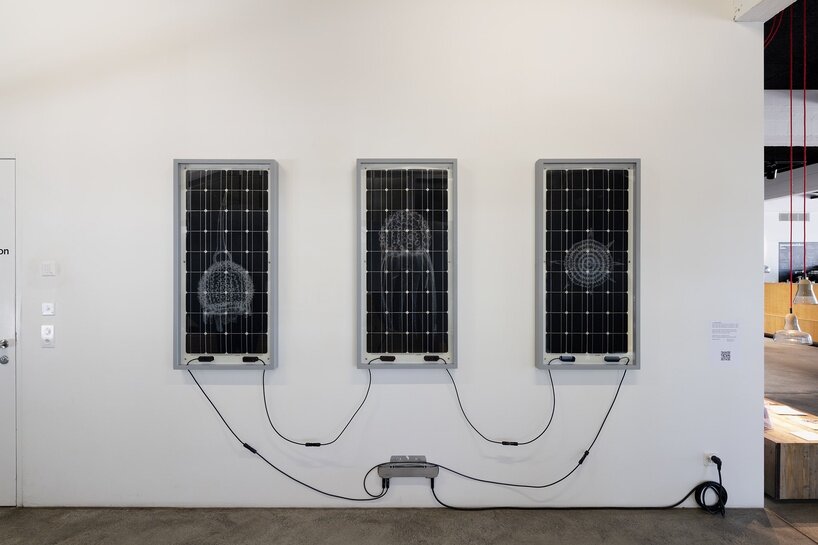
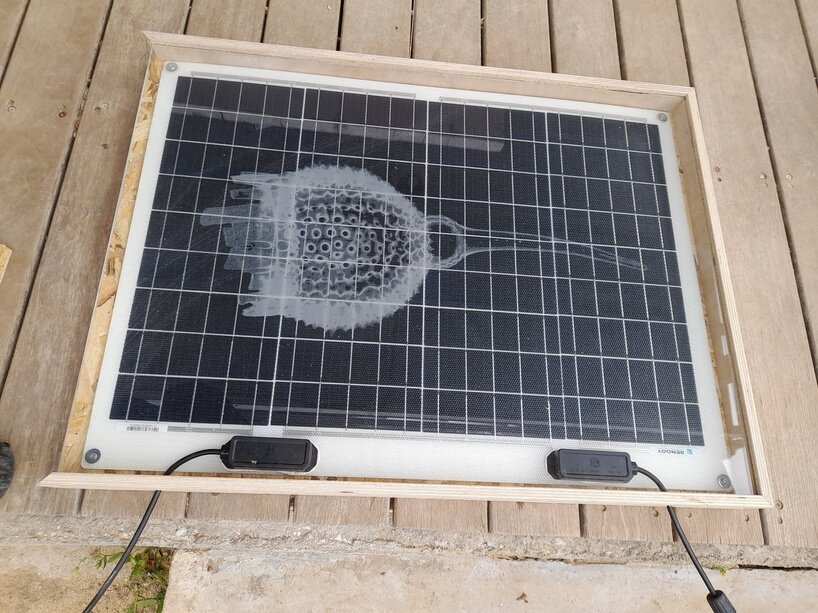
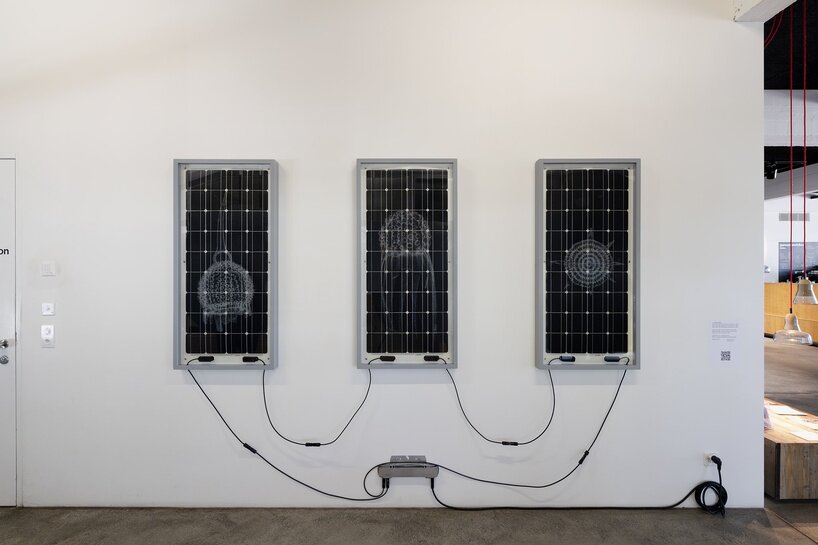
Back in 2022, James Bridle—artist, technologist, and author of the book New Dark Age (2018)—created a work called Solar Panels (Radiolaria Series). It was a series of five functional 100W photovoltaic generators, the faces of which were etched with tiny, microscopic zooplankton called Radiolaria. Looking at images of their silica skeletons, enlarged hundreds of times so they are visible to the human eye, reveals a universe of spiky arms, swirling bodies, intricate lattices, and geometric patterns. Juxtaposed with each other, and containing their own advanced modes of capturing energy, Bridle creates a compelling parallel between non-human and human intelligence, and what that could mean for the future of the earth.
Across their writing, installations, and lectures, James Bridle has become known for thinking about the ways that technology, the natural world, and humanity influence each other, with a strong emphasis on understanding ‘intelligence’. They look beyond the popular, mainstream ideas associated with the word, often linked to IQ, large language models, and other forms of reconstructing human thought patterns. In their piece, AI was built on human intelligence. Nature has more to teach, they express the urgency of going beyond this definition, and to learn from the other creatures we share the Earth with.
It is this line of thinking that has underwritten their works with solar panels, water collection systems, and vernacular architecture. Looking back to their 2019 exhibition, Through Other Eyes, which they curated with NeMe Art Centre in Cyprus, an emphasis on more-than-human forms of thinking and creating is evident. Here, they invoked the 1922 writing of Dziga Vertov, in which he describes his fascination with documentation through the lens of a camera. Bridle parallels this with the technologies of the twenty-first century – all the mania, fascination, and consequences – saying that, if we apply these new or different ‘eyes’, those of machines and animals, ‘They might also, if we are open to them, offer us visions of unexpected insight, and startling beauty.’ It is within this vision – trans-species and trans-machine – that Bridle’s work takes form.
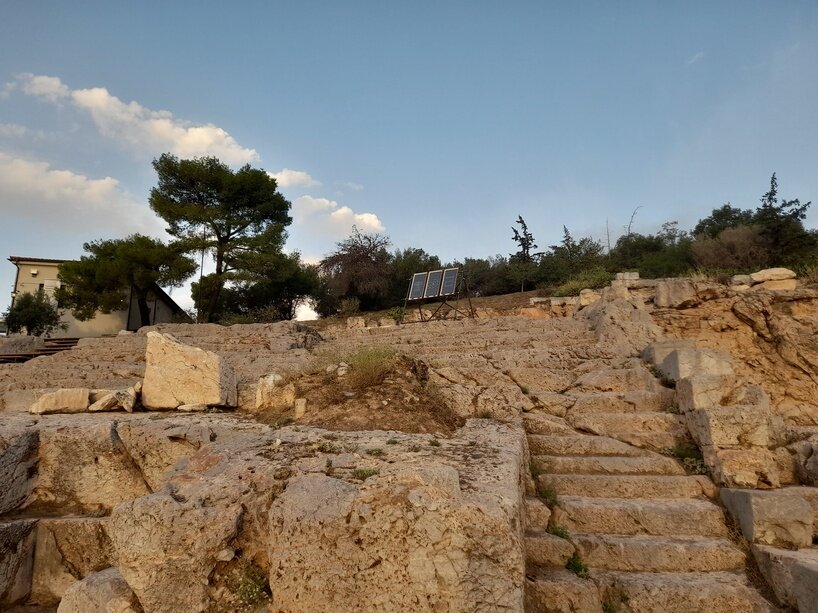
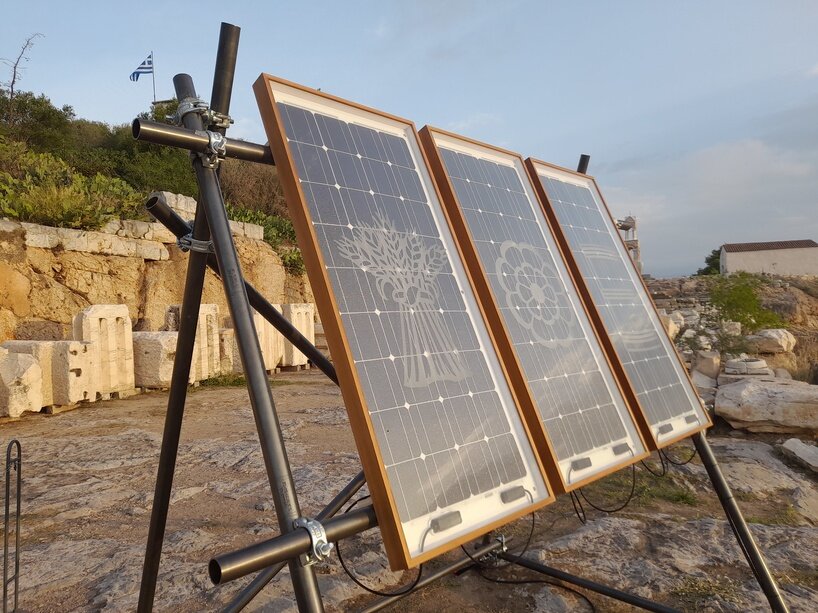
Putting an image of radiolaria on a solar panel conjures ideas about the ability to sustain life and other modalities of using energy generated by natural processes. It calls into question the human need to consume power. Radiolaria, microscopic yet possessing highly advanced skeletal structures, can exist symbiotically with algae that provide them with energy. There is an ancient logic to their existence that can be traced back to the Cambrian. Bridle, in their description of the project, highlights how they were ‘famously illustrated, by the German naturalist Ernst Haeckel, who coined the term “ecology” in 1866.’ The complex structures of these organisms continue to inspire wonder, demonstrating how something so small can be so powerful and complex.
Expanding this logic to the scale of solar panels, a technologically intensive mode of capturing and converting energy from the sun in a way that can power human inventions calls into question the effectiveness of human ‘technology’ when compared to that of the non-human. Here is an incredible invention that can create sustainable energy, a promising alternative to fossil fuels, yet it takes advanced electronics and logistics to achieve what a single-celled organism has been doing for thousands of years. Here, Bridle once again asks us to consider what innovation means, not when we compare it to the span of human history.