How New York Failed Jordan Neely
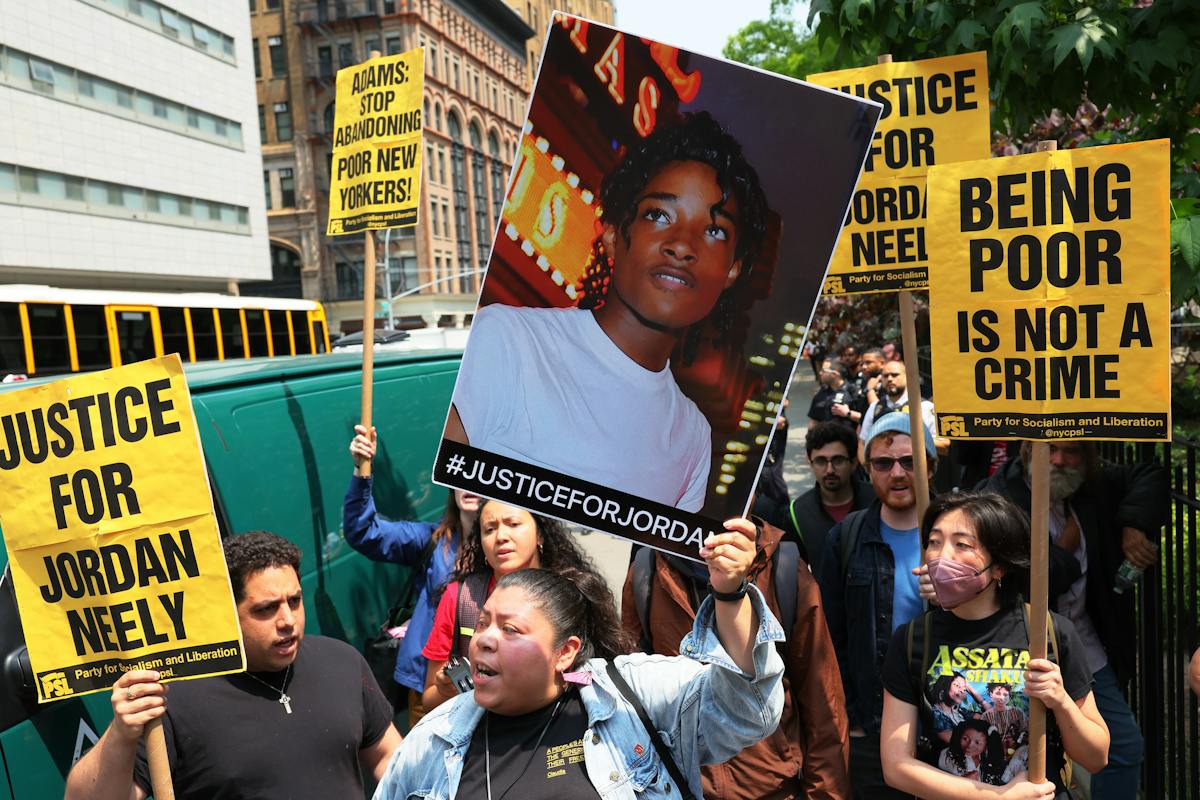

Neely’s last chance to escape this cycle came in April 2023. Homeless outreach workers found him at the Coney Island subway station, drug-addled and with holes in his clothes. He exposed himself and urinated in front of the workers. They worried that he might hurt himself or someone else, so they consulted NYPD officers, who persuaded Neely to accept a shelter placement. The cops took him to a waiting van. But the driver, who worked on a contract with the city, refused to take Neely unless he had an escort. While the driver was arguing with the police, Neely wandered off.
As of that spring, Daniel Penny, who was 24, had been living in New York City for the better part of a year. He was taking architecture classes and teaching swimming lessons at a gym. Giridharadas, in the course of his reporting, visited West Islip, the Long Island suburb where Penny grew up. Over lunch, the editor of a local newspaper described the town as “the Long Island version of a flyover state.” Like much of Nassau County, it’s a haven for families who decided, at one point or another, to trade the excitement of city life for backyard barbecues and little league games.
In Penny’s case, that choice was made a couple generations earlier. The high school he graduated from, West Islip High, is the same one his grandmother and his father attended. But he found the town stifling. When he joined the Marine Corps, immediately after high school, he did so “in search of adventure,” as he later said. He was inspired by Don Quixote—who, as Penny put it, left “his ‘normal’ life to pursue his dreams despite [being] called a madman.” Penny spent four years in the military, much of that time deployed on a ship in the Mediterranean, before returning to civilian life.