From Nations League disappointment to ‘Country Roads’ celebrations: The highs and lows of Mauricio Pochettino’s USMNT era
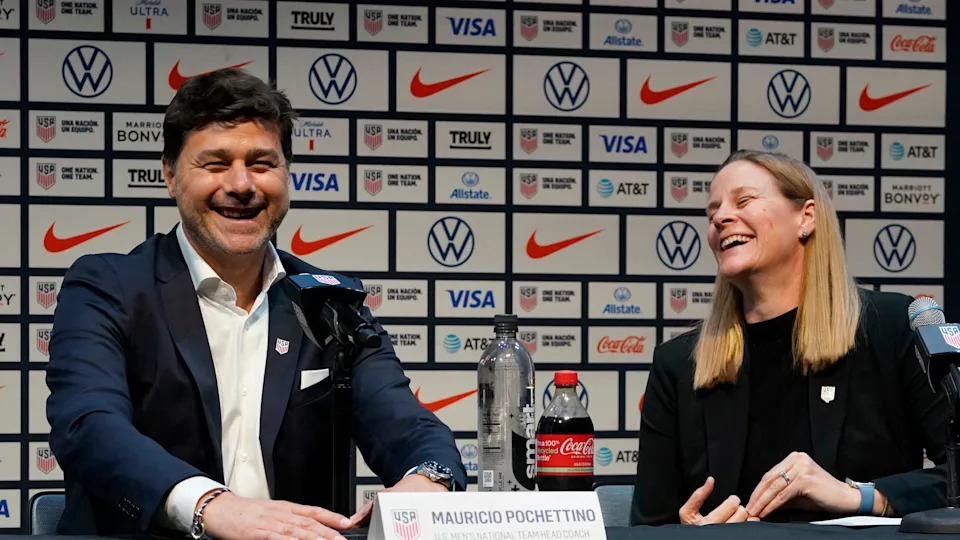
Mauricio Pochettino’s USMNT tenure brought renewed belief and painful setbacks. GOAL revisits the defining moments and the legacy he leaves behind.
The Mauricio Pochettino era of American soccer wasn’t long, but it packed a lot in. With the home 2026 World Cup at its center, his USMNT tenure was always going to carry enormous stakes. The tournament, though, was only part of the ride. From beginning to end, this was a rollercoaster – partly by design, partly by circumstance.
There was no point where Pochettino’s tenure was boring, that’s for sure. From the moment he arrived on American shores, the Argentine looked set to shake things up. He was hired to do just that, bringing a resume that included stops at Tottenham, PSG and Chelsea. He was the man tasked with leading American soccer into the biggest moment in the sport’s history. Ultimately, doing so wouldn’t be easy.
Pochettino’s run as head coach included some of the highest highs of the program’s history. It also included some unquestionable lows that are still being discussed today. It was, to put it lightly, eventful, as Pochettino built, broke down, and rebuilt the USMNT on the fly, all while leading this team into massive games.
So what were the big moments? What were the low ones? GOAL looks back at Pochettino’s time in charge…

The Pochettino era began with big smiles in September 2024.
As Pochettino sat down next to JT Batson, Cindy Parlow Cone and Matt Crocker, there was only one word to describe the atmosphere: hope. After the USMNT crashed out of the Copa America on home soil, hope was in short supply, but U.S. Soccer had taken a big swing to restore it by bringing in a big name.
On the first day in New York, Pochettino said all the right things. He wasn’t in America to compete at the World Cup; he was in America to try and win it. He spoke about belief, about passion and, most notably, about dreaming big. It was not in his nature to simply play. It’s not in America’s either.
And so the two sides came together to try to win. It was safe to say that Pochettino won that first day on the job, though, as he started his tenure with a smile.

Pochettino used the USMNT’s Nations League defeats to confront a culture he believed had grown too comfortable.
Over a year after it happened, Pochettino spoke extensively about the USMNT’s backbreaking CONCACAF Nations League losses to Panama and Canada. They were a “punch,” as Pochettino described them, but a punch that he and his staff felt was coming.
Between his arrival in September and those losses in March, Pochettino had seen the cracks in the foundation that had led to Gregg Berhalter’s departure. He took aim at his players for treating USMNT duty like a vacation or a reunion rather than a business trip. The business aspect of international breaks had been lost. The players simply weren’t taking things as seriously as Pochettino wanted them to.
Losses, then, were inevitable and, ultimately, Pochettino was glad they came when they did. They stung in the moment, yes, but they allowed him to point to the problems with some tangible consequences to further his point. That summer, he began addressing those symptoms, but it’s safe to say that the vibes were at their lowest leading into that Gold Cup.

The Gold Cup ended in heartbreak, but Pochettino used that summer to set new standards and rebuild the USMNT’s culture.
Oddly enough, the Gold Cup ended in tears. Pochettino himself was heartbroken as he addressed his team postgame. The loss to Mexico in the final was soul-crushing to the coach in particular, because he felt his players deserved more.
That was due to the work that they all put in during their weeks travelling around the country. Featuring a squad of select veterans and somewhat overlooked newcomers, Pochettino pushed back numerous times when questioned about roster selection. He had the guys he wanted, and all of them were USMNT players. They would prove it before the end, reaching the final before falling to Mexico.
Yet, that summer was as much about who wasn’t there as who was. Pochettino’s war of words with Christian Pulisic was a headline-grabber, and there are still questions today about what it meant for the bigger picture of their relationship. Yunus Musah’s decision to pull out as well seemingly cost him a World Cup spot. It was during that Gold Cup that Pochettino broke down the USMNT and began building it back up, setting new standards about where this team could go with or without certain players.
Once many of those players rejoined the group, good things happened as the USMNT put together results against Japan, Australia, Paraguay and Uruguay in friendlies. The final game, a 5-1 win over Uruguay, was among the most dominant performances of the Pochettino era.
As the calendar turned to 2026, then, everything seemed to be going in the right direction as Pochettino had effectively rebuilt the culture of the USMNT over a nine-month period.
The March break was, effectively, the kickoff of World Cup season. To get things started, the USMNT brought in two European heavyweights: Belgium and Portugal. The games would be tests. Best case, the U.S. win and build hype. Worst case, they lose, and Pochettino’s players get a bit of a humbling reminder of where they stand on the pecking order.
The USMNT was served up with the latter. After being smashed, 5-2, by Belgium in the opener, they were dispatched, 2-0, by Portugal in the second game. The scorelines don’t reflect that there were positive moments in both games, but the scorelines also don’t lie. March was a reminder that the USMNT, while talented, weren’t world class.
There were questions as to how the team would take that lesson. Would it galvanize them or would they shrink? That was Pochettino’s big job in the weeks leading up to the moment he’d been hired for: the World Cup.
Everyone remembers the visual: Country Roads blasting with Pochettino, wearing his now-iconic blue outfit, fist-pumping and smiling ear to ear. For many, it was the peak of American soccer, the moment where it felt like the world was watching and liking what they saw.
There was much to like in those first few games. Under Pochettino, the USMNT played free-flowing attacking soccer unlike anything the world had seen from an American side. There had been World Cup successes, but those came with pragmatism. Not this run. This one began with the U.S. blowing the doors off the opposition.
Paraguay were demolished. Australia were swept away. Turkey barely scraped together a win over an entirely rotated U.S. team. Then, even down a man, the U.S. took it to Bosnia and Herzegovina to win their Round of 32 clash. It wasn’t just the results, but the manner in which the U.S. was getting them. They were achieving things, yes, but, just as importantly, they were fun.
Pochettino, too, was having fun. He was singing country music, embracing American culture, and more importantly, he was winning big games on the big stage. This was what he was hired to do.
The only real negative coming out of that last win in the Bay Area was Folarin Balogun’s red card. He had been the star of the World Cup so far but, controversially, his red card meant he would be out for the biggest game in team history.
The world knows what happened next.
FIFA rescinded that red card, making the USMNT Public Enemy No. 1 to the rest of the world. In an instant, the vibes were essentially crushed, but Belgium did their part to make that happen, too. There was a brief moment of hope following a Malik Tillman free kick, but from there, the Belgians restored order, crushing the USMNT, 4-1, to end the hosts’ World Cup dream with a thud.
The loss was bad, but it was the manner of it that was so difficult. On a day where so many new fans tuned in to see the U.S. try to take the leap, they were instead shown how far they have to go. All the while, many outside of the States watched and laughed, having seen justice served following the Balogun situation.
It seemed like that would be the Pochettino era, one that had incredible highs but one insurmountable low. It wasn’t over, though.
After a few weeks of mulling over his future, Pochettino made his choice. In August, he put pen to paper on a new contract that would keep him with the USMNT for another four years.
Why did he return? Primarily, it was to continue the challenge of building up American soccer. He would have quite a lane to do so now. With an extended runway and rising stars like Cavan Sullivan, Julian Hall and Mathis Albert on the rise, Pochettino would get to spend this cycle doing what he does best: laying the foundation and helping mold young stars.
In his first camp of the 2030 cycle, Pochettino called in a split roster of veterans and teenagers, yet the group played as if it was the program’s Best XI. They defeated Peru, Chile, Mexico and Canada over their two weeks together. Those wins brought so much reason for optimism. Hope was restored, with Pochettino set to lead this group on a new journey.

A tearful Pochettino struggled with his goodbye to the USMNT.
A partnership that began with smiles ended in tears. Manchester United had called and Pochettino simply had to go. He was excited to realize the dream of managing at Old Trafford, but he was heartbroken to be leaving a USMNT group that he had become so attached to.
So, seated at the Arthur M. Blank Training Center just outside of Atlanta, Pochettino’s emotions poured out of him. His second cycle will conclude after just over 100 days, which means he leaves with no shortage of unfinished business. That said, it’s Manchester United. When they call, you answer and figure out the rest later on.
Before saying goodbye, though, Pochettino was determined to lead the team through two CONCACAF Nations League games against Haiti. The first was a 6-0 win, which effectively left the second as little more than a Pochettino swansong. It will be an emotional day for an emotional coach as he ends his stint at right around 26 months.
And then he’ll be off to Old Trafford to start a new journey. Based on that club’s trajectory, it, too, will have its share of highs and lows as Pochettino departs to take on one of the biggest challenges in the world.