I brushed off bizarre loo symptoms for 12 years & GP ignored warning signs… after shock diagnosis I go to bed terrified
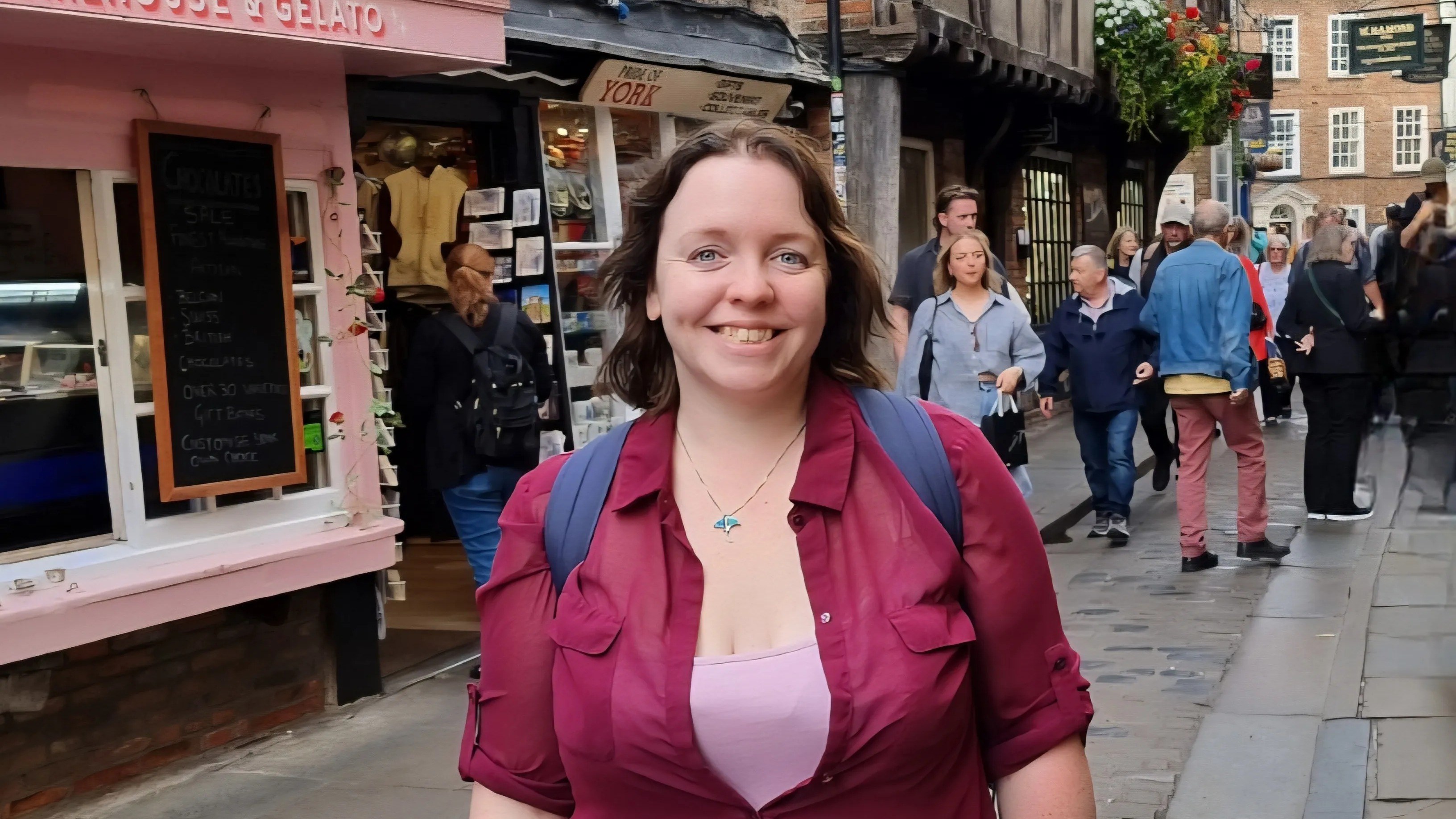


FOR more than a decade, Hannah Mockler had planned her life around trips to the toilet.
The 34-year-old, from Derbyshire, never considered seeing a doctor about it.
Looking back, Hannah believes that was among the first signs of multiple sclerosis (MS), a lifelong condition affecting the brain and spinal cord that would go undiagnosed for more than a decade.
More than 150,000 people in the UK live with MS, with recent estimates showing that number has increased.
Symptoms range from extreme fatigue and dizziness to problems with balance and memory – and differ from person to person making it difficult to diagnose.
The condition is incurable and unpredictable, ranging from mild daily symptoms to severe disability and in some forms, it can flare up at times or steadily worsen over time.
Hannah, who was diagnosed at the end of 2025, now uses a walking stick, has lost feeling down the right side of her body and uses catheters for worsening bladder problems.
She wonders how different her life might have been if she had started treatment years earlier.
Hannah had lived with sudden, desperate urges to urinate since her early 20s. Her sleep was regularly interrupted by visits to the loo.
She struggled to swallow tablets without choking and sometimes had to consciously think about swallowing food and drink.
But having had them for so long, she dismissed them as peculiarities of her body.
“I always assumed it was just me being weird,” she said.
But Hannah had a warning sign of MS around four years ago, when she woke up with pins and needles in both hands following a violent bout of sickness.
Initially, she thought she had injured herself while vomiting, but the tingling gradually turned to numbness and weakness in her fingers, making it difficult to grip things.
Her GP told her to come back in eight weeks if the problem persisted. It never went away.
Over the next three years, Hannah repeatedly visited doctors, undergoing nerve tests and physiotherapy, but getting no answers.
She began to suspect some doctors thought the problem was psychological.
She said: “Maybe it’s just psychological, like it’s in your head. Ironically, not quite in the way they thought.”
After years without answers, she stopped expecting one.
In November last year, Hannah woke up to find what felt like a film covering the right side of her vision.
At first, she blamed tiredness or the bright lights at the supermarket where she had recently started working as an online shopper.
She was struggling to read the small print on her handheld scanner and wondered whether she simply needed stronger glasses.
Over the next few days, her eyesight deteriorated further.
When she tried to text friends and family, she could no longer make out the letters on the bottom-right corner of her phone’s keyboard.
Her family began joking about all the mistakes in her messages, unaware that she was struggling to see what she was typing.
After around a week with no improvement, Hannah booked an appointment at her local Scrivens opticians, expecting to be told she needed a new prescription.
While her eyes appeared healthy, further tests revealed she had lost part of her peripheral vision.
The optician was so concerned that he handed her an envelope containing the results and told her to go straight to A&E.
He had written “go today” in the bottom-right corner, but Hannah couldn’t see the message because that part of her vision had disappeared. Luckily she received a follow up message which prompted the visit.
Hannah had already been referred to neurology over the unexplained numbness in her hands, but was still waiting for an appointment.
At King’s Mill Hospital, doctors initially feared she had suffered a brain aneurysm.
Her vision continued to deteriorate until she could look directly at someone’s face and see only one eye.
After nine days in hospital, scans revealed damage to the protective covering of nerves in her brain, with doctors suspecting multiple sclerosis.
The diagnosis was confirmed around two months later.
Hannah’s peripheral vision has since returned, but because she has lost feeling down the right side of her body, she has had adaptations installed at home to help her get around.
Hannah said: “I’m honestly terrified of every night I go to bed and I’m terrified of what is going to happen tomorrow.”
Nick Moberly, chief executive of the MS Society, said the disease can be difficult to recognise because its early symptoms vary so widely and can resemble other conditions.
Most people are diagnosed in their 30s or 40s, although symptoms can begin much earlier.
He said: “It’s hard to pinpoint exactly when MS begins, and the early signs and symptoms are different for everyone.”
Optometrists cannot diagnose MS, but they can spot problems that warrant further investigation by a neurologist.
One warning sign is optic neuritis, an inflammation of the nerve connecting the eye to the brain that can cause pain and loss of vision.
Moberly said: “The most common problems with vision in MS are optic neuritis, double vision and involuntary eye movements.
“Optic neuritis is often an early symptom of MS – with about half of all people with MS experiencing it at some point. But not everyone who has optic neuritis will go on to be diagnosed with MS. Most people make a good recovery from their eye problems.”
Difficulties with identifying MS came under scrutiny last month after Hollywood actress Christina Applegate, 54, revealed she had been wrongly diagnosed with MS in 2021.
The Dead to Me star, who has spent years undergoing treatment and speaking publicly about her illness, said doctors had since told her she did not have MS, despite continuing to experience debilitating symptoms.
She said: “You don’t get misdiagnosed and then all of the sudden I’m better. If anything, I’ve gotten worse.”
A 2024 review of six studies involving more than 1,600 patients found that around 15 per cent of MS diagnoses were incorrect, although rates varied considerably between studies.
Moberly dismissed concerns and said MS is diagnosed using strict criteria.
He said: “An MS diagnosis follows strict criteria that make it very reliable.” Doctors use MRI scans, blood tests and sometimes lumbar punctures to investigate symptoms and rule out other conditions.
But a lack of access to specialists and poor awareness of symptoms can make getting a diagnosis harder.
There is no cure for MS, although drugs known as disease-modifying therapies (DMTs) can reduce the number and severity of relapses, when symptoms suddenly appear or worsen.
They work by altering the immune system’s activity to reduce attacks on the protective covering around nerves in the brain and spinal cord.
Starting effective treatment early can reduce the risk of further nerve damage and disability developing over time.
The drugs cannot reverse damage that has already occurred.
Hannah now receives treatment but wishes she had sought help for her bladder problems and difficulty swallowing, and that the numbness in her hands had been investigated sooner.
“Maybe I wouldn’t have to be using a walking stick right now because if I’d have had the medication sooner then maybe I wouldn’t have had this flare up of my right side going completely numb,” she said.
Her advice to anyone experiencing unexplained symptoms is simple.
“Don’t just think that it’s you being weird,” she said. “Go and talk to a GP about it.”