Nvidia’s in Bed With a Chinese Spy—and Trump’s in Bed With Nvidia
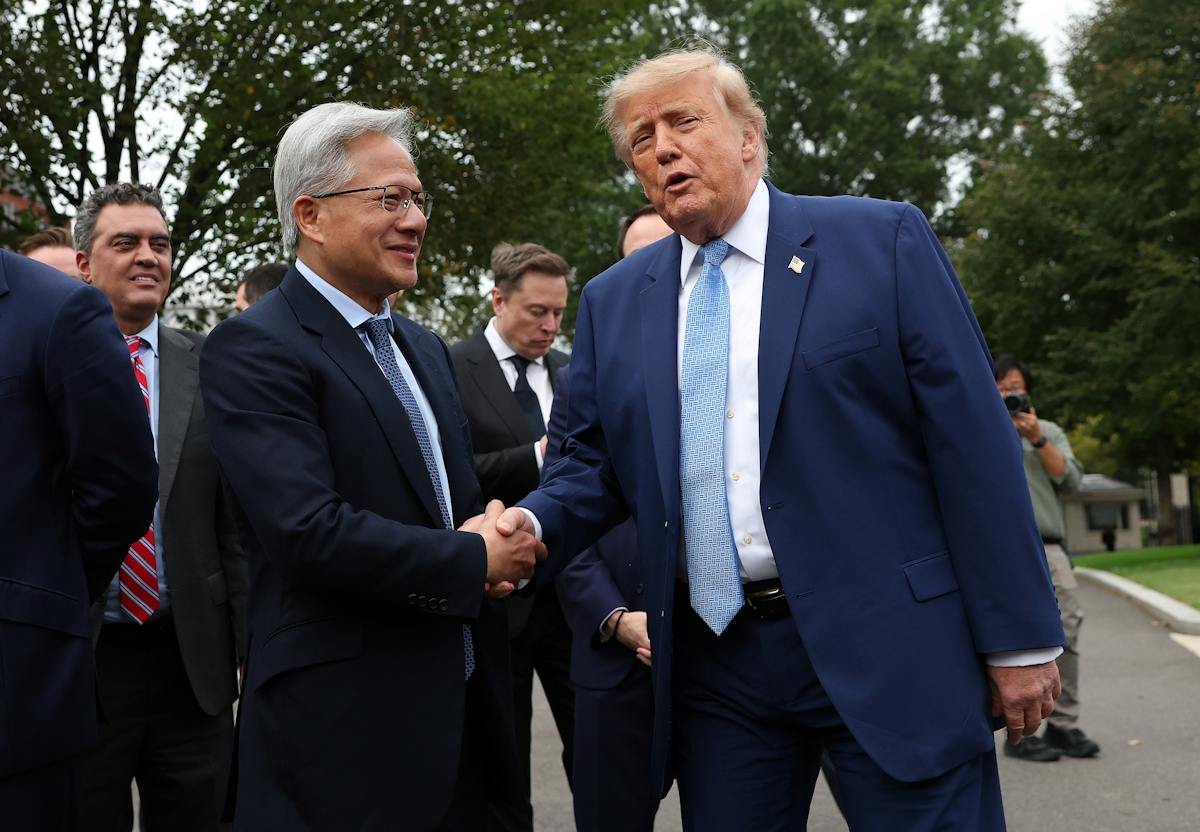

Meanwhile, in August 2025—the same month Trump and Huang met, and also the same month Trump announced the first of two decisions to ease up on Nvidia’s export controls to China—officials at the Department of Commerce who were investigating Metaspeed and Alice Huang received an email from Nvidia’s general counsel, Timothy Teter. In the message, Teter told the Commerce officials that he’d been given permission to contact them by their boss Jeff Kessler, a political appointee (undersecretary for industry and security) who, according to the Times, reports directly to Commerce Secretary Howard Lutnick.
The Commerce officials politely declined to talk to Teter and forwarded his meddling emails to Kessler, who told them to handle the investigation by the book. But it seems clear Kessler and, in all likelihood, Lutnick, flirted momentarily with disrupting Commerce’s Metaspeed investigation, which eventually moved over to the Department of Justice. (In July 2025 Lutnick said of the Nvidia sales to China: “We don’t sell them our best stuff, not our second best stuff, not even our third best. The fourth one down, we want to keep China using it.”)
It shouldn’t surprise anybody that Trump sees national security as a commodity to auction off to the highest bidder. He’s done it before. In the case of Nvidia, Trump granted export approval conditioned on becoming America’s business partner (plus a patriotic supporter of Trump’s White House ballroom and inauguration). In the earlier case of some advanced AI chips desired by the United Arab Emirates that the Biden administration had placed off limits—including Nvidia H200 chips—Trump granted export approval to an entity that was already his own business partner, the UAE, which purchased a 49 percent stake in World Liberty Financial and then bought $2 billion in WLF stablecoin to invest in Binance. A mere two weeks passed between the latter deal and the Trump administration’s approval of the AI chips purchase.