I’m a GP and ignored diabetes warning signs for 10 years until a nifty gadget revealed my ‘danger’ food
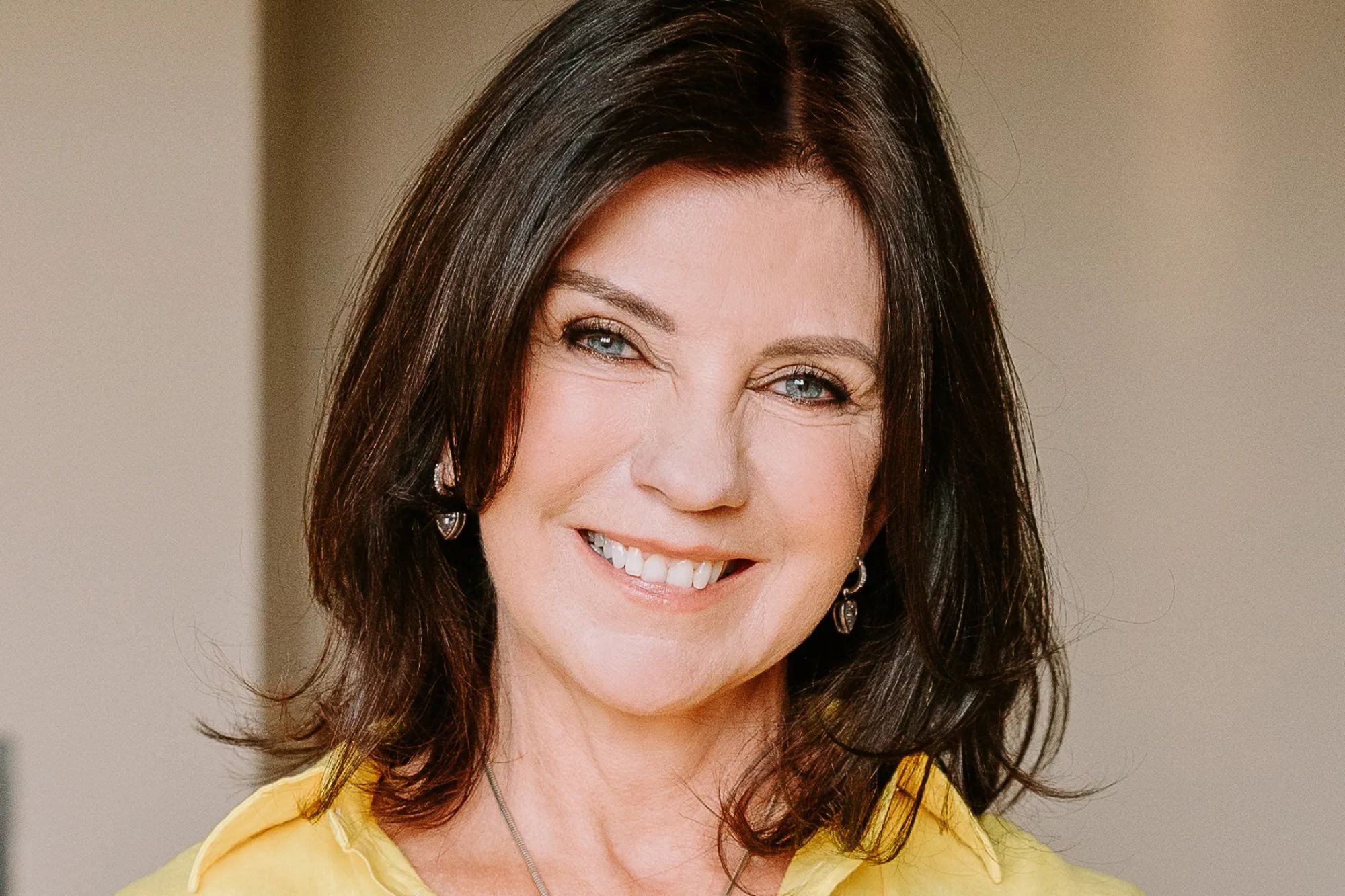


TV doctor Dawn Harper appeared to be the picture of health. So when tests flagged that the GP was on the cusp of type 2 diabetes for 10 years – like a whopping 6.3 million Brits – she buried her head in the sand.
Even when she finally got her diagnosis, in July 2023, she was stunned to discover that there was only one food in her diet that tipped her into a high blood sugar range – and by cutting it out, she’s managed to avoid medication so far.
For years, the NHS GP was on our TV screens giving health advice while co-hosting Embarrassing Bodies.
With a healthy BMI of 19, a diet built around home-grown vegetables, and an active lifestyle, she was bewildered when tests flagged her as prediabetic for several years.
Then came the bombshell diagnosis in 2023, the mum-of-three had type 2 diabetes.
Type 2 diabetes is more often diagnosed in people with extra fat around the middle and poor lifestyle habits, so health fanatic Dawn couldn’t understand why she had it.
“It was a massive wake-up call,” Dawn, 63, tells Sun Health.
“What was frightening for me was thinking, ‘What on earth can I change?’ because it wasn’t as though I was carrying two stone of extra weight.”
Determined to understand what was driving her elevated blood sugar, Dawn bought and wore a continuous blood glucose monitor (CGM) on the back of her arm.
These devices let you check your sugar levels without having to prick your fingers, and it can be used to see how your blood sugar levels respond to different foods in real time.
It identified a major culprit in her diet.
Bread spiked her glucose levels above 20 mmol/L— well outside the safe range (3.9 to 11.1 mmol/L).
Tests eventually showed Dawn suffered a much rarer and lesser-known form of the disease, called late-onset type 1 diabetes (LADA).
LADA is often misdiagnosed as type 2 diabetes because it also comes on in later life, but develops slowly and worsens with time.
Type 1 diabetes, on the other hand, tends to start in childhood.
LADA tends to occur in people with a healthy weight, according to Diabetes UK, and it has traits of both type 1 and type 2 – earning it the nickname type 1.5 – so it can be trickier to manage.
But, like all forms of diabetes, Dawn’s lifestyle choices matter and can help avoid complications.
Dawn believes her CGM has been “life-saving” for keeping her blood sugar levels in range 90 per cent of the time.
But she believes it could save the lives of millions more, if NHS access was expanded.
CGMs are only available to type 1 diabetics (400,000 people) and high-risk type 2 diabetes patients.
The tech can be bought privately, costing £50 to £120 a month for sensors, with additional upfront costs for transmitters and app subscriptions.
That’s why several major patient advocacy groups are campaigning for better access to such devices, including Diabetes UK (Diabetes Tech Can’t Wait).
Dawn doesn’t just see them helping the 4.5 million people with type 2 diabetes, but the estimated 6.3 million people at risk with prediabetes.
“If CGMs allow people to cut back on foods that cause a spike in blood sugar, they can prevent prediabetes from progressing to type 2 diabetes,” Dawn says.
“I believe if we could give CGMs to every person diagnosed with prediabetes in this country, and they acted on anything the monitoring threw up, that we could save millions of lives and save billions of pounds.
“I would go so far as to say we could save the NHS.
“A CGM costs pounds. Managing diabetes and the complications of poorly controlled glucose costs millions, and that number will only go up if we don’t act now.
“We know that having diabetes increases your risk of heart disease, going blind, kidney disease and dialysis, strokes, and amputations.
“Poorly controlled diabetes damages the nerves and blood vessels over time.”
Every week, diabetes leads to 184 amputations, and more than 1,010 strokes, 700 heart attacks and 3,340 cases of heart failure.
Dawn, who lives in the Cotswolds with her husband, Jack, 58, a mortgage broker, with whom she shares three children aged 29 to 32, initially didn’t take her chronic health condition diagnosis seriously.
She was first alerted to the possibility of being prediabetic in 2013 while filming spin-off Chanel 4 show Embarrassing Fat Bodies.
As part of the production, Dawn took part in an experiment that saw her undergo checks, including an HbA1c blood test, which measures average blood sugar levels in the previous two to three months.
It’s different from a finger-prick test, or CGM measurement, which is a snapshot of blood sugar levels at a particular time, on a particular day.
A normal HbA1c level for a person without diabetes is less than 42 mmol/mol [millimoles per mole], while 42 to 47.9 mmol/mol signals prediabetes.
“At the end of one day’s filming, the researcher took me aside,” she recalls.
“She told me, ‘Dawn, I’m sure this is a lab error, but your blood sugar is raised.
“‘It’s saying you’re prediabetic, so you just might want to get that checked’.
“I then did what we tell patients off about – I took absolutely no notice of what I’d just been told!
“I thought, ‘Look, I’m really fit. I do loads of exercise. I’m slim. I eat well’.
“It’s a standing joke with my friends that I never have dessert at a dinner party, not because I’m virtuous, but because I genuinely don’t have a sweet tooth.
“So I just thought, ‘Yeah, I’m sure it’s a lab error too’.”
Seven years passed, and in 2022, Dawn had an NHS Health Check, which is offered to everyone in England over the age of 40.
The next day, she was told she was prediabetic with a HbA1c reading of 44 mmol/mol, but admits she spent the next six months in “a bit of denial”.
Dawn says: “I just thought, it doesn’t fit. Type 2 diabetes is usually linked to lifestyle.”
Obesity drives up the risk of the condition, but family history, age and ethnicity play a role, too.
Her only obvious risk factor was that her dad, Roy, now 87, was diagnosed with type 2 diabetes years ago.
In 2023, Dawn finally took action when another test revealed her reading was now 48 mmol/mol, which is type 2 diabetic.
“I just thought, ‘Dawn, you need to wake up and smell the coffee here’.”
Her doctor immediately started her on metformin – a common prescription drug used to treat type 2 diabetes – which she says “didn’t really make any difference to my blood sugar levels”.
She wanted to know exactly what was causing her blood sugar spikes and purchased the Yuwell Anytime CGM.
She wore the sensor on the back of her arm for two weeks, with a tiny needle that takes continuous blood sugar readings.
By logging food in an app, she was able to track how her blood sugar responded in real time.
Dawn, who says her only vice was an occasional wine, guessed it would cause a red-flag reading.
“I loaded the app up on my phone and poured myself a glass of wine, thinking that was the culprit,” Dawn says.
“The only thing I could do to improve would be to go teetotal, because I don’t have other vices.
“Then I looked at my readings and the wine had done absolutely nothing to my sugar levels.”
She continued to wear the device and eventually, the true culprit became clear.
“My go-to lunch would be a ham and cheese sandwich or a chicken Caesar wrap,” she says.
“The first time I ate a sandwich while wearing my CGM, my blood sugar went straight over 20 mmol/L.
The normal range of millimoles per litre two hours after eating, in a non-diabetic, is up to 7.8 mmol/L.
“So it was really high,” says Dawn. “Whatever kind of bread I ate, my sugar still went up to over 20 mmol/L.”
The verdict was clear: Bread was spiking her blood sugar into the danger zone.
Carbohydrates always raise blood sugar, whether you have diabetes or not, because they are broken down into sugars.
Experts tell people with diabetes to be cautious of intake.
Red and processed meats like bacon, ham, sausages, pork, beef and lamb are also riskier.
“Carbohydrates will cause a rise in blood sugar levels, but not out of range in non-diabetic people,” says Dawn.
“Bread caused the biggest spike in my sugar levels – other carbohydrates, less so.
“I can eat a small amount of rice or potatoes and stay within range, but if I ate a large portion of either of these, I would go out of range.”
She cut bread out of her diet almost completely and when she saw her specialist, her repeat HbA1c blood test had plummeted to 38 mmol/mol – safely back in the normal range.
It was in 2025 that Dawn got her correct diagnosis of LADA when she was encouraged to enrol in a research study with Bristol University.
Like type 1 diabetes, LADA happens when the pancreas stops making insulin, usually because an autoimmune system process is damaging cells in the pancreas. It’s sometimes called diabetes type 1.5.
Metformin may help treat LADA, but as the body slowly loses its ability to make insulin, most people with LADA eventually need insulin shots.
But Dawn, who is now a medical ambassador for Yuwell, says she believes the CGM is preventing her needing insulin treatment for “as long as possible”.
“My doctor says I am only not yet on insulin because I am managing my lifestyle in terms of diet and exercise very carefully,” she says.
“Currently, anyone diagnosed with prediabetes is offered an online prevention course telling them how to eat better and move more, but almost all the advice is generic.
“That’s not wrong, but it doesn’t tell anyone what, specifically, in their own diet or routine is actually driving their glucose up.
“It’s not tailored to us as individuals, the uptake isn’t great, and the success isn’t great.”
The total cost of diabetes, of any type, to the NHS in the UK is an estimated £10.7billion, with 60 per cent of that spending on the costs of diabetes complications.
It is estimated that diabetes will cost the NHS nearly £18 billion by 2035 if prevalence continues to rise at the current rate.
“Diabetes alone could bankrupt the NHS if we aren’t careful,” says Dawn.
“Giving people CGMs is an investment that I believe would have a massive return.”
The Yuwell Antime CT3 consists of a transmitter (£36) that is rechargeable and lasts two years, and sensors worn on the back of the arm, which are £48 for two weeks (£3.43 per day).
A 12-week starter pack (a transmitter plus six sensors) costs £272.00.
Diabetes is a serious condition where blood glucose levels are too high because the body cannot effectively process carbohydrates using insulin.
Type 2 diabetes is the most common form, where the body becomes resistant to insulin or doesn’t produce enough.
Type 1, however, is an autoimmune condition where the body doesn’t make insulin.
While type 1 usually starts in children and young adults, it can happen at any age.
If diabetes comes on later in life, people are often diagnosed with type 2 by mistake. But a late onset of diabetes is actually often a different type altogether, known as Latent Autoimmune Diabetes in Adults (LADA).
LADA is a type of diabetes which seems to straddle type 1 and type 2 diabetes. Bits of it are more like type 1, and other bits are more like type 2. That’s why some people call it type 1.5 diabetes.
While it’s not actually classified as a separate type of diabetes at the moment, there’s some medical research going on to try and pinpoint exactly what makes it different from type 1 and type 2 diabetes.
The symptoms of LADA are the same as type 1 and 2 diabetes and include:
The difference, however, is that these symptoms tend to come on much slower than they do with type 1, over months rather than weeks.
On the other hand, the symptoms are more obvious and often come on more quickly than you’d expect with type 2.
While being overweight is a major risk factor for type 2 diabetes, people with LADA tend to have a healthy weight.
Diagnosing LADA
If you have LADA, you’ll usually have antibodies in your blood that are found in people with type 1 diabetes.
In people with the condition, their immune system slowly attacks the pancreas, so doctors test the blood for signs of that immune attack, and not just blood sugar levels alone.
The key test used looks for something called GADA antibodies. If these antibodies are found and you’ve already been diagnosed with type 2 diabetes, you’ll be diagnosed with LADA.
Doctors say that GADA antibodies are the most accurate marker of the condition.
LADA is usually diagnosed in people aged 30 to 50 years old.
How is LADA treated
You’ll usually start taking oral medication, usually metformin, and go on to insulin as your blood sugar levels start to go up. You tend to go on to insulin much quicker than you would normally if you had type 2 diabetes.
But there isn’t a definite, agreed way of managing LADA yet.
LADA isn’t recognised as a separate type of diabetes yet. So when it comes to treatment, the most important thing is to take whatever medication helps you manage your blood sugar levels properly.