How Corruption Finally Became A Winning Issue For Democrats In The Trump Era

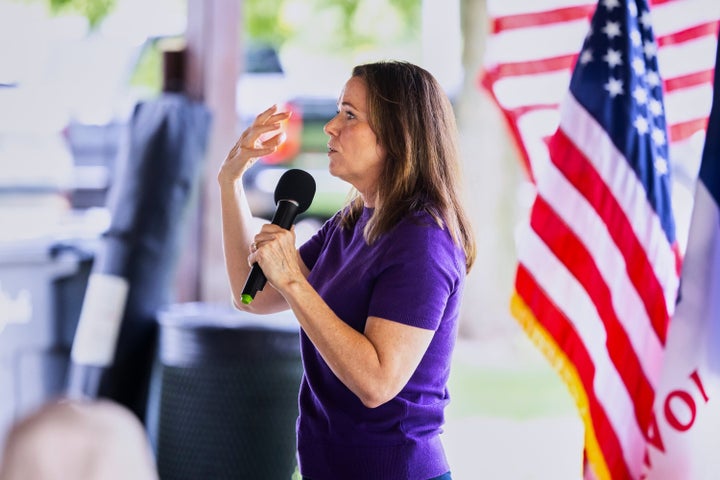
Whenever Christina Bohannan, a Democratic law professor who was running in Iowa’s 1st Congressional District, knocked on a door while campaigning, she would leave more than just your standard campaign literature behind.
She would always include a letter, signed by hand, with a host of promises: a stock-trading ban for members of Congress. Working to reverse the Citizens United decision. Age caps for members of Congress, a ban on pay to members during government shutdowns and barring members from buying first-class plane tickets with taxpayer money. A code of ethics for the Supreme Court.
“It’s time we put our Constitution over corruption, and people over corporations. I support term limits and tough ethics reform,” the letter reads. “I take no corporate PAC money and never will.”
Advertisement
via Associated Press
Bohannan had twice narrowly lost to GOP Rep. Marionette Miller Meeks in this district covering Iowa’s southeast, but she and her letters broke through in 2026: She was favored heading into Election Day and ultimately won by nine percentage points.
Bohanan was not alone. After years of a stop-and-start effort to make President Donald Trump’s corruption a signature political issue, Democrats took advantage of the president’s ostentatious self-dealing — a gifted plane from Qatar, $1.4 billion in cryptocurrency earnings, nearly 29,000 presidential stock trades and multiple pardons handed out to political donors — to put corruption under the spotlight in their campaigns.
Advertisement
“The issue is front-and-center because the administration has made it front-and-center,” said Brian Lemek, the executive director of Defend The Vote, which has encouraged Democrats to link corruption and the cost of living. “They’ve effectively brought the realities of corruption to the masses.”
The result was an unprecedented wave, with Democrats from Maine to Mississippi slamming their opponents as part of a broken political system en route to massive gains in both chambers of Congress and historic wins at the state level.
The key for Democrats was linking the issue to the rising costs Americans believe are sinking their economic futures, arguing that the millions donated to political campaigns by lobbyists, billionaires, and corporations directly lead to policies that benefit the politically connected more than everyday people.
Advertisement
The Dallas Morning News/Hearst Newspapers via Getty Images
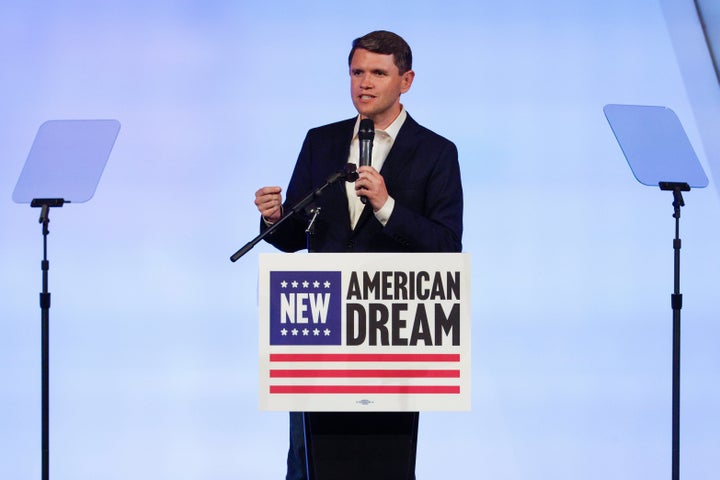
The highest-profile campaigns of the cycle — Sen. Jon Ossoff’s 18-point win in Georgia, James Talarico’s massive victory in Texas — built their messages around corruption, with Ossoff delivering viral takedown after viral takedown excoriating Trump and his family members for self-dealing and Talarico delivering a key speech outlining how a memo written by former Supreme Court Justice Lewis Powell urging corporations to get more involved in politics led to the today’s “rigged economy.”
“We have an affordability crisis because we have a corruption crisis,” Talarico said in the July speech, adding: “The rules of today weren’t written for us. They were written for billionaires.”
Advertisement
Voters responded: 90% of the electorate said corruption was either a crucial or major factor in their vote, and those voters favored Democrats by a 57% to 41% margin, according to exit polls.
It didn’t hurt that the notion of graft dovetailed perfectly with the widespread sense that the economy is failing everyday people.
“Americans have gotten hip to the game here,” Lemek said. “They see what’s happening and they’re frustrated.”
Advertisement
Trump’s war in Iran has caused a brutal, months-long spike in fuel prices that put inflation and affordability top of mind for voters. Meanwhile, as gas prices climbed above $4 a gallon, they watched the president try to create a $1.4 billion “slush” fund for his supporters, a Russian oligarch bankroll his eldest son’s wedding party, and war-time profits soar for the largest oil and gas companies — an industry Trump literally offered regulatory rollbacks in exchange for $1 billion in campaign money in 2024.
The sense of corruption resonated with voters because they saw it through the prism of their own financial struggles, said Joseph Geevarghese, executive director of Our Revolution, the progressive group aligned with Sen. Bernie Sanders (I-Vt.).
“I think people saw the quid pro quo in action — they saw donors lining up to get returns on their investments, and I think it disgusted the electorate,” Geevarghese said. “At the same time, people felt the economic squeeze — the affordability issue — and they started to draw connections between the grift and their economic strain.”
Advertisement
Democrats started to fine-tune their message way back in November 2025, when House Majority PAC, a super PAC run by allies of Democratic leader Hakeem Jeffries, conducted polling looking at why voters believed costs were high, In one survey, given the choice between blame corporations for jacking up prices or blaming “out of touch politicians” who don’t hold corporations accountable, 67% chose to blame the politicians.
But the issue really jumped out in May 2026, when the group found corruption tied to the cost of living as voters’ top issue, and that Republicans and independents were more likely to name corruption as a major problem. Voters were ready to believe that politicians were simply doing the bidding of their donors or making decisions based on what was best for their own stock portfolios.
“Voters really diagnosed political corruption as the reason costs were high,” said Matt Canter, a Democratic pollster at Global Strategy Group who conducted the surveys for HMP. “Elites didn’t always recognize that.”
Advertisement
via Associated Press
Meanwhile, Republicans in power were mostly dismissive of the issue.
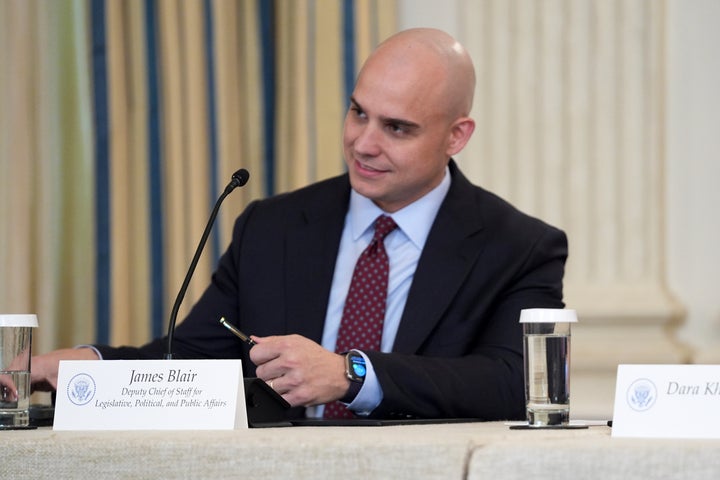
“That dog don’t hunt,” James Blair, the Trump aide charged with leading the GOP’s midterms efforts, told the conservative website The Free Press in September. He insisted voters cared more about fraud in government programs than the president’s self-dealing.
Republicans did do one major round of advertising hyping their own votes for a stock-trading ban, which Democrats dismissed as weak. But the party never built a consistent message on the issue, even though much pre-election polling indicated voters didn’t trust either party to clean up Washington.
Advertisement
“Democrats were able to tell a story about this,” said one GOP strategist, who requested anonymity to speak frankly. “We have to figure out our own story before 2028 rolls around or this is going to happen again.”
With new majorities in the House and Senate, Democrats will now wield subpoena power, and they are teeing up a slew of investigations into Trump and his family.
But Jeff Hauser, executive director of the Revolving Door Project, a nonprofit that tracks corporate influence on the Trump administration, said it would be a mistake for them to focus their new investigatory powers merely on how the president may have violated laws or ethical norms.
Advertisement
“That’s penny-ante — people know that,” Hauser said. “You’ve got to show that the corruption has an impact on people’s lives… that this is not a one-off situation, but a pervasive problem. That gives you momentum for a governing agenda.”
Many of the Democrats who flipped seats signed on to either End Citizens United’s “Unrig Washington” pledge or a letter organized by Defend The Vote pushing for Democratic leader Hakeem Jeffries to set up a series of anti-corruption votes on the first day of the new Congress. Following through, party officials said, would be key to rebuilding trust with voters.
“The voters get a say here and they’ve been pretty clear about how they feel,’ Canter said. “This is the way the party has to commit to acting in the future.”
Advertisement
SOPA Images via Getty Images
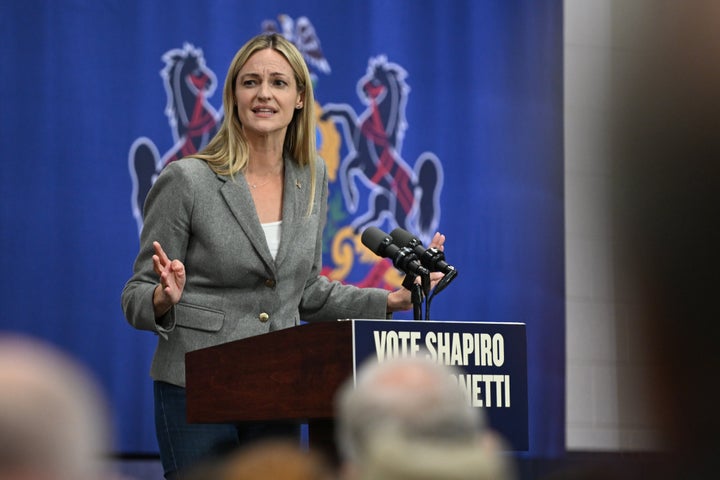
Democrat Paige Cognetti, the Scranton, Pa., mayor who prevailed in her House race against incumbent Republican Rep. Rob Bresnahan, made corruption and ethics the centerpiece of her campaign. Bresnahan was previously among the most frequent stock traders in the Capitol, as Cognetti was happy to remind voters throughout the race. (Bresnahan has said he did not direct the trades himself and that a firm that manages his investments carried them out.)
Cognetti told HuffPost on Wednesday that Bresnahan’s trading “recruited me into this race.”
“I saw a similar pattern of folks that are in these public positions thinking that they’re there to enrich themselves instead of help people, and that’s what we’ve been running on since day one,” she said. “Corruption last fall was kind of a mid-tier issue on voters’ minds, and it really catapulted over the last year to the top.”
Advertisement
Cognetti, like other Democrats, has cast the corruption issue as much larger than Trump. In fact, her agenda revolves largely around Congress itself and resembles Bohannan’s: banning stock-trading for lawmakers, barring corporate PAC donations, instituting term limits and preventing members of Congress from becoming lobbyists after they leave.
“There’s this kind of feeling now that everything is rigged against regular people, and that the folks that are high up in corporations or high up in positions like the United States Congress are really, really in it for themselves,” she said.
Advertisement