this living garden changes color to reveal how flowers may appear to moths

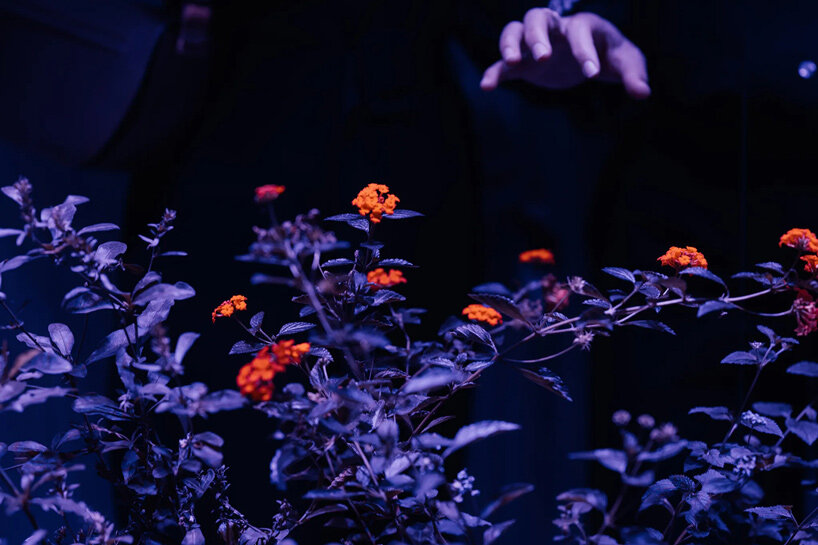
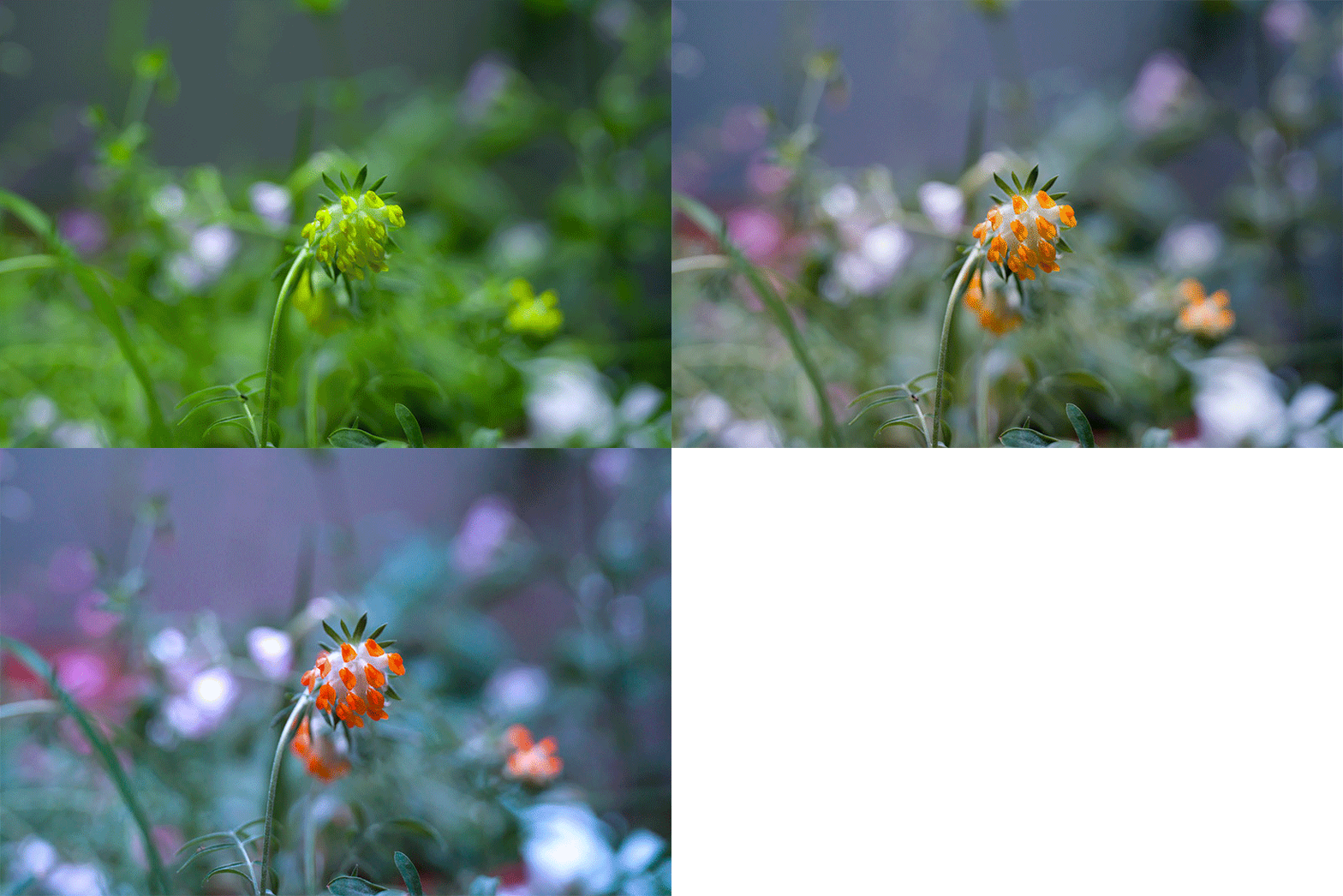
At the 2026 Ars Electronica Festival in Linz, Brussels-based artist Adrien Lucca and a team of scientists presented Parallel World, a living garden illuminated to suggest how flowers might appear to a moth. The installation brings real plants beneath a computer-controlled LED system to create a small indoor meadow that changes appearance at regular intervals. Delicate stems rise above dense foliage, with pink blossoms scattered throughout. As the lighting shifts, the garden takes on an entirely different color composition, even as every flower stays exactly where it is.
Under the bluish light, green leaves turn brown or nearly black, while the flowers become unusually bright against their surroundings. The transformation comes from the wavelengths of light reaching the plants and reflecting back toward the viewer. It is a simple visual experiment with an intriguing premise: the colors we associate with a garden are only one interpretation of what exists there. The same arrangement of plants can appear very different to another living creature.
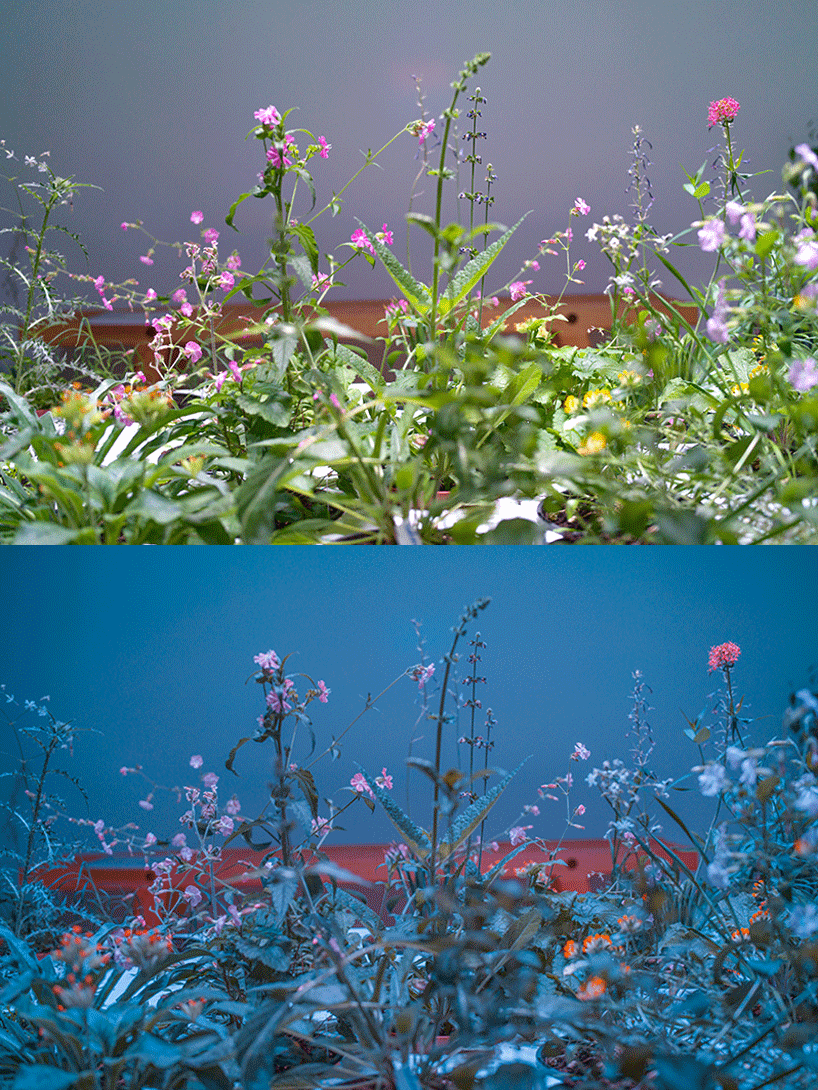
The installation by Studio Adrien Lucca draws on the visual system of the elephant hawkmoth (Deilephila elpenor), a nocturnal pollinator capable of distinguishing colors under exceptionally dim light. While humans gradually lose their ability to perceive color after sunset, these insects can continue identifying flowers beneath the faint illumination of the night sky.
Their eyes respond to ultraviolet wavelengths alongside the blue-to-green regions of the spectrum, giving them access to visual information beyond human perception (see here). Research published in Nature in 2002 established that the species can distinguish colors under conditions comparable to dim starlight.
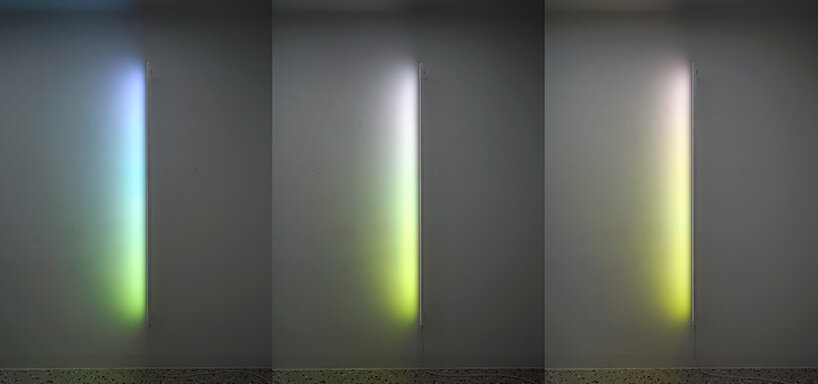
Lucca developed the 2026 installation with color scientist Ali Aiman Raza and researcher Colas Schretter, alongside biologist Marko Ilić, whose work focuses on insect vision. Together, they use programmable lighting to translate aspects of the moth’s visual environment into colors human visitors can experience.
The approximation has its limits, as human eyes cannot directly perceive ultraviolet light and the moth’s compound eyes process visual information differently from ours. Even so, the changing garden lends a tangible way to approach a sensory experience that would be inaccessible otherwise.
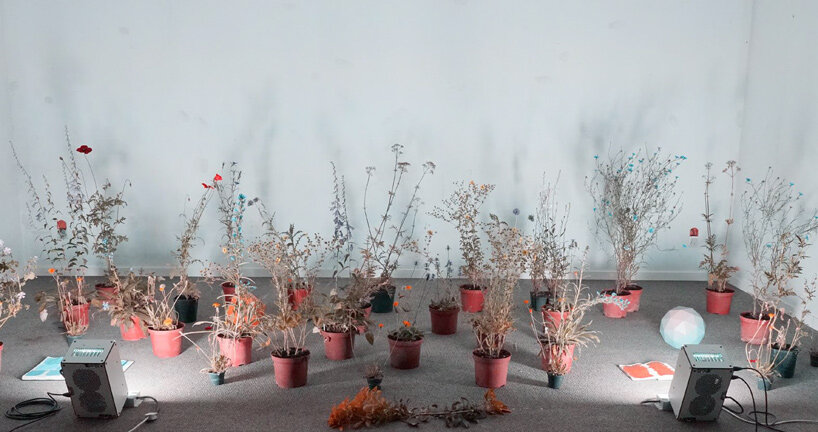
The project grew out of Lucca’s earlier experiments with plant pigmentation and artificial light. In 2022, he collaborated with Brussels-based LMNO Gallery and Belgian seed producer Ecosem to create Mondes parallèles, an installation featuring wildflowers illuminated by programmable lamps.
By adjusting the spectrum, he could change the relationships between colors within the planting, bringing certain flowers forward while others appeared to recede into the vegetation. The experiment explored how flowering plants have developed visual characteristics through their long evolutionary relationships with pollinating insects.
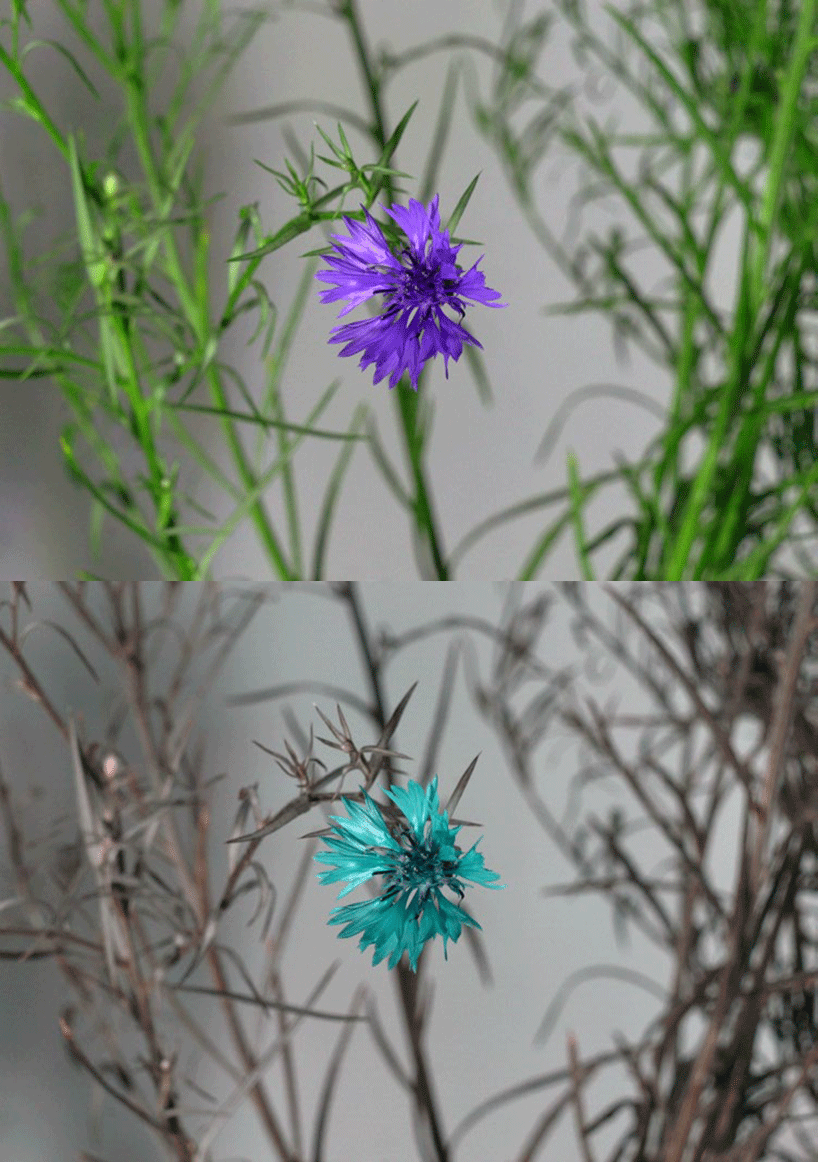
During a 2024 residency with Gluon in Brussels, Lucca turned his attention more specifically to the elephant hawkmoth and the colors of the night. His 2025 exhibition À l’aube du crépuscule at LMNO brought together paintings and luminous sculptures tracing the changing light of twilight.
Other works investigated the insect’s unusually wide field of vision and its sensitivity to colors humans cannot see. A drawing titled Rosetta compared the visual sensitivities of humans and hawkmoths, using visible red as a substitute for ultraviolet. The living garden extends this research into an environment where visitors can observe these differences for themselves.
Beyond the gallery, the research raises questions about the artificial lighting that shapes contemporary landscapes. Flowers have evolved colors and patterns that help communicate with pollinators, including markings visible in ultraviolet light (see here).
Their appearance depends partly on the light illuminating them, which means streetlights can alter the visual signals available to insects after dark. A 2017 study published in Nature found that nocturnal flower visits decreased by 62 percent in artificially illuminated plant communities compared with dark areas, with consequences for plant reproduction.
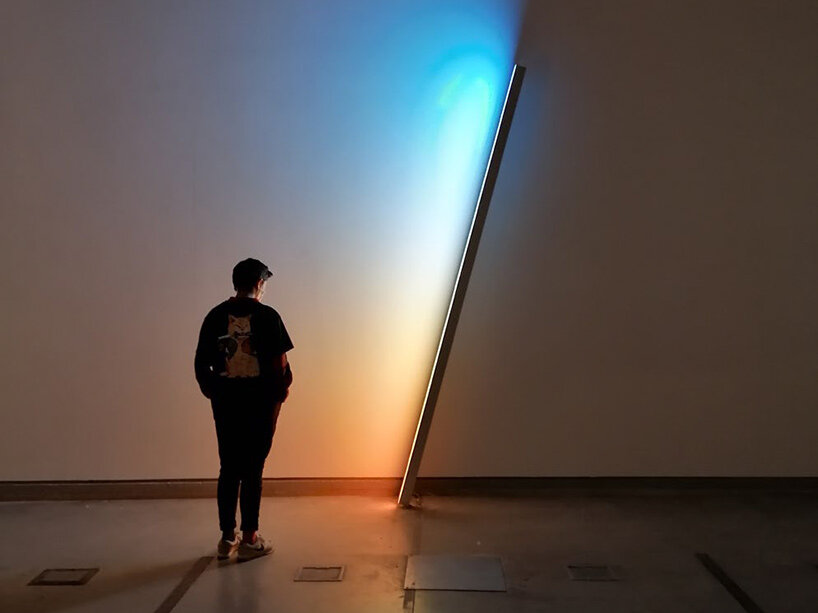
The effects also depend on the type of illumination. A 2021 study in Nature, using the elephant hawkmoth’s visual system as a model, examined how different artificial light sources influence the visibility of flowers against foliage.
Some lighting spectra preserved or enhanced color contrasts, while narrow-band orange lighting made floral colors more difficult for the moth to distinguish. The findings suggest that the wavelength and intensity of artificial light can change how insects navigate their surroundings, even when the environment appears perfectly legible to human eyes.
Presented in Gdańsk and later at Ars Electronica in 2026, Parallel World brings these questions into an immediate physical setting. Lucca’s work has long explored the relationship between light and perception, often through custom-built lighting systems that alter the appearance of painted surfaces or architectural spaces. Here, the same methods are applied to living plants and the animals that encounter them.
The garden becomes a way to consider how lighting design might respond to different forms of vision, especially in public landscapes where human activity overlaps with nocturnal wildlife.