<gu-island name="KeyEventsCarousel" priority="feature" deferuntil="visible" props="{"keyEvents":[{"id":"6ae854df8f08f802b2b683c5","elements":[{"_type":"model.dotcomrendering.pageElements.TextBlockElement","html":"
In Kyiv, residents received a succession of unusual alerts late on Sunday night over the period of roughly an hour.
","elementId":"12e68a02-5d3f-4db2-a820-41283903455c"},{"_type":"model.dotcomrendering.pageElements.TextBlockElement","html":"
Typically, people can receive several alerts a day warning of incoming Russian drones or missiles; locals after four years of living in a warzone are used to their phones going off, often followed by sirens in the street.
","elementId":"5a36c954-3dea-4af4-9973-1e86cf9baff5"},{"_type":"model.dotcomrendering.pageElements.TextBlockElement","html":"
But these messages warned of radically different threats- a nuclear radiation warning, a chemical attack and even an incident of street fighting in Kyiv.\n
\n
\n One of the messages was also transmitted in Russian, a clear tell that something was potentially off.
","elementId":"a26e33b8-c053-4b75-bec5-67d5c0c4f31b"},{"_type":"model.dotcomrendering.pageElements.TextBlockElement","html":"
The messages sent out were:
","elementId":"e53e4bc0-5233-4a8e-b5e4-9ab4a8fbdf2a"},{"_type":"model.dotcomrendering.pageElements.TextBlockElement","html":"
- \n
- \n
22:47: “Radiation threat. Radiation threat declared in Kyiv.”
\n
- \n
22:48: “Hi! There will be a nuclear alert across Ukraine. Don’t worry, it’s Oreshnik flying” [This message was written in Russia]
\n
- \n
22:49: “Chemical threat. There is a threat of a chemical attack on Kyiv. Don’t go outside.”
\n
- \n
22:49: “Street fighting threat. Street fighting is taking place in Kyiv. Don’t go outside.”
\n
- \n
23:53: All clear messages sent out
\n
\n
\n
\n
\n
\n
","elementId":"2b1b6c26-5739-4d1e-a12f-29d33abcb3dd"}],"attributes":{"pinned":false,"keyEvent":true,"summary":false},"blockCreatedOn":1793610975000,"blockCreatedOnDisplay":"09.16 GMT","blockLastUpdated":1793612767000,"blockLastUpdatedDisplay":"09.46 GMT","blockFirstPublished":1793612767000,"blockFirstPublishedDisplay":"09.46 GMT","blockFirstPublishedDisplayNoTimezone":"09.46","title":"Timeline of Alarming Alerts","contributors":[],"primaryDateLine":"Mon 2 Nov 2026 09.46 GMT","secondaryDateLine":"First published on Mon 2 Nov 2026 08.59 GMT"},{"id":"6ae84a508f08f802b2b6839e","elements":[{"_type":"model.dotcomrendering.pageElements.TextBlockElement","html":"
Good morning and welcome to our live coverage of key events in Europe.
","elementId":"f414a7f3-993f-4c3e-806a-b0175699e00b"},{"_type":"model.dotcomrendering.pageElements.TextBlockElement","html":"
Ukraine and Russia have reported corresponding cyber-hacks on their app warning systems overnight.
","elementId":"5c81988d-cd62-433f-9306-a434447abf8e"},{"_type":"model.dotcomrendering.pageElements.TextBlockElement","html":"
These are the mobile apps which send alerts and air-raid warnings, alerting citizens to when missiles and drones are incoming (and thus advising residents to seek shelter or go down to a bunker).
","elementId":"65fc1069-8a03-4333-95a0-14a9e246aaa8"},{"_type":"model.dotcomrendering.pageElements.TextBlockElement","html":"
This appears to be the first breach of the app, on such a scale, during the war so far; directly immobilising one of the most important channels of communication authorities have to help advise citizens.
","elementId":"df1398ac-1543-4681-a75a-00bc10cb761b"},{"_type":"model.dotcomrendering.pageElements.TextBlockElement","html":"
In the Ukraine hack, the app started spewing out alarming fake messages late on Sunday night – warning residents of a nuclear radiation threat in the capital Kyiv, a chemical attack, street fighting and also incoming Oreshnik hypersonic missiles, which Ukraine lacks interceptors for.
","elementId":"81900f7b-6ff8-434c-ab52-cd65710f821a"},{"_type":"model.dotcomrendering.pageElements.TextBlockElement","html":"
Ukraine’s Air Force issued clarification within the hour on Telegram, urging people to remain calm and disregard the messages, one of which was written in Russian.
","elementId":"91d00671-953c-40bc-b951-a40b5baea761"},{"_type":"model.dotcomrendering.pageElements.TextBlockElement","html":"
Some hours later, Russian authorities said its warning app had been hacked and had to be taken offline. A Ukrainian hacker group has claimed to have sent fake alerts warning of nuclear warheads to users inside Russia.
","elementId":"3c7ae253-a432-46ad-b36b-22fae41c51f4"},{"_type":"model.dotcomrendering.pageElements.TextBlockElement","html":"
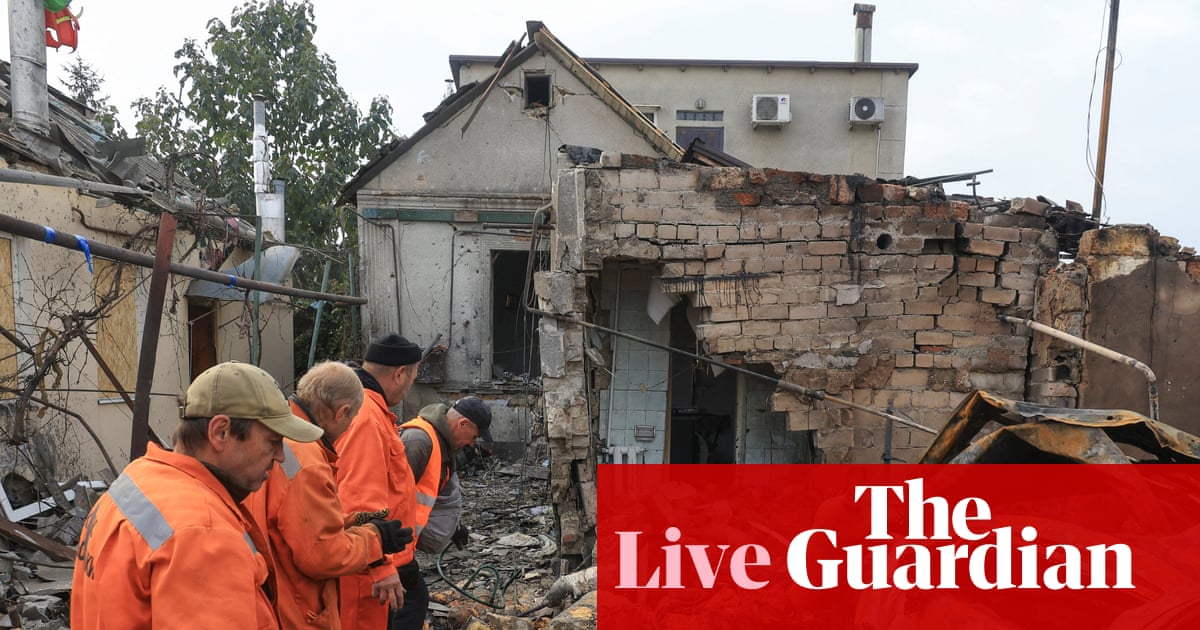
Amid the cyber warfare overnight, both sides also carried out strikes, targeting energy sites like oil refineries. Strikes have been reported in Zaporizhzhia and Odesa.
","elementId":"59847a04-9a6f-4036-851c-4c2381f516bf"},{"_type":"model.dotcomrendering.pageElements.TextBlockElement","html":"
Stay with us for all the developments.
","elementId":"e43000ec-ab5f-4a9d-a920-5fe56eeefd9f"}],"attributes":{"pinned":false,"keyEvent":false,"summary":true},"blockCreatedOn":1793609998000,"blockCreatedOnDisplay":"08.59 GMT","blockLastUpdated":1793609998000,"blockLastUpdatedDisplay":"08.59 GMT","blockFirstPublished":1793609998000,"blockFirstPublishedDisplay":"08.59 GMT","blockFirstPublishedDisplayNoTimezone":"08.59","title":"Opening summary","contributors":[],"primaryDateLine":"Mon 2 Nov 2026 09.46 GMT","secondaryDateLine":"First published on Mon 2 Nov 2026 08.59 GMT"}],"id":"key-events-carousel-mobile","renderingTarget":"Web","serverTime":1793612970423}”>
Key events
Timeline of Alarming Alerts
In Kyiv, residents received a succession of unusual alerts late on Sunday night over the period of roughly an hour.
Typically, people can receive several alerts a day warning of incoming Russian drones or missiles; locals after four years of living in a warzone are used to their phones going off, often followed by sirens in the street.
But these messages warned of radically different threats- a nuclear radiation warning, a chemical attack and even an incident of street fighting in Kyiv.
One of the messages was also transmitted in Russian, a clear tell that something was potentially off.
The messages sent out were:
-
22:47: “Radiation threat. Radiation threat declared in Kyiv.”
-
22:48: “Hi! There will be a nuclear alert across Ukraine. Don’t worry, it’s Oreshnik flying” [This message was written in Russia]
-
22:49: “Chemical threat. There is a threat of a chemical attack on Kyiv. Don’t go outside.”
-
22:49: “Street fighting threat. Street fighting is taking place in Kyiv. Don’t go outside.”
-
23:53: All clear messages sent out
Opening summary
Good morning and welcome to our live coverage of key events in Europe.
Ukraine and Russia have reported corresponding cyber-hacks on their app warning systems overnight.
These are the mobile apps which send alerts and air-raid warnings, alerting citizens to when missiles and drones are incoming (and thus advising residents to seek shelter or go down to a bunker).
This appears to be the first breach of the app, on such a scale, during the war so far; directly immobilising one of the most important channels of communication authorities have to help advise citizens.
In the Ukraine hack, the app started spewing out alarming fake messages late on Sunday night – warning residents of a nuclear radiation threat in the capital Kyiv, a chemical attack, street fighting and also incoming Oreshnik hypersonic missiles, which Ukraine lacks interceptors for.
Ukraine’s Air Force issued clarification within the hour on Telegram, urging people to remain calm and disregard the messages, one of which was written in Russian.
Some hours later, Russian authorities said its warning app had been hacked and had to be taken offline. A Ukrainian hacker group has claimed to have sent fake alerts warning of nuclear warheads to users inside Russia.
Amid the cyber warfare overnight, both sides also carried out strikes, targeting energy sites like oil refineries. Strikes have been reported in Zaporizhzhia and Odesa.
Stay with us for all the developments.