Russia is coming back to tennis and nobody seems particularly worried about the Ukrainian women

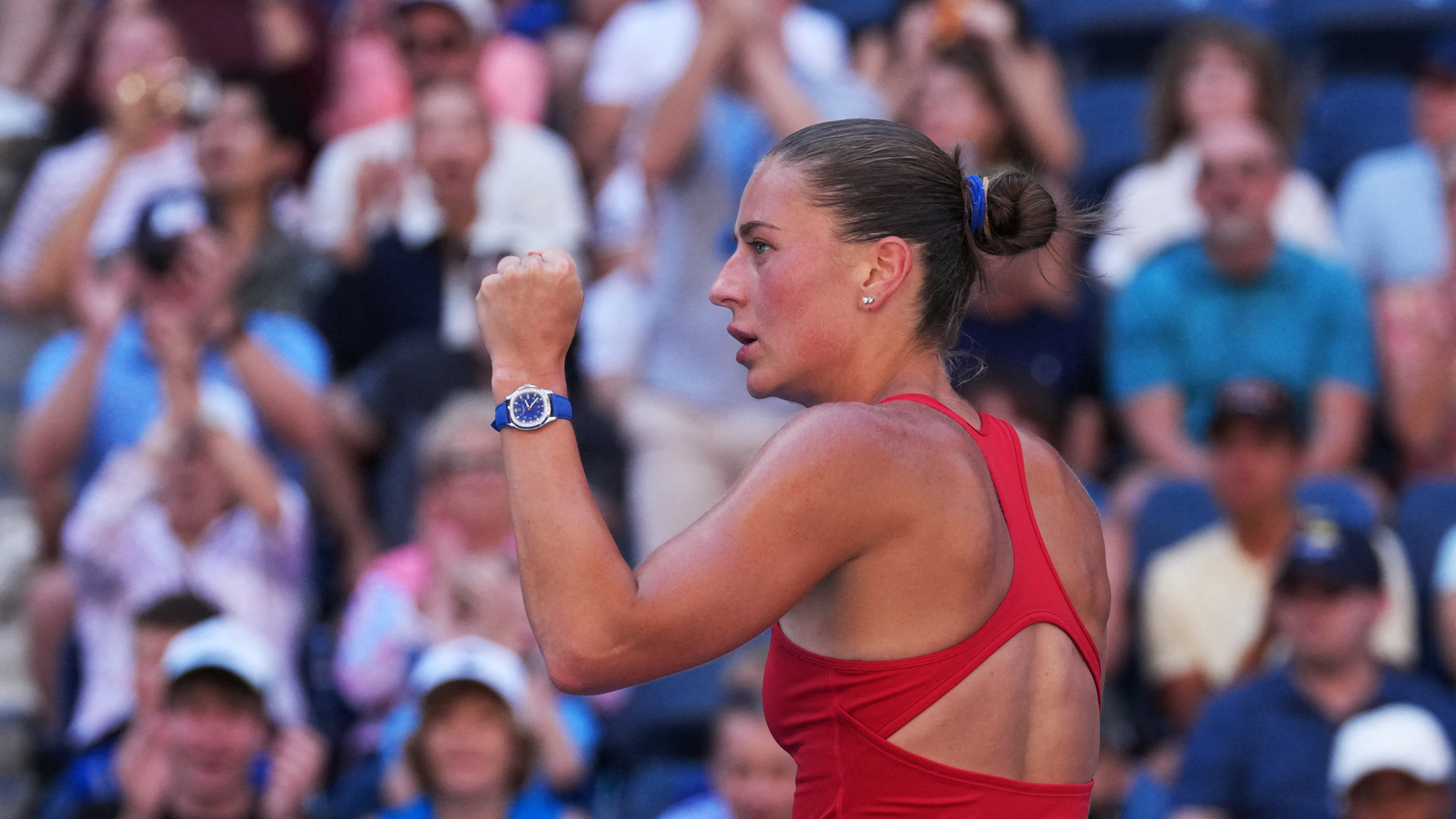
Kostyuk has had to worry about whether her family will survive the night. And then she’s expected to walk onto a tennis court, compete at the highest level and somehow compartmentalize everything happening back home.
Elina Svitolina addressed precisely this problem during the French Open. Speaking about Kostyuk’s experience, she described how terrifying it can be to wake up to news of missile attacks and then have to play a match. She acknowledged that Ukrainian players have carried this burden for years, often without discussing it publicly. This isn’t a theoretical concern about whether somebody might feel uncomfortable seeing a Russian flag.
It’s a question of how much emotional strain a professional athlete can reasonably be expected to absorb before the sport acknowledges that her circumstances are fundamentally different from those of her competitors. Svitolina, Kostyuk, Dayana Yastremska and other Ukrainian players have continued showing up. They’ve traveled, trained and competed while maintaining connections to families and communities living through a war.
And what has tennis largely offered them? The opportunity to keep playing. Which is something, certainly. But it strikes me as a remarkably limited response to an extraordinary situation.
One of the more convenient arguments in international sport is that competition should remain separate from politics.
I understand the appeal. I love tennis partly because, for a few hours, the outside world can disappear. Two players, a net, a ball and the extraordinary challenge of trying to outthink and outplay another human being.
But the idea that tennis exists outside politics has always been more aspiration than reality.
National identity is everywhere in the sport. We celebrate Davis Cup victories as national achievements. We wrap Olympic tennis in flags and anthems. We describe players as representatives of their countries whenever it suits the occasion.
Then, when those national associations become politically uncomfortable, we’re told that nationality shouldn’t matter.
For Ukrainian players, it matters quite a lot. Kostyuk and Svitolina have declined the customary post-match handshakes with Russian and Belarusian opponents. Their decisions have generated controversy, sometimes among spectators who appear more concerned about tennis etiquette than the circumstances that produced the refusals.
I don’t particularly care whether someone believes the handshake tradition should be preserved. What troubles me is the apparent expectation that Ukrainian women should behave as though nothing unusual is happening.
They’re supposed to compete against Russian and Belarusian players, answer the inevitable questions, manage the audience’s reaction and then politely move on.
Meanwhile, their families may be sheltering from air raids. At what point does the sport recognize that treating everyone identically doesn’t necessarily mean treating everyone fairly?
What makes Friday’s decision so significant is that it moves the debate beyond whether sporting federations want to readmit Russia.
The question is increasingly whether they can legally maintain restrictions, and on what grounds.
The IIHF argued that Russia’s participation created unacceptable safety and security concerns. CAS found that the evidence presented was insufficient under the applicable rules. Importantly, the panel did not decide whether Russian teams must compete with national symbols, leaving that question unresolved.
For tennis, that distinction matters. Full reinstatement would involve more than allowing individual athletes to play, something the sport has already been doing for years. It would potentially restore national representation, team competition and the institutional legitimacy that comes with federation membership.
There’s also a reasonable counterargument here. Sporting federations shouldn’t be allowed to exclude athletes indefinitely without an adequate legal basis. If restrictions are imposed, those restrictions should be justified, proportionate and consistent with the governing rules.
I agree with that principle. But I also believe sporting organizations have an obligation to consider the welfare of every athlete affected by their decisions, not merely the athletes seeking reinstatement.
And that brings us back to the Ukrainian women. Where is the serious discussion about what their working lives have become? Where are the meaningful accommodations, the sustained psychological support, and the willingness to consult them before decisions are made that could fundamentally change their competitive environment? I don’t mean a sympathetic statement posted on social media. Tennis is exceptionally good at those. I mean something tangible.
I suspect that when Russia is fully reinstated in tennis, the announcement will be presented as an administrative development. There will be statements about fairness, sporting unity, legal obligations and the importance of bringing athletes together.
Some players will welcome the decision. Others will avoid commenting. Tournament organizers will adjust their procedures, and within a few weeks the new arrangements will probably begin to feel normal.
That’s how professional sports operate. The calendar moves forward, and yesterday’s controversy becomes tomorrow’s routine. But for Ukrainian players, nothing about this is routine. Their country is still dealing with the consequences of Russia’s invasion. Their families are still exposed to dangers that most of their competitors cannot begin to imagine. And they’re being asked to perform in an environment where the rest of the sport increasingly seems ready to declare the problem settled.
I don’t believe Russia’s full return to tennis is far away. Friday’s hockey ruling makes that outcome look considerably closer, even if the ITF still has legal and institutional choices of its own.
What I find much harder to accept is how little attention is being paid to the women who will have to live with the consequences. We’ve spent years asking whether Russian athletes deserve the right to compete. Perhaps, before the flags return and the national teams are welcomed back, somebody in tennis should spend a little more time asking Ukrainian players what they’ve been through. And, for once, actually listen to the answers.