The long path to Oxford Street’s pedestrianisation
United States
Breaking News:
🫡 Neymar scores his 500th career goal; watch it and see the breakdown
Michael Penix Jr. lost the funniest fumble of the NFL season
No. 4 USC women beat Iowa State 90-59 in Bahamas behind 43 combined points from Watkins, Hall
Giannis Antetokounmpo dealing with Achilles discomfort, not starting against Cavs
Washington DC
Sunday, Nov 29, 2026

Share this article
Join the conversation
Oxford Street has been a “key thoroughfare” in London since the capital was called Londinium, said The Times. “Where the Romans used chariots or animal-drawn carts, modern Britain filled Oxford Street with double-decker buses, black cabs and e-bikes. Until now.”
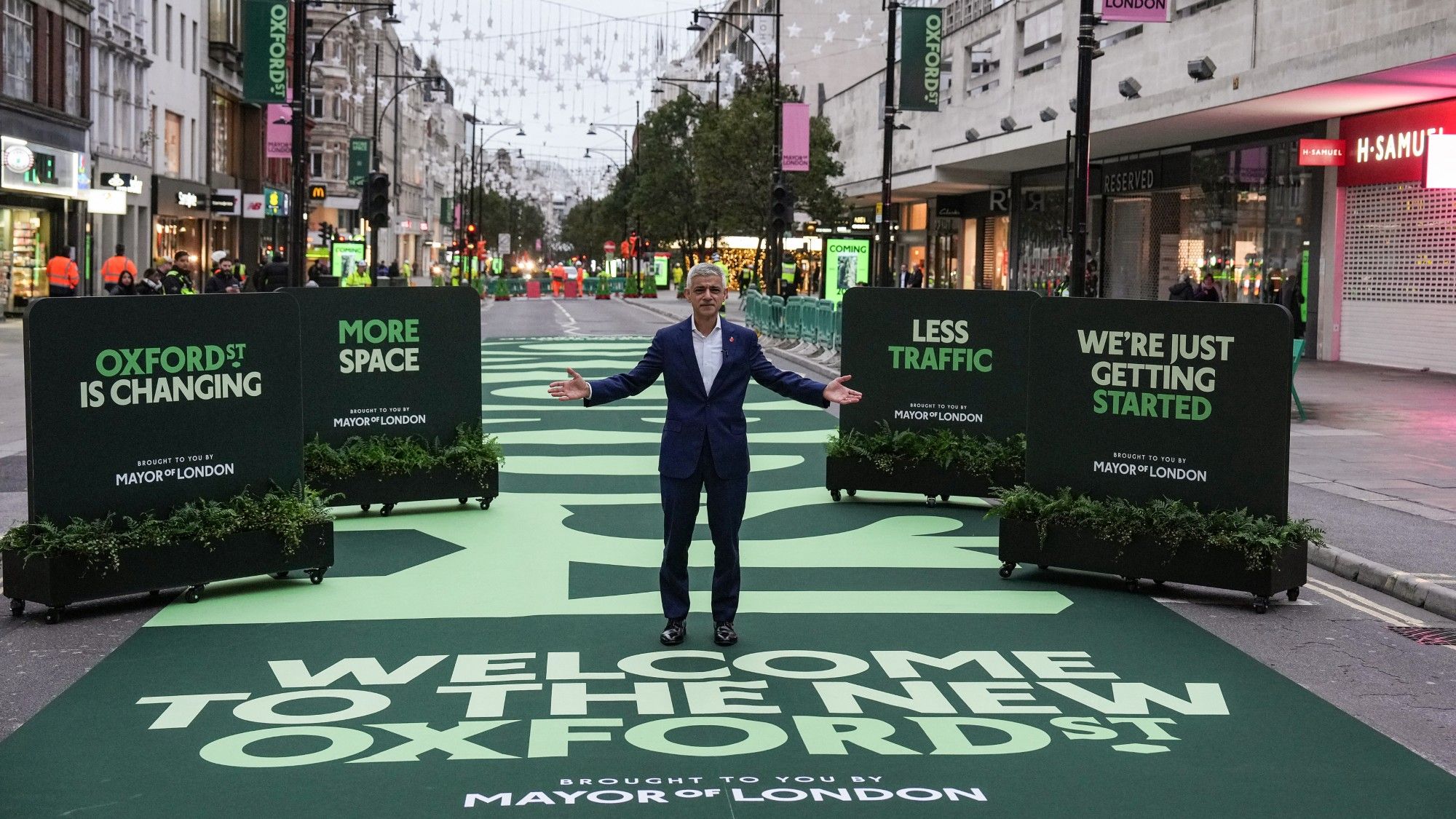
From today, after “2,000 years of traffic”, a half-mile stretch of the “nation’s high street” will be pedestrianised. The hotly contested measure has been championed by London Mayor Sadiq Khan, but had been opposed by the local council.
Now all ordinary cars, buses, taxis, private vehicles, (e-)bikes, scooters and pedicabs will be banned between Selfridges and Ikea by Great Portland Street. Bus routes will be diverted to neighbouring streets, such as Wigmore Street, Henrietta Place and Cavendish Place.
Join more than 350,000 subscribers and keep yourself informed with a selection of The Week’s most interesting, enlightening and entertaining stories – plus daily puzzles.
Latest Videos FromThe Week US
Emergency vehicles will continue to have access at all times, and essential services for business will have designated overnight hours.
Oxford Street will become more like Times Square in New York, or the shopping streets of “La Rambla in Barcelona or Strøget in Copenhagen”, said the Financial Times. This change is certainly “welcome”, as the area has gone through a “bleak period” since the pandemic. Vehicle-free streets suit the modern and “changing nature of retail”, which emphasises marketing, displays and brands over transactions.
The development comes after “years of proposals, abandoned schemes and political wrangling”, said London’s The Standard. Though there has been a debate “stretching back to the early 1960s”, the idea was first formally promised in Sadiq Khan’s election manifesto for London Mayor in 2016.
There was a consultation a year later, but plans were then abandoned after the Conservative-led Westminster City Council – which controls the area – withdrew its support. Pedestrianisation was “revived” in 2024, as part of Khan’s “wider transformation” of the area.
A free daily email with the day’s biggest news and analysis – and the best features from TheWeek.com
This “thorny issue” has “foxed mayoral administrations for years”, said the BBC. To circumvent the council’s rulings, Khan created a development corporation, a mayoral body that could take control of the area and assume planning powers from the council. Doing this in a semi-residential area was “unprecedented”. A development corporation been used only twice before – at brownfield sites developed for the Olympic Park in east London and Old Oak Common in west London.
However, it could only be permitted if it had the approval of central government. After Labour’s landslide election victory in 2024, Angela Rayner, the housing, communities and local government secretary, granted approval for the plan, which would have been “unlikely” in previous years.
Critics called the decision “anti-democratic”, said The Telegraph. Local residents are concerned that rerouting buses will cause congestion, and larger footfalls won’t be matched with adequate police resources or security.
For Khan, who has prioritised clean air throughout his tenure. this is a “political victory”, said The Guardian. The scale and importance of Oxford Street, with its millions of foreign tourists each year, will mean the £150 million scheme will be of “interest to city planners around the world”.
This is “only the first stage of a much bigger redevelopment”, said The Standard. Authorities will monitor and collect data over the Christmas period and begin developments in the spring for an “eventual permanent redesign” of Oxford Street.
By the start of next summer, visitors should see “more than 50 new trees, two new public squares and better signage”, said The Independent. “More than 100 new seats, dining tables and new lighting are also to be installed.”
Explore More