Trump’s Midterm Swing Brings Him To Michigan As GOP Aims To Undermine El-Sayed

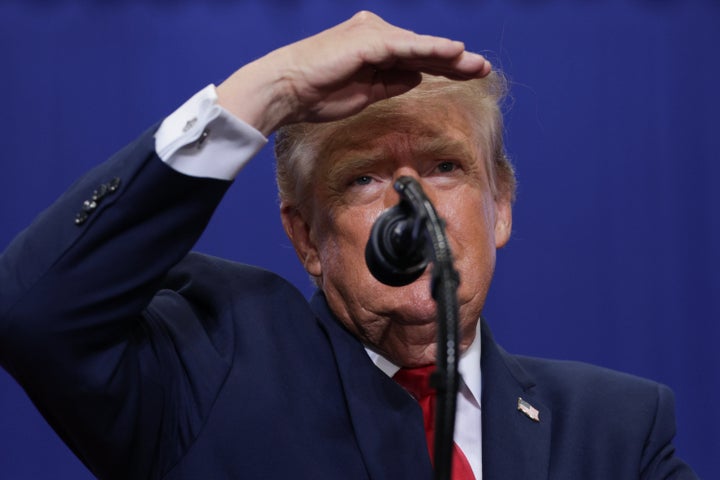
PORT HURON, Mich. (AP) — After weeks of assailing Democratic Senate candidate Abdul El-Sayed in rallies across the country, President Donald Trump on Sunday is bringing his midterm barnstorming to Michigan, where Republicans see a chance to pick up an open seat on Election Day.
El-Sayed, a former public health official, faces Republican Mike Rogers, a former congressman backed by Trump, in the Nov. 3 race to succeed retiring Democrat Gary Peters.
Advertisement
“We don’t want to see a jihadist senator,” Trump told reporters as he left for Michigan. “We don’t want to see a member of the Muslim Brotherhood in our Senate.”
El-Sayed has repeatedly denied unsubstantiated Republican allegations that he is connected to the Muslim Brotherhood, an Islamic movement with branches that the U.S. government has designated as terrorist organizations. The claims by Republicans have been denounced by Democrats as attacks on El-Sayed’s faith and his Egyptian heritage. El-Sayed would be the first Muslim senator if elected.
The race has taken on significance beyond Michigan, with Republicans casting El-Sayed as a symbol of a Democratic Party moving further to the left. Progressives, meanwhile, see his candidacy as a test of whether their agenda can win in a battleground state ahead of the 2028 presidential election.
Advertisement
Alex Wong via Getty Images
Trump’s visit to Port Huron follows former Democratic President Barack Obama’s appearances Saturday in Michigan and Ohio for his party’s candidates. It is Trump’s latest stop on a packed campaign schedule to bolster Republicans on the midterm ballot as the GOP is weighed down by voters’ frustration with the economy and the war with Iran.
Port Huron, about 60 miles (96.56 kilometers) northeast of Detroit, sits across the St. Clair River from Canada, where Trump’s tariffs have strained trade relations between the longtime allies.
Advertisement
Unlike Trump’s earlier trips to Republican-controlled states where his party is on defense, the GOP has not won a Senate race in Michigan for more than three decades. Rogers unsuccessfully ran for Senate in 2024, losing to then-Rep. Elissa Slotkin.
El-Sayed has taunted Trump, encouraging him to come to Michigan in the belief that a visit would backfire on Rogers.
“Donald, if you’re watching, don’t wuss out, man,” El-Sayed said. The progressive, who won a divisive primary in August, has said the country needs to “turn the page on Donald Trump.”
Advertisement
Robin Buckson/Detroit News via Associated Press
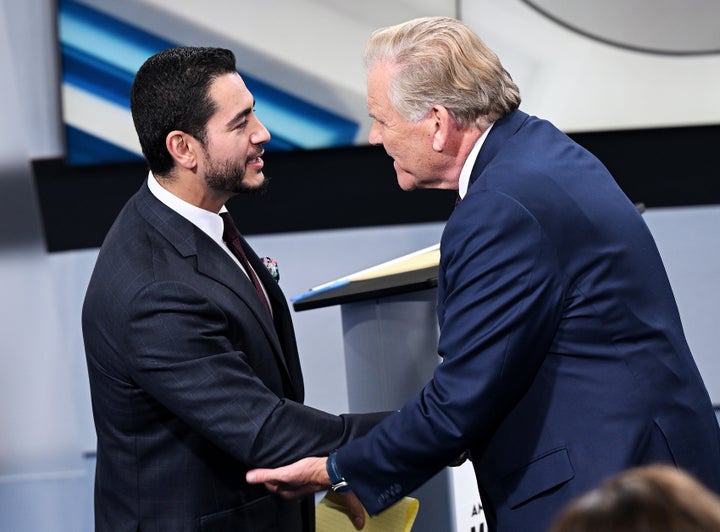
During their second and final general election campaign debate, Rogers questioned El-Sayed’s loyalty to the United States.
“Are you for America, or are you for these terrorist groups overseas?” Rogers asked.
El-Sayed said that questioning was “shameful.”
“I’m proud of our Constitution that guarantees all of us the right to pray as we choose to pray,” he said.
Advertisement
Speaking before Trump’s appearance Sunday, Rogers repeated his allegations linking El-Sayed to the Muslim Brotherhood.
“The Muslim Brotherhood celebrated exactly one victory in the United States in the primary this year,” Rogers said on stage. “Abdul El-Sayed’s.”
El-Sayed has faced criticism for his own rhetoric, particularly when he said “hurt people hurt people” after an attack on a synagogue in the Detroit area. The attacker had lost four relatives in an Israeli airstrike on Lebanon the week earlier. El-Sayed later apologized, saying he was not trying to justify what happened.
Advertisement
“To anyone who feels like my comments might have been hurtful, I’m really sorry,” he said. “That was not my intention.”
El-Sayed has struggled to unite Democrats following a contentious primary against Rep. Haley Stevens. Appearing Sunday on CNN, Stevens declined to explicitly say whether she was “still fully behind” El-Sayed, instead saying she was “on the team” and naming other Michigan Democratic candidates but not the party’s Senate nominee.