crafted from mycelium, hypha-lume pavilion maps human movement through light

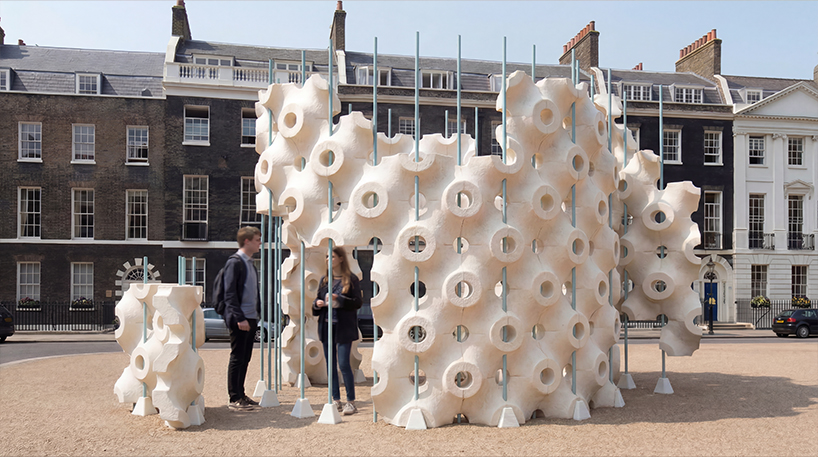
Hypha-Lume is an adaptive modular pavilion that uses reconfigurable mycelium components, sensors, projection, and sound to translate human movement into spatial data. Conceived as a responsive system, the structure incorporates three block types with curvatures of 20, 40, and 60 degrees. These tapered biomaterial modules connect around vertical supports for structural stability, allowing the shell to be reassembled into varied configurations depending on site requirements.
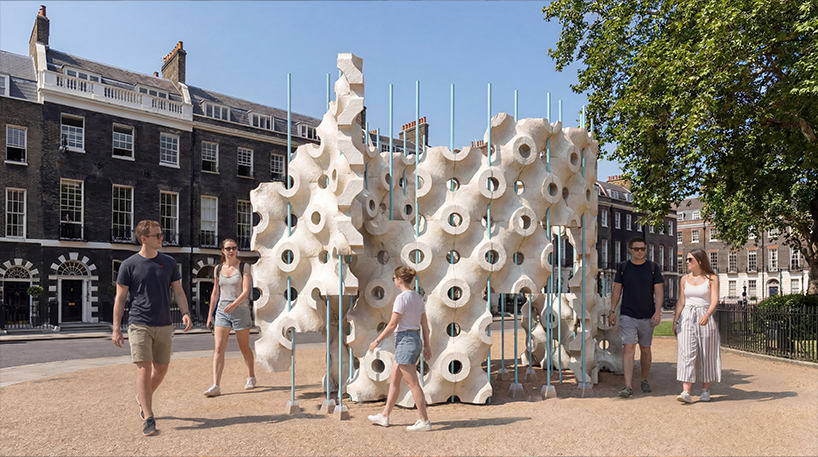
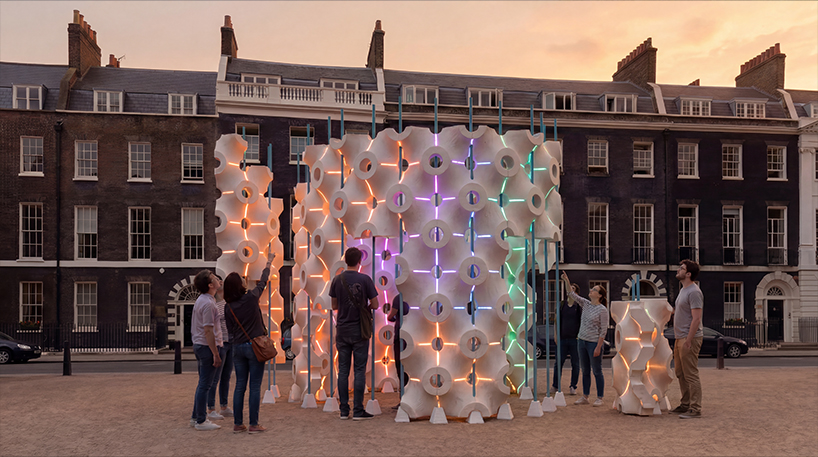
The pavilion, conceived by Darya Holub, Selin Ozasik, Pinak Bhapkar, Nikhil Narendiran and Baskar Bharathwaj Subramanian, functions as an interactive archive of site activity. Integrated sensors track visitor paths, pauses, and gatherings, converting occupant movement into real-time light patterns and audio. While the structure is defined by its organic geometry and modular rhythm during the day, nighttime illumination projects layered visual traces of previous human interactions directly onto the building envelope.
[embedded content]